The capacity-building initiatives for urban resilience in India have primarily focused on state institutions, whereby non-state actors have often not been considered. Also, the initiatives are not geared towards making the communities resilient. The proposed project aims to build the capacity of non-state actors in Urban India towards understanding climate crises and its causal linkages. This project will adopt the climate justice framework and participatory approach with an overall objective of creating communities of practice and academic-activist knowledge based on scientific fundamentals. In the first phase (6 months), 5 regional workshops across differing clusters in India will be conducted in the local languages, that will focus on enhancing the capacity of non-state actors to address urban climate challenges. In the second phase (12 months), the project will support 12 community-based climate action projects across India, which will be codeveloped by groups of participants from the regional workshops. In the third phase (6 months), the project will organise a National Consultation as well as a concluding conference on linking scientific evidence, community knowledge and policy propositions based on the learnings of the action projects and a concluding conference to disseminate the findings and learnings from the project and relevant policy recommendations.
Project leader
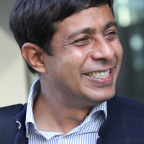
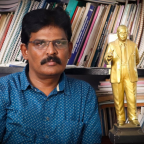
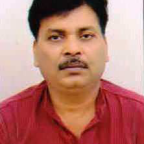
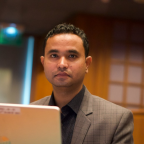

Sandeep Chachra, Executive Director of ActionAid Association
“The challenges posed by climate change require a collective effort to develop sustainable urban solutions. The conclave is a crucial step towards building resilient urban communities in the face of climate change."
Shri Vagtaram Devasi, of the Rajasthan Raika Vikas Sanghathan , a leading people’s organisation
“Pastoral communities across the country need to come together to share experiences, [such as facilitated under this project], and together call for policies and schemes that could protect their way of life, which is increasingly important with climate change affecting their livelihoods across different sectors.”
Dipali Sharma, Director of Programmes, ActionAid Association India
“This project provided a great platform to bring like-minded individuals from various sectors for developing action research and directly engage with the deprived urban communities to give them voice. Together, we can ensure that no one is left behind in the face of climate change.”
Project publications

Project final report: CBA2023-07MY-Chachra

Climate Justice for Informal Workers: An Action Research in Jaipur, Rajasthan

Climate Change in a Mountain City: Impacts, Perceptions, and Vulnerabilities of Informal Workers in Shimla, Himachal Pradesh

Impact of Climate Change on Slum Dwellers of Bhubaneswar, Odisha

Heat, Rain, and Uncertainty: Climate Change and Informal Workers in Bengaluru

Living with Uncertainty: Climate Change, Informal Work, and Everyday Vulnerability in Tamil Nadu
Related content

Building Capacity to Enhance Farmer’s Capabilities to Address the Challenges of Climate Change Using Climate Smart Agriculture Strategies
Impacts of Global Warming on Coastal and Marine Ecosystems in the Northwest Pacific
