While the Philippines has made significant strides in proactive disaster risk reduction measures, current planning actions are undertaken primarily based on historical flood risk. There are gaps in understanding how the escalating impacts of climate change will alter flood dynamics. This study examines shifting local flood risk patterns in the Municipality of Carigara in Leyte. The team quantifies probabilistic flood damage on residential structures for early, mid-, and late-term flood scenarios under RCP4.5 and RCP8.5 pathways. By utilising localised housing vulnerability functions, risk trends were assessed at a household level, considering concrete, light material, and elevated light material housing typologies. The results indicate a 3 % decrease in future flood damages to residential structures under RCP 4.5 and a 34 % decrease in damages under RCP 8.5 by 2100 attributable to climate change for 100-year flood events. These shifts highlight the nuances of regional changes in flood damages over the next century. The findings provide insights into how localised climate-risk assessments for municipalities might be established as entry points to inform climate change policies and projects. Through established mechanisms such as Local Disaster Risk Reduction Management Funds (LDRRMF) in the Philippines, the team proposes methods of climate-informed decision-making for local government units to minimise damage for future climate scenarios.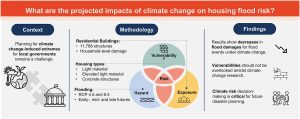
Peer-reviewed publication


