Disasters pose a significant threat to global development and poverty reduction. In developing communities, understanding disaster risk can be challenging in data-scarce environments. This research transformed disaster risk assessments by understanding how climate change will impact localised flood risk and unpack how these assessments can be better incorporated into local planning processes. The project team accomplished this through an in-depth study of two catchment basins located in the Municipality of Carigara (Leyte, Philippines) and the Regency of Singkil (Aceh, Indonesia). Hydrological modelling incorporated downscaled climate change models, in combination with vulnerability assessments, to examine shifting flood risk patterns. Focus groups, key informant interviews, and serious games were used to develop a flood decision tool for local governments to better understand and apply flood climate models. Results informed strategies to improve the resilience of resource-constrained communities.
Project leader
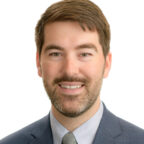

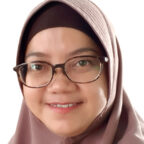

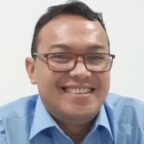
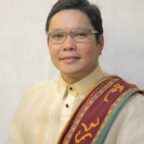
Aaron Opdyke (Project Leader) - The University of Sydney, Australia
"It is important that we co-produce knowledge with communities. There is much more collective demand for disaster risk reduction measures where we can communicate disaster and climate science in a way that is connected to people’s lived realities. In this project, we’ve developed extremely granular assessments of flood risk under change, but we’ve also worked hard to create engaging tools that can help local governments make better decisions that relate to their priorities"
Ella Meilianda (Project Collaborator) - Tsunami and Disaster Mitigation Research Center, Indonesia
“This project advanced understanding of complex systems of flooding. The serious game on flood risk management contributed to a transformative impact, particularly local government officials, by fostering engagement, enhancing understanding, and supporting decision-making. The project enhanced learning across all the stakeholders involved through interactive learning and dialogue. It has transformed traditional training and policy development, making a proactive, engaging, and data-informed contribution to tackle managing complex flood risk challenges"
Alfredo Mahar Francisco A. Lagmay (Project Collaborator) - University of the Philippines, Philippines
"The business of hazard mapping is not only to find out where the hazards are. The business of hazard mapping is to find safe areas for development. So regardless of the multitude of hazards present in the Philippines, with frontline science, we are able to locate evacuation centers and development centers...."
Project publications

The cost of flooding on housing under climate change in the Philippines: Examining projected damage at the local scale

Residential Building Flood Fragility and Vulnerability Curves for the Province of Leyte, Philippines

Project final report: CRRP2021-13MY-Opdyke

Designing serious games to advance climate change adaptation

High-Resolution Elevation Model and Orthomosaic of the Municipality of Carigara, Leyte, Philippines

Uncertain Waters: A Game of Collective Cooperation and Climate Change

Archetypes of local governance for flood risk reduction decision-making under uncertain climate change futures

Application of spatial model the contribution of land subsidence caused by palm oil plantations land clearing to the escalating flood risk in the Trumon Area, South Aceh Regency, Indonesia
