Microplastic pollution in natural waters is a growing concern throughout the world. Rivers transport around 8 million pieces of plastics to our oceans every day. South Asia ranks 2nd globally in plastic pollution and three mighty rivers (Ganges, Brahmaputra, Irrawaddy) transport most of them to the Bay of Bengal. Considering the huge volume of discharges and discards the Brahmaputra River (9th largest river in the world by water discharge) receives and transports to the sea, the proposed CRRP is aimed at investigating transboundary microplastics contaminations in fish and aquatic food chain along the course of this river, trophic transfer of microplastics and ecological consequences derived therefrom. During 1st year, fish, fish’s food, river water & sediment samples from 2 tributaries of the Brahmaputra in Bhutan, 5 locations in India and 3 locations in Bangladesh will be studied. Focus group discussions & key informant interviews will be performed along the corresponding sampling sites of this river to find out the dietary habits of local people, their dietary dependency on riverine fish & implications of these findings to locals’ exposure risks. In the second year, fish & invertebrate species will be exposed in vivo to assess trophic transfer of microplastics in the aquatic food chain & physiological stresses upon exposure.
Project leader

Project collaborators





Prof. Dr A. K. Fazlul Haque Bhuiyan - Vice Chancellor of Bangladesh Agricultural University (BAU)
“This project is time-demanding research for Bangladesh and the region. The results of this project have demonstrated that Bangladesh is most vulnerable to transboundary microplastics pollution due to its position in the downstream part of many rivers including the Brahmaputra River. I am optimistic about the formulation of effective policy recommendations based on the findings of this project. Addressing the concerns raised by the demonstrated facts of this project, I hereby declare that the use of plastic bottles is strictly prohibited inside the Bangladesh Agricultural University campus from now on.”
Dr Probodh Bora - Director of Research at Assam Agricultura University, India
“This APN sponsored project is a very good beginning and it will provide vital support for policy framing which is required to initiate the scientific measures to be adopted to prevent microplastics contamination in future.”
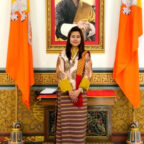
Dr Rekha Chhetri - College of Natural Resources, Royal University of Bhutan, Bhutan
“This study revealed an uncomfortable truth, and the findings are a wakeup call that microplastics are already in the aquatic environment and potentially in our bodies. This paves a path from awareness to action demanding collaboration to protect our pristine environment."
Mrs Jarina (Rural Women, Fish Consumer) - Gaibandha, Bangladesh
“Fish health depends on river health, so this study is required.”
Project publications

Microplastics pollution in water and sediment matrices of the old Brahmaputra River, Bangladesh: An ecological risk appraisal of an urban river

Project final report: CRRP2021-09MY-Rashid

Transboundary Microplastics in the Brahmaputra-Jamuna River: Forging Adaptive Governance for Shared Ecosystem Resilience

Occurrence of microplastics in fish gastrointestinal tracts belongs to different feeding habits from the Bangladesh coast of the Bay of Bengal

Microplastic pollution in surface waters and sediments matrices of the Sundarbans – The largest single block of tidal halophytic mangrove forest in the world

Investigations of hemato-biochemical and histopathological parameters, and growth performance of walking catfish (Clarias batrachus) exposed to PET and LDPE microplastics
Other project outputs
Related content
