Southeast Asian lakes provide several ecosystem services and are an important natural resource for water supplies, industry, agriculture, shipping, fishing, and recreation. It is demonstrated that they are highly vulnerable to anthropogenic and climate threats. Scientific studies clearly demonstrated that climate change has already significantly affected the SEA region and that these impacts will continue and expand as the pace of climate change accelerates. However, a deep understanding of “if” and “how” climate change, as well as the intensification of land uses may exacerbate those impacts on such vulnerable ecosystems across the whole region is lacking.
CCRASEAL will try to detect possible linking between observed alterations to multiple-threats, to understand if, when and where threats overlap and will define and choose metrics that best quantify the effects of multiple threats and their changes under future scenarios of climate and land uses. CCRASEAL will thus design a regional-scale approach for filling existing knowledge gaps and will provide guidance for addressing the urgent management challenges posed by multiple threats in freshwater ecosystems.
Interdisciplinary in nature, the project has a strategic approach and transdisciplinary outlook to guarantee that the linkage between science and policy at the regional level will be strengthened by actively engaging academic and government partners from 5 different countries in the Indo-Burma region.
Project Leader

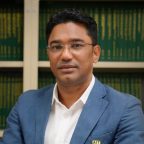

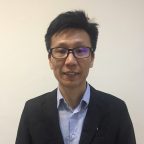


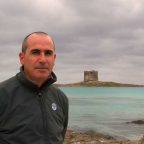
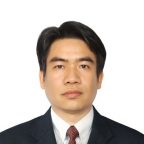
Dr Salvatore G.P. Virdis, Asian Institute of Technology, Thailand
"The CCRASEAL Project demonstrated that coupled land use, land cover, and climate change have negatively impacted Southeast Asian lakes over the past 30 years. Even under optimistic projections, this negative trend is expected to persist, as future scenarios—both optimistic and pessimistic—continue to confirm these patterns."
Siwat Kongwarakom, The University of Western Australia (UWA), Australia
"It has been a true privilege to serve as both project manager and researcher on the CCRASEAL project. As an early-career researcher, this experience has been profoundly transformative. I have actively engaged in every stage of research, from developing research questions to presenting findings and moving toward publication, all with the invaluable support of experts from diverse fields. On the managerial side, the collaborative experience taught me how to work effectively with individuals from various backgrounds, allowing us to address regional-scale challenges and pursue the shared goal of resolving them. These experiences have paved the way for my PhD journey, where I am now conducting research under leading experts to investigate the complex issues facing socio-ecological systems, which pose serious risks to both nature and human well-being if left unaddressed. Toward the end of my work, I had the opportunity to share my insights with students, researchers, and practitioners, and I hope to inspire future generations of problem-solvers to adopt a collaborative approach that strengthens the science-policy-practice interface and fosters adaptive governance for long-term resilience and sustainability."

