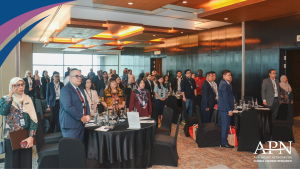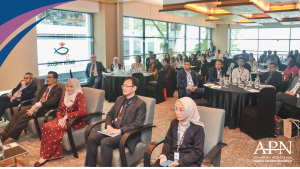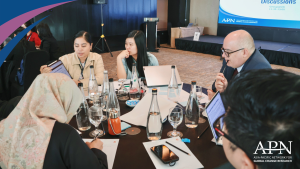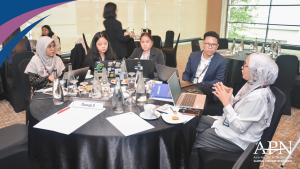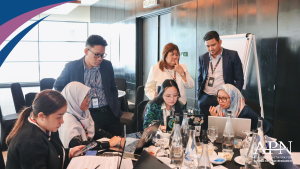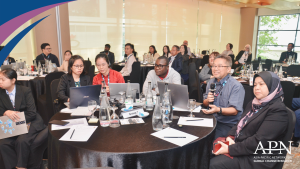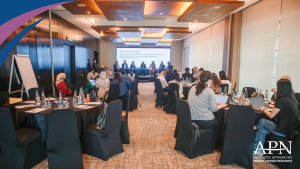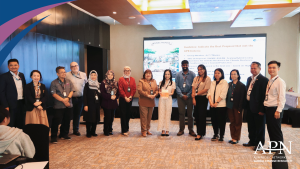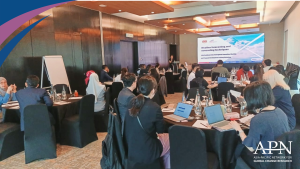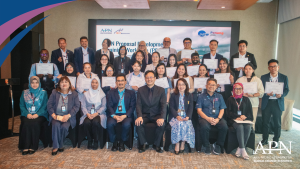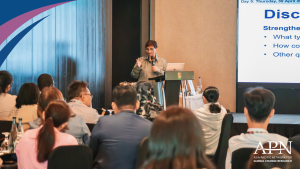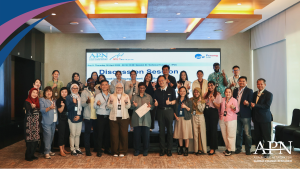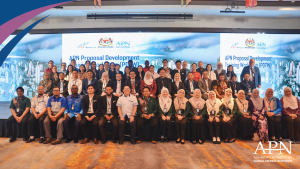
26-30 May 2026, Penang, Malaysia – Held in the UNESCO World Heritage city of Penang, Malaysia, the Malaysian Meteorological Department welcomed and hosted the APN Southeast Asia Proposal Development Training Workshop (2026) at the G Hotel Gurney. This flagship APN event brought together early career professionals and experienced global change researchers and practitioners from across the Southeast Asian subregion for an intensive week of scientific capacity building and collaboration. The workshop, seeking to advance APN’s strategic research interests in the region, focused on climate change, variability and disaster risk reduction (DRR), with alignment to international frameworks such as the Sendai Framework for Disaster Risk Reduction (2015–2030), the UNFCCC Paris Agreement on Climate Change and the Sustainable Development Goals.
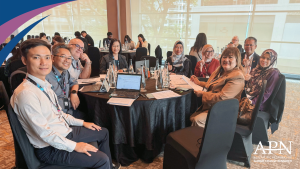
Sixteen early career professionals from the Southeast Asia region (Cambodia, Indonesia, Lao PDR, Malaysia, Philippines, Thailand and Vietnam) participated in the workshop, collaborating in regionally diverse teams under the guidance of twelve regional mentors. The mentoring team comprised of APN National Focal Points (nFPs), Scientific Planning Group (SPG) members and former APN project leaders from the following institutions, offering a wealth of regional environmental expertise.
- Ministry of Environment, Cambodia
- National Research and Innovation Agency (BRIN), Indonesia
- Malaysian Meteorological Department, Malaysia
- Universiti Tenaga Nasional, Malaysia
- Universiti Malaysia Terengganu, Malaysia
- Department of Environment and Natural Resources – Ecosystems Research and Development Bureau, Philippines
- Asian Institute of Technology, Thailand
- Vietnam Academy of Science and Technology, Vietnam
- Vietnamese-German University, Vietnam
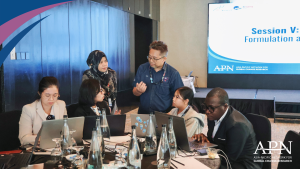
Over the course of the workshop, trainees engaged in hands-on experiences and interactive sessions to engage with critical sub-themes, including the integration of climate information into DRR planning, enhancing early warning systems and community-based monitoring mechanisms, and nature-based and ecosystem-based approaches for risk reduction and adaptation. Trainees identified research gaps in regional change in Southeast Asia, developed compelling research questions, designed budgets and methodologies, and created effective narratives for their proposals. Mock proposal submissions in the APN Information System provided a realistic simulation of a grant application experience, using the APN Call for Proposals as a tangible example.
The workshop culminated in the development of four early career professional-led proposals, each demonstrating a strong commitment to bridging science, policy and community engagement. The summary proposals included:
- EO4RICE: Earth observation for drought risk reduction and rice-based food security in Southeast Asia
- Integrating climate and ecosystem-based information in data-scarce regions for flood risk reduction in Southeast Asia
- SHORE ASEAN: Scaling hybrid living shorelines for climate resilience in Southeast Asia’s coastal protection
- Strengthening community resiliency toward increasing flood risk in Southeast Asia by integrating disaster data, local knowledge for actionable decision-making
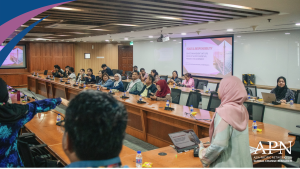
Interactive session: Science-policy dialogue
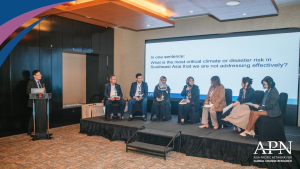
A science-policy dialogue on the SEA PDTW theme, “Climate Change and Disaster Risk Reduction in Southeast Asia”, was held to strengthen engagement among researchers, policymakers and practitioners and enhance the integration of scientific knowledge into climate adaptation and DRR policy processes.
The session brought together nFPs and SPG members of APN from Southeast Asia to reflect on the most pressing climate and disaster risks facing the subregion, including floods, droughts, heat stress and coastal hazards. Panellists exchanged perspectives on why many of these risks remain insufficiently addressed despite growing scientific knowledge and policy attention.
Panellists highlighted that science-policy disconnects often arise because scientific research is not communicated in formats that are accessible, actionable or directly relevant to policymakers and local practitioners. They emphasised that policymakers require clear and simplified outputs, such as decision-support tools, baseline data and policy-relevant recommendations, rather than complex datasets or abstract analyses. They also noted the importance of aligning scientific outputs with decision making processes, policymaking timelines, feasibility, cost considerations and practical implementation pathways.
The discussion continued to explore why climate information, including forecasts and projections, remains underused in DRR planning. Key challenges mentioned include technical complexity, uncertainty in interpretation, limited local applicability, insufficient trust in the data and lack of actionable guidance. Panellists also pointed to fragmented governance hindering the effective integration of climate information into policies and plans. Additionally, they underscored the importance of codesigning research through stronger collaboration among researchers, governments, practitioners and local communities.
The session concluded by emphasising the need for more inclusive, context-specific and community-responsive approaches to climate adaptation and DRR, while reinforcing the value of long-term partnerships and locally relevant knowledge in strengthening climate resilience across the region.
Interactive session: Mentor wisdom swap game
An interactive session called the “Mentor Wisdom Swap Game” was held on Day 3 of the SEA PDTW. The game was designed to create a dynamic exchange between mentors and trainees, focusing on climate change variability and disaster risk reduction. The objective was to move beyond theory by engaging trainees in real-world problem solving and encouraging them to translate knowledge into practical and actionable solutions.
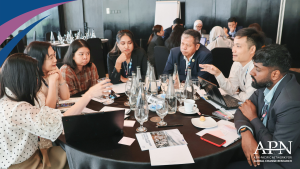
During the session, four mentors presented short case studies based on their professional experiences, covering issues such as changing flood regimes in the Mekong River Basin, limited disaster awareness and preparedness, sedimentation linked to land-use change and the combined impacts of climate and land-use change on ecosystems and livelihoods. Trainee groups were tasked with selecting one case study to discuss and pitch practical, solution-oriented interventions that integrated technical, social and policy perspectives. The trainees were given a limited timeframe for discussion, simulating real-world policy and decision making settings.
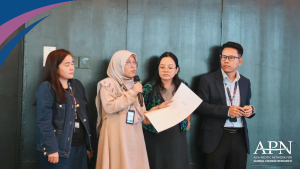
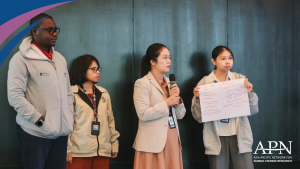
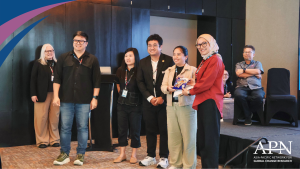
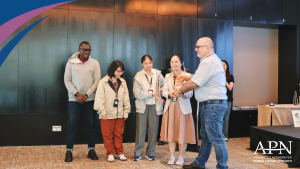
During the pitching phase, groups presented their proposed solutions within a short allocated time. Each group was recognised for its distinct strengths. One group stood out for its clear, structured communication and its strong community-based approach to promoting disaster awareness through education and practical tools. Another group was commended for its integrated technical and policy-oriented solution addressing agricultural and water management challenges through sustainable governance practices. A third group was recognised for its holistic “human-nature-technology” framework, which effectively combined systems thinking with both top-down and bottom-up approaches. Additionally, one group was acknowledged for its strong problem identification and logical solution framing, demonstrating a solid scientific basis in its proposal.
Overall, mentors praised the creativity and relevance of the proposals while emphasising the importance of presenting clear, concise and actionable messages grounded in local realities. Their feedback further highlighted the need to simplify complex ideas and communicate them in ways that resonate with diverse audiences.
The session culminated in reinforcing the importance of codesign, interdisciplinary thinking and effective communication in addressing complex climate and disaster challenges. This activity provided trainees with a valuable opportunity to practice critical thinking and articulate actionable solutions under pressure.
Expert-led training sessions at the PDTW
- Weather forecasting and nowcasting (Mr Maqrun Fadzli B. Mohd Fahmi, Malaysian Meteorological Department)
A technical training session on weather forecasting and nowcasting was delivered by Mr Maqrun Fadzli B. Mohd Fahmi, Senior Director of the National Weather & Geophysics Operation Centre at the Malaysian Meteorological Department. Tailored to participants from both meteorological and broader multidisciplinary backgrounds, the session introduced how weather forecasting and nowcasting can support timely decision making and help reduce weather-related risks.
Drawing on his extensive experience in meteorology and national weather operations, Mr Maqrun shared practical insights and real-world examples throughout the session. He discussed weather prediction methods, short-term forecasting techniques and the application of radar, satellite imagery and observational data in monitoring weather conditions. The session also spotlighted practical applications in severe weather monitoring, aviation safety and urban flood management, while addressing current challenges and future developments in weather prediction systems.
- IPCC 7th assessment cycle and early career engagement (Prof. Joy Pereira, Universiti Kebangsaan Malaysia)
The training session, delivered by Prof. Joy Jacqueline Pereira from Universiti Kebangsaan Malaysia, provided participants with an engaging overview of the Intergovernmental Panel on Climate Change (IPCC) and its seventh assessment cycle (AR7), as well as ways for early career researchers to engage with the IPCC. The first segment introduced the role, structure and evolution of the IPCC, followed by an overview of the Working Group outlines for the AR7. Prof. Joy reinforced the growing importance of regional research and scientific contributions in shaping global climate assessments such as those undertaken by the IPCC. She highlighted several research areas, including climate science, mitigation pathways and carbon dioxide removal, where scientific research and empirical regional evidence remain limited, presenting valuable opportunities for PDTW trainees to contribute.
The second segment focused on how the participants can engage with the IPCC process, particularly through expert reviews. The participants learned how to become expert reviewers, provide constructive feedback and contribute to strengthening the credibility, transparency and inclusivity of IPCC reports. They also gained an understanding of the IPCC’s calibrated uncertainty and confidence language, which is used to assess and communicate scientific findings in their reports. Through practical examples and interactive discussions, the training encouraged participants to actively contribute their expertise and regional insights to future IPCC assessment processes.
Linkages with the Asia-Pacific Network of Early Career Professionals for Global Change Research (APN-ECAP)
As a component of the Southeast Asia PDTW, the APN Secretariat introduced participants to the Asia-Pacific Network of Early Career Professionals for Global Change Research (APN-ECAP) initiative, designed to foster collaboration among the next generation of global change researchers across the region. The APN Secretariat provided an overview of APN-ECAP’s initiative ambitions and encouraged trainees to join its growing community through LinkedIn and other early career engagement opportunities.
To better understand the priorities of early career professionals in Southeast Asia, a Mentimeter survey was conducted in the closing session of the PDTW. Participants expressed strong interest in receiving further information on regional/global grant sources, open-access research and publications, and regional networking and grant development opportunities. Many also highlighted their existing connections with networks such as the IOC, UNESCO, the ASEAN Working Group on Chemicals and Wastes, Mekong CREATE, and others, underscoring the value of cross-network collaboration in advancing their careers and research impact.
Field visit to the Penang State Disaster Control Centre
To conclude the PDTW, the Malaysian Meteorological Department (METMalaysia) led a field visit for all participants to the Penang State Disaster Control Centre. The visit provided participants with valuable insights into Penang’s disaster risk profile, state-level disaster response mechanisms and the coordinated administrative functions of agencies working collaboratively to strengthen preparedness, operational readiness and emergency response capacities in managing disaster situations.
Participants also learned from a range of practical experiences and case studies shared during the visit, including the ASEAN commemorative activities in Penang marking the 20th anniversary of the Indian Ocean tsunami disaster. These discussions highlighted regional efforts to honour affected communities while reinforcing the importance of cross-border cooperation, disaster preparedness and resilience-building across Southeast Asia.
Way forward
The Southeast Asia PDTW held in Penang, Malaysia, marked an important step in strengthening regional cooperation and expanding professional networks through APN. The workshop created a dynamic and collaborative platform for early career professionals to refine their proposal development skills, foster meaningful cross-regional partnerships, and deepen their understanding of approaches to addressing sustainability challenges across the region. In anticipation of the 2026 Call for Proposals, which will open in November, trainees were strongly encouraged to continue working with their internationally diverse teams to develop and submit collaborative research proposals in the months ahead.
Prior to the formal closing of the Southeast Asia PDTW, a Mentimeter survey was conducted to evaluate the overall experience of the participants and gather their feedback on the workshop’s content, delivery and outcomes. The survey results indicated that the workshop successfully strengthened participants’ proposal development skills, their understanding of the APN proposal process and their recognition of the importance of the science-policy interface, while fostering valuable networking and collaboration opportunities. Participants also suggested key areas for improvement to further strengthen future PDTW workshops, including extending the workshop duration, adding more technical training on climate change and related topics, sharing examples of successful APN-funded proposals and providing pre- and post-workshop support to help early career researchers develop competitive and policy-relevant proposals.
The APN Secretariat expresses its heartfelt appreciation to the Malaysian Meteorological Department and the dedicated onsite organising team for their invaluable support and warm hospitality in hosting the PDTW in Penang. Their efforts provided an excellent environment for productive exchange, collaboration and learning, contributing greatly to the advancement of APN’s mission of promoting global change research, sustainable development and strengthened regional cooperation.
Quotes from keynote speakers
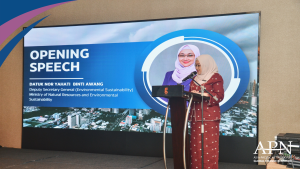
“[Malaysia’s Fourth National Communication (NC4)] highlights that Malaysia has experienced a consistent increase in surface temperature of approximately 0.13 degrees Celsius to 0.24 degrees Celsius per decade over the past 50 years, alongside surveyed changes in rainfall patterns and rising sea levels. These findings underscore the importance of strengthening scientific research and regional collaboration in generating reliable data … and to better understand localised climate impacts, especially for us here in the Southeast Asia region.”
- Opening remarks from the Honourable Datuk Nor Yahati Binti Awang, Deputy Secretary General (Environmental Sustainability), Ministry of Natural Resources and Environmental Sustainability, Malaysia
“Through collaboration with regional and international partners, including organisations such as APN, we continue to contribute toward advancing climate research and strengthening preparedness against climate-related risks.”
- Welcoming remarks from the Honourable Dr Mohd Hisham bin Mohd Anip, Director General, Malaysian Meteorological Department, Malaysia
“This workshop is not only about technical learning. It is about collaboration, confidence-building and transformation. APN is committed to supporting early career professionals in becoming regional leaders who can design strong, policy-relevant proposals, work across borders and contribute to solutions that matter to their communities.”
- Keynote remarks by Mr Toshiyuki Yamasaki, Director of the APN Secretariat
“The [Southeast Asia] Subregional Committee expects, through this training workshop, that all participants can develop foundational skills in identifying research skills, designing methodologies and granting strong proposals. After discussions and coming up with the draft proposals, we encourage the groups to submit the proposal to the APN 2026 Call for Proposals launching in November this year to be funded in next year, 2027.”
- Keynote remarks by Prof. Erna Sri Adiningsih, Chairperson of the APN Southeast Asia Subregional Committee and Executive Director of the Indonesian Space Agency Secretariat (INASA), Indonesia
Testimonials
“[The Southeast Asia PDTW] is not just about learning how to complete the application form. It was about rethinking what it means to design research that is collaborative, regionally relevant and capable of making a difference, particularly in the face of climate change and disaster risk.
- PDTW trainee, Cambodia Development Resource Institute, Cambodia.
“[The most valuable part of the PDTW] was the opportunity to draft research proposal ideas live with mentors. The mentors shared not only their practical experience in developing proposals, but also their insights as reviewers. This enabled me to understand the proposal process from both perspectives. The experience was valuable because we didn’t just learn about the technical aspects of proposal writing, but also gained a deeper understanding of what reviewers look for, how they assess proposals, and what makes a proposal coherent and convincing.”
- PDTW Trainee, WRI Indonesia and Independent Social Research Foundation (ISRF), Indonesia.
“Engaging directly with other early-career professionals from different countries allowed me to see that while our local contexts vary, our climate adaptation and data governance challenges are deeply shared. Having the space to co-create team-based proposal reviews and receive rigorous, constructive feedback from seasoned mentors demystified the international funding process and gave me the confidence to champion regionally-scoped research initiatives.”
- PDTW Trainee, Ministry of Environment, Cambodia.
“The connections we made here this week will travel further than any proposal we wrote. And as we look ahead to the APN Call for Proposals opening in November, we sincerely hope that all of our proposals will be selected, so that the work that we started here in Penang can grow into something meaningful for our regions.”
- PDTW Trainee, Universiti Malaysia Terengganu, Malaysia.
Photo gallery