Wetlands in Asia are vital ecosystems, providing essential ecosystem services and serving as key habitats for migratory waterbirds along the East Asian-Australasian Flyway (EAAF). However, 70% of global wetlands have been lost since 1900, with 45% of these in Asia. Habitat loss, degradation, invasive species, illegal hunting, pollution, and climate change are driving over 60% of waterbird species into decline, making Asia the most threatened region for migratory birds. Effective wetland management is crucial for conserving biodiversity and maintaining ecosystem health.
This project addresses these challenges by building the capacity of site managers, equipping them with science-based management skills, Nature-based Solutions, traditional knowledge, CEPA (Communication, Education, Participation, and Awareness), and emerging technologies like the Internet of Things (IoT) to promote adaptive management. Well-managed wetlands contribute to global frameworks such as the Ramsar Convention, Kunming-Montreal Global Biodiversity Framework (GBF), and Sustainable Development Goals (SDGs). Recognising the ecological connectivity of wetlands through migratory birds, the project aims to strengthen the networks of wetland managers, fostering knowledge exchange and promoting regional cooperation to enhance the protection of critical wetland habitats on the flyway.
Project Leader

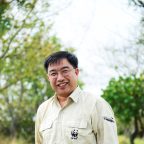









Vivian Fu, Wetlands for Asian Flyways Initiative Lead, WWF-Hong Kong
"We are excited to partner with leading organisations to enhance flyway conservation. Using Mai Po Nature Reserve as a living classroom, we share our successes and lessons learned with over 40 years of wetland management experience in collaboration with different stakeholders. As part of the flyway, we strive to connect sites, strengthen partnerships, and contribute to a more cohesive and resilient flyway network."
Jennifer George, Chief Executive, East Asian–Australasian Flyway Partnership
"Wetlands are not connected by themselves. Migratory birds connect them. And people keep that connection strong through care and good management. When a shorebird leaves Mai Po and later arrives in Sibugay, Korea, or Cambodia, it creates a living bridge between those wetlands. And when you sit together this week, you become the human bridge that protects that living bridge."
Anonymous participant (obtained from post-workshop questionnaire)
"The training course provided me with valuable insights into practical wetland management, particularly how habitat management, monitoring, and community engagement can be integrated effectively. The structure of the presenter's lectures and the field trip also helped me understand everything better and more comprehensively. I am also impressed with the use of technology-based monitoring systems and how they can support conservation outcomes. Lastly, the exchanges with participants from different countries working on similar conservation challenges were very useful."
Project publications

Related content
A Compass for Future Earth — PAGES 2nd Young Scientists Meeting and 4th Open Science Meeting
