29–30 September 2025, Bangkok, Thailand — The Asia-Pacific Network for Global Change Research (APN) and the Institute for Global Environmental Strategies (IGES) jointly organised a Regional Workshop on Locally Led Adaptation (LLA) as part of the deep-dive sessions of the 9th Asia-Pacific Adaptation Network (APAN) Forum at the United Nations Conference Center (UNCC) in Bangkok, Thailand.
The workshop served as a synthesis event for the APN project “Regional partnership for localisation of NDCs through community-led local adaptation innovation hubs (AOA2022-01MY-Shivakoti)” under the leadership of Dr Binaya Raj Shivakoti from IGES. Implemented through Model Case Sites in Fiji, Nepal and Vietnam, the project demonstrates how indigenous, traditional, and local knowledge systems can inform adaptation that is inclusive, grounded and scalable.
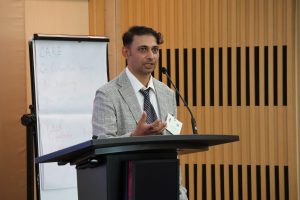
The workshop opened with welcoming remarks from Dr Linda Anne Stevenson, Programme Director of APN, and Mr Osamu Mizuno, Programme Director for Climate Change of IGES. Dr Stevenson emphasised that the workshop marked the culmination of years of collaborative work in advancing locally led adaptation through model case sites.
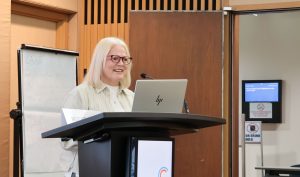
On the second day, Mr Toshiyuki Yamasaki, Director of APN, reflected on the importance of partnerships and regional collaboration in scaling up locally led approaches. He encouraged participants to share lessons and constructive feedback on how the implementation of locally led adaptation can be accelerated and expanded in the Asia-Pacific region.

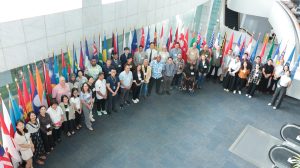
The two-day event gathered 34 participants on Day 1 and 51 participants on Day 2, representing research institutions, government agencies and regional organisations.
Showcasing local innovation and knowledge
The collaborators of the project presented the three model case sites and shared on-the-ground experiences and key lessons in advancing community-led adaptation:
- Fiji Case: Mr Albert Jerry Whippy, Dr Patrick Nunn and Dr Roselyn Kumar Nunn, University of the Sunshine Coast, Australia
- Nepal Case: Dr Chi Huyen (Shachi) Truong, Himalayan University Consortium Secretariat, ICIMOD
- Vietnam Case: Prof. Ho Ngoc Son, Thai Nguyen University of Agriculture and Forestry, Vietnam
Experiences from Nepal demonstrate the power of traditional agricultural and housing practices. Farmers use mud silos to preserve grain for more than a decade, potato storage systems that avoid dependence on costly cold chains, and mud houses that provide natural thermal regulation. These approaches are low-cost, sustainable and culturally embedded, offering models for climate-smart agriculture and housing.
In Vietnam, communities have created herbal medicine enterprises that link adaptation with cultural preservation and livelihood generation. These initiatives conserve biodiversity while providing income and strengthening local identity. The multidimensional nature of adaptation has been highlighted, which extends beyond technical measures to social and cultural resilience.
Fiji provides another compelling example. Communities continue to use ecological indicators, such as tree flowering or bee activity, to forecast weather events and plan for agriculture and fishing. These practices enable communities to manage uncertainty in the face of shifting climate patterns, demonstrating the enduring relevance of traditional ecological knowledge.

Developing a blueprint for action
Workshop discussions emphasised that adaptation is most effective when led by those living with climate risks. Participants worked toward shaping a blueprint for LLA, a guiding framework that is structured yet flexible, capable of connecting local realities to regional and global systems.
The blueprint aims to integrate local and scientific knowledge, promote inclusive participation, ensure access to finance, and embed equity and cultural values at the centre of adaptation. It also envisions cross-learning mechanisms to link communities and foster innovation across the Asia-Pacific region.
From local practice to regional policy
The exchanges highlighted that locally led adaptation is both a practical and transformative approach, connecting local action with national policy and regional collaboration. Participants recognised that scaling these efforts requires systematic documentation, shared learning and institutional support to ensure that community-led innovation informs broader development and adaptation strategies.
The discussions also underscored the importance of inclusive financing that directly reaches communities. This includes developing simplified funding pathways, supporting indigenous-led financing models, and forming partnerships with intermediary organisations that can channel resources more effectively to local actors.
Strengthening knowledge-sharing mechanisms was identified as a key priority. Platforms such as AP-PLAT and APAN were recognised for their role in promoting cross-country learning and building bridges between community initiatives, scientific knowledge, and policy frameworks.
Finally, participants emphasised that equity and inclusion, particularly the participation of women, youth and indigenous peoples, are essential to ensure that locally led adaptation is sustainable and just. Their leadership and perspectives are vital for designing adaptation strategies that reflect diverse community priorities and values.
To achieve meaningful impact, participants underscored the need to:
- empower local actors to lead and define adaptation priorities,
- reform financing mechanisms to make funds more accessible to communities,
- institutionalise LLA within policies, curricula and development plans and
- strengthen regional platforms like AP-PLAT and APAN to connect local practices with policy action.
By synthesising local innovation, scientific knowledge and regional collaboration, the workshop set the foundation for a blueprint for LLA that can guide future actions toward transformative and just climate resilience in the Asia-Pacific region.