8-14 November 2025, Yokohama, Japan — The Asia-Pacific Network for Global Change Research (APN) participated in the 2025 Annual Meeting of the North Pacific Marine Science Organization (PICES), contributing to regional efforts to strengthen inclusive and co-designed approaches to ocean science. APN co-organised a workshop on engaging local and traditional knowledge holders, and participated in three PICES meetings during the Annual Meeting. The engagement of APN in this event builds on the APN–PICES Collaborative Framework for Scientific Cooperation, signed in 2023, which enhances joint research, capacity development and cross-regional collaboration.
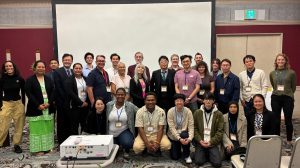
Workshop highlights
The workshop explored the vital yet often underrepresented role of local and traditional knowledge in shaping ocean science and policy in Pacific Small Island Developing States (SIDS). Participants examined the opportunities and challenges of co-designing research that brings together scientific, community-based and Indigenous perspectives, and discussed how lived experiences and cultural heritage can strengthen climate resilience and sustainable ocean governance.
Mr Toshiyuki Yamasaki, Director of the APN Secretariat, delivered opening remarks highlighting the importance of inclusive collaboration. Ms Rieko Tamura, Chief Programme Officer, introduced APN’s mission and strategic direction, and presented two APN projects on ocean science: research on ocean acidification and marine tourism (CRRP2019-05MY-Benkendorff), and a regional initiative on blue carbon ecosystem management (CBA2020-05SY-Kohsaka). These examples demonstrated how APN projects contribute to community-engaged research across the region.
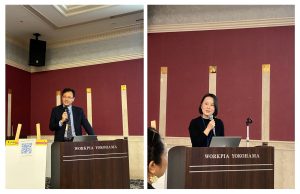
Eight speakers from the Marshall Islands, Solomon Islands, Fiji, Samoa, Japan and Canada shared examples of co-designed and community-led initiatives, including work on submarine groundwater discharge, community-based fisheries management, ecotourism, climate impacts and nature-based solutions, community governance, maritime heritage, ocean monitoring and data sovereignty. Speakers noted that co-design requires trust, time and sustained dialogue across sectors and knowledge systems. They also emphasised the importance of recognising local academics, non-governmental organisations (NGOs), community leaders and early career professionals as equal partners whose contextual knowledge is essential for effective research and action.
To gather insights into the experiences of participants with co-design, the workshop included an online survey followed by structured breakout discussions. Survey responses showed that most respondents were familiar with co-design principles, and emphasised the importance of engaging local and traditional knowledge holders in ocean science. Respondents also highlighted that Indigenous and traditional knowledge should be recognised as a parallel and equally valid knowledge system to scientific knowledge.
In the breakout discussions, participants identified recurring challenges, including limited time and human resources, competing priorities, limited funding and institutional support, communication and language barriers and power dynamics. Suggested actions included strengthening governance structures and youth engagement at the community level, and improving communication practices and joint proposal development for researchers. Participants also recommended increased support for bilingual facilitators and the development of policies recognising Indigenous and traditional knowledge at the government level. NGOs and the private sector were identified as potential conveners that can help build capacity and bridge communication gaps.
The workshop brought together diverse experiences and perspectives to deepen understanding of what co-design means in practice for Pacific SIDS. Presentations and discussions illustrated how grounding ocean science in local knowledge and lived experience can enrich research and decision-making, while the survey and breakout sessions shed light on the practical conditions that support or hinder this work. Collectively, these insights offer a clearer foundation for strengthening co-designed approaches to ocean science across the region.
APN engagement across the Annual Meeting
The engagement of APN continued across the PICES Annual Meeting. Mr Yamasaki attended the AP-UNDOS Business Meeting, the Science Board Meeting and the Governing Council Meeting, where he introduced key areas of APN’s work that intersect with the priorities of PICES. He highlighted the long-standing support of APN for regional research on oceans, climate and ecosystems, its contributions to global processes, such as the IPCC, and its alignment with the UN Decade of Ocean Science. He also noted ongoing collaboration under the APN–PICES framework, highlighting joint activities such as PICES-supported participation of early career professionals in APN’s Proposal Development Training Workshops in Fiji and the Republic of Korea, and APN’s contribution to the PICES-2025 workshop described above.
Looking ahead
The workshop convenors proposed holding an interactive workshop at the 2026 PICES Annual Meeting in Nanaimo, Canada, building on the discussions initiated in Yokohama. They are also considering a collaborative publication with invited speakers to consolidate the insights shared during the workshop.
APN will continue to engage with PICES, supporting opportunities for co-designed research, knowledge exchange and capacity development that contribute to inclusive ocean science across the region.