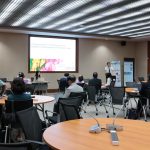
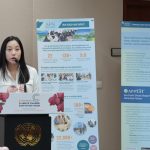
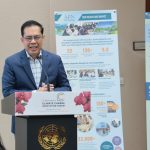
30 September 2025, Bangkok, Thailand — The Asia-Pacific Network for Global Change Research (APN) convened a closed pre-session as part of the 9th Asia-Pacific Climate Change Adaptation Forum to strengthen regional partnerships and explore how co-financing and joint action can amplify the impact of adaptation across the Asia-Pacific region.
Background
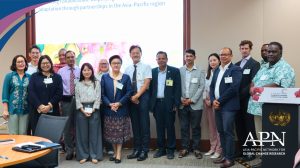
The pre-session, titled “Unlocking collaboration: Amplifying the impact of adaptation through partnerships in the Asia-Pacific region”, took place at the United Nations Conference Centre in Bangkok, Thailand. It brought together representatives from governments, international organisations, development agencies and research institutions to exchange insights on practical approaches that build partnerships, mobilise resources and translate scientific knowledge into investable, locally relevant adaptation actions.
Session highlights
APN opened the session by outlining its strategic priorities and partnership-driven approach that connects research, policy and practice. Four regional partners shared practical examples of collaborative mechanisms supporting climate adaptation:
- The Asian Development Bank presented regional co-financing models and partnership mechanisms designed to scale up adaptation investments and improve access to finance.
- The International Union for Conservation of Nature highlighted the importance of aligning policy and finance across environmental agendas, showing how integrating climate, biodiversity and other sustainability objectives can lead to more coherent and effective outcomes.
- The Manipal Academy of Higher Education discussed innovative financing and cross-border cooperation for disaster risk reduction, emphasising regional mechanisms that transform pilot initiatives into lasting partnerships.
- The Pacific Climate Change Centre showcased partnership-based approaches to climate innovation, knowledge exchange and capacity development that strengthen the adaptive capacity of Pacific Island countries.
The roundtable discussion explored how partnerships can better integrate climate adaptation and development and what principles underpin their long-term success. Participants agreed that strong partnerships unlock resources, reduce duplication and promote coordinated regional action. The discussion stressed that adaptation and development must progress together, built on shared ownership, complementarity and trust. Participants observed that diverse actors contribute unique strengths, from research and policy to implementation, and that durable cooperation requires mutual value, ongoing engagement and flexibility to evolve over time. They also highlighted that financial innovation, policy alignment and knowledge exchange can accelerate the shift from research to implementation, while consistent commitment beyond project cycles is essential to sustain progress.
Key messages
APN reaffirmed its role as a bridge between science, policy and practice. It committed to working with regional partners to co-develop proposals and initiatives that address shared adaptation priorities. The session concluded with a collective recognition that sustained cooperation and partnership, grounded in trust, complementarity and long-term engagement, are essential to achieving resilience and sustainable development in the Asia-Pacific region.
Gallery