Simulated combustion experiments have identified polycyclic aromatic hydrocarbons (PAHs) and metal oxides as critical species in the formation of environmental persistent free radicals (EPFRs). However, little evidence exists regarding the interactions among PAHs, metals, and EPFRs in the real atmosphere. In this study, we collected PM2.5 samples in downtown Ulaanbaatar in four seasons from 2020 to 2021, and analyzed the seasonal variations of 16 PAHs, 14 heavy metals and EPFRs in PM2.5. The health risks of PM2.5 were determined by calculating the incremental lifetime cancer risks of PAHs and heavy metals and equivalent cigarette numbers of EPFRs. According to the source apportionment results of the Positive Matrix Factorization (PMF) model, coal and biomass combustion, vehicular emission, and fugitive dust were identified as the dominant sources of PAHs, EPFRs, and heavy metals, respectively. The intercorrelations of EPFRs with PAHs and heavy metals from different sources revealed the important roles of most PAHs and some specific metals such as Zn, Pb, Sb, Sn, Tl in the formation of EPFRs. The dominant contribution of vehicular emission to EPFR pollution in PM2.5 could be largely attributed to the co-emissions of PAHs and specific heavy metals in vehicular emission.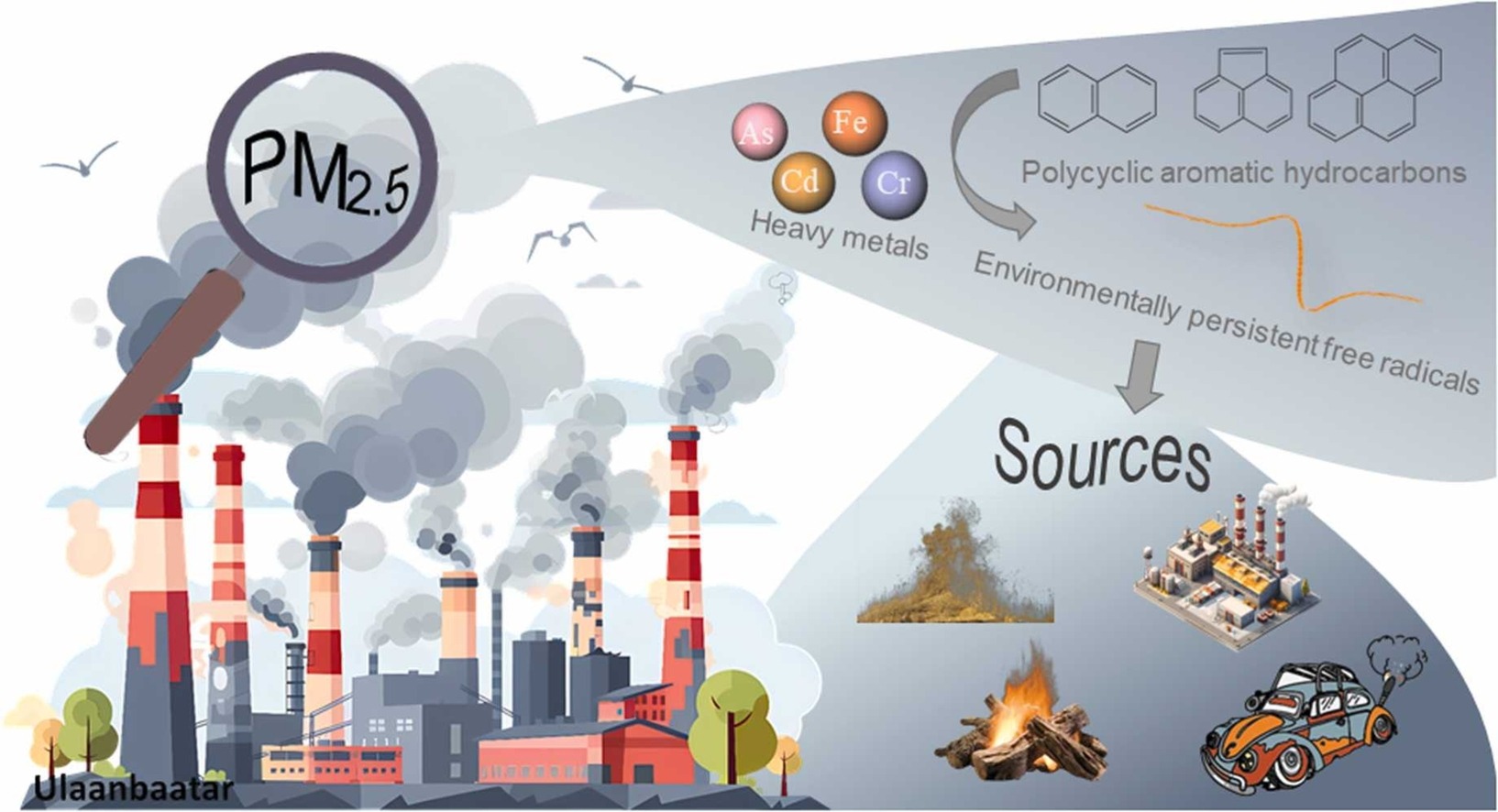
Related content

International Symposium on Satoyama Highlights Ecosystem Values and Traditional Knowledge and Practices

Ocean acidification and implications of the COVID-19 pandemic for the SCUBA diving industry in four regions in Asia-Pacific
