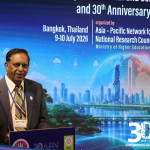
9 July 2026, Bangkok, Thailand — Marking its 30th anniversary in 2026, the Asia-Pacific Network for Global Change Research (APN) organised a commemorative session during the 27th Joint Intergovernmental Meeting and Scientific Planning Group Meeting. The session reflected on three decades of cooperation across the region to advance research, strengthen scientific capacity and connect science with policy.
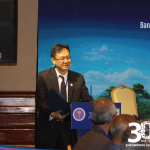
Opening the session, the Steering Committee Chair, Dr Douglas Hill, highlighted the unique interface that APN provides between researchers, government officials and other stakeholders. He emphasised that their commitment sustains the network, while real-time feedback on country needs shapes relevant research and capacity development.
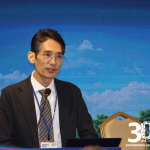
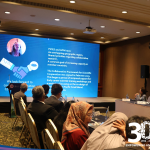
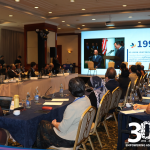
A historical video traced the origins of APN in the 1990s and its development to the present. Building on this overview, Mr Yukihiro Haisa, representing the Ministry of the Environment, Japan, a longstanding donor to APN, described APN as a trusted platform for decision making based on scientific knowledge and emphasised its welcoming atmosphere that enables honest discussions across the diverse region.
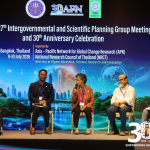
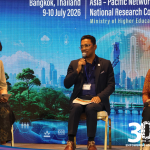
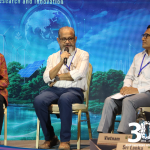
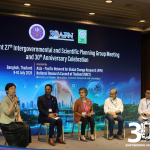
At the heart of the celebration was a dialogue moderated by Prof Ailikun, an invited expert to the Scientific Planning Group. The panellists were Prof Sangam Shrestha and Prof Joyashree Roy of the Asian Institute of Technology (AIT), Dr Dhiraj Pradhananga of Tribhuvan University, Nepal and Dr Dipayan Dey of the South Asian Forum for Environment, India. They reflected on how APN shaped their careers, research approaches and regional partnerships.
Prof Shrestha illustrated this by recalling an earlier APN project he led, highlighting the lasting value of co-designing research with intended users, developing project management skills and creating a regional network that supported subsequent work, including a synthesis project he later led that produced articles cited in the IPCC Sixth Assessment Report. Prof Roy recalled how integrating economics with climate science and hydrology prepared her for multidisciplinary work within the IPCC and strengthened her ability to translate field evidence into policy recommendations. Dr Pradhananga described the 2008 proposal development training workshop as a turning point that helped him secure later projects, while subsequent APN research opened leadership opportunities in global networks, including a UN working group on cryospheric sciences. Dr Dey explained how the first APN project led by his organisation established its research credibility and demonstrated that civil society organisations could combine scientific research with community action.
Across their reflections, the panellists showed that research leads to action through rigorous evidence, collaboration across disciplines and countries, meaningful participation and communication that addresses the priorities of policymakers and communities. Drawing on these experiences, Prof Ailikun emphasised that APN is more than a funding agency. By supporting projects that emphasise such collaboration, APN also contributes to the formation of a community of scientists who work together and support one another.
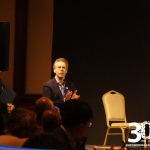
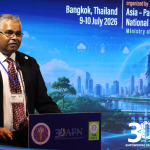
The session also included celebratory messages from AIT, the University of the South Pacific and the North Pacific Marine Science Organization. Collectively, their messages highlighted continued partnership and knowledge exchange, support for the next generation and innovative solutions to shared regional challenges. To close, Mr Subramaniam Moten, the longest serving member of APN, brought its history to life through reflections on his journey with the network from 1992 to the present.
The celebration honoured the people and partnerships that have shaped APN and reaffirmed their importance in advancing a just, resilient and sustainable Asia Pacific.

Related content

Promoting adoption of circular economy in agriculture for sustainable development in northern mountainous region of Vietnam
