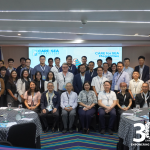
28–30 July 2026, Manila, Philippines – Researchers, climate scientists, urban planners and stakeholders from across Southeast Asia gathered in Manila, Philippines, from 28 to 30 July 2026 for the Final Workshop of the CARE for SEA Megacities project. Hosted by the Manila Observatory, the workshop marked the culmination of a multi-year regional collaboration to improve understanding of climate hazards affecting Southeast Asian megacities and to strengthen climate resilience through science-based decision-making. The three-day programme brought together project partners and stakeholders from across the region to present research findings, exchange knowledge and identify pathways for applying climate information to urban planning and policy.
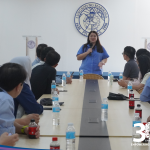
The workshop was opened by Fr Jose Ramon T. Villarin SJ, Executive Director of the Manila Observatory, followed by opening remarks from Dr Faye Abigail Cruz, who reflected on the achievements of the CARE for SEA Megacities project and its close collaboration with CORDEX-SEA. APN Programme Director Linda Anne Stevenson delivered the keynote presentation, highlighting the importance of regional scientific collaboration in strengthening resilience to climate extremes and emphasising the role of sustained investment in collaborative research and scientific capacity development to support evidence-based adaptation across Southeast Asia.
The first day focused on recent advances in regional climate modelling and urban climate research, including updates on CORDEX-SEA CMIP6 downscaling activities, national climate scenarios and studies examining urban heat islands, extreme heat and precipitation across major cities, including Metro Manila, Greater Jakarta, Bangkok, Ho Chi Minh City, Hanoi and Greater Kuala Lumpur. Participants also presented the key scientific findings of the CARE for SEA Megacities project, highlighting projected changes in extreme heat and rainfall under future climate scenarios and their implications for rapidly growing urban centres.
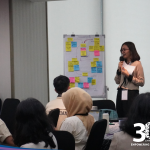
On the second day, attention shifted from research to application through stakeholder-focused workshops on the CARE for SEA data portal and the use of climate storylines to communicate climate risks. Participants explored approaches for making regional climate information more accessible and relevant to decision-makers, while collaborative exercises demonstrated how climate storylines can support local planning by translating scientific projections into plausible future scenarios.
The final day featured an interactive workshop on designing climate-resilient cities. Through a structured future visioning process, participants worked collaboratively to develop resilient urban futures, identify priority actions and refine ideas through group discussions and feedback. The workshop concluded with closing remarks from Dr Faye Abigail Cruz, after which project collaborators met to discuss future coordination and opportunities to build on the project’s achievements.
Supported by the Asia-Pacific Network for Global Change Research (APN) and a broad consortium of regional and international partners, the CARE for SEA Megacities project has strengthened regional collaboration in climate science and advanced knowledge of climate hazards affecting Southeast Asia’s rapidly expanding cities. The workshop demonstrated the value of integrating high-resolution climate modelling, stakeholder engagement and regional partnerships to support informed urban planning and climate-resilient development across the region.
Related content

Mitigating carbon emissions and haze in Southeast Asia’s peatlands: Opportunities and challenges in integrating policy and governance