
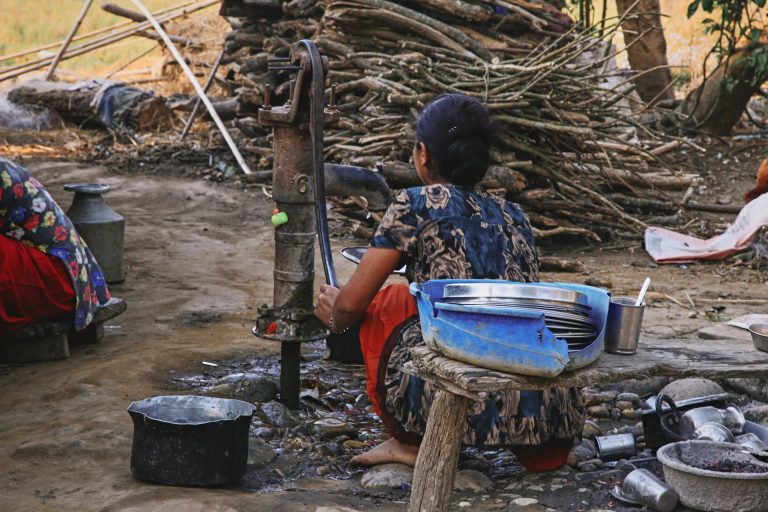
Understanding water security in a peri-urban region: A study from two South Asian countries
Keywords
CONFLICT · COPING AND ADAPTATION STRATEGIES · INSTITUTION AND GOVERNANCE · WATER METER · WATER USER ASSOCIATION · WATER USER COMMITTEE
HIGHLIGHTS
- Water scarcity is a driver of conflict in peri-urban regions.
- Contextual factors govern coping and adaptation strategies in peri-urban communities.
- Community-based Organisations and water institutions are vital for sustainable water resources management.
- The Problem and Solution Tree tool helps explore water security issues in peri-urban regions.
1. INTRODUCTION
Water security is a concept that entails ensuring the availability of sufficient, safe, and reliable water resources to meet various needs while simultaneously managing potential risks from pollution and natural disasters, and preserving the ecosystem (Grey & Sadoff, 2007; UN-Water, 2013). Water security problems are often systemic and governed by many factors, including hydrology, socioeconomic conditions such as sociopolitics, water infrastructure, economy, and culture (Sen et al., 2018), climate change (Bakker & Morinville, 2013), and complex interactions between these factors (Sen et al., 2018). According to projections, global water demand is expected to rise by 20% to 30% across various sectors by 2050, with agriculture currently accounting for approximately 70% of total global water usage due to intensified farming practices and shifting urban lifestyles (Burek et al., 2016; Merz et al., 2003; Pandey, 2021; Teferi et al., 2020). Water demand is rising dramatically due to climate change, population growth, rapid urbanisation, agricultural intensification and changes in urban lifestyles (Merz et al., 2003; Pandey, 2021).
There is an enormous gap between water demand and supply (Pandey et al., 2019), and inadequate or unreliable water supply, including inequities in water accessibility, is common (Pomeranz, 2013). In addition to these problems, water institutions and city officials do not pay sufficient attention to sustainable management (Aylett, 2015; Shrestha et al., 2013; Subhadra, 2015); as a result, malfunctioning institutions pose a threat to water security.
Water insecurity affects an estimated 80% of the global population (Vörösmarty et al., 2010). Despite the abundance of water sources, water security has emerged as a critical issue in South Asian countries due to their heavy reliance on available water and their inadequate capacity to manage it effectively during frequent floods or water shortage seasons (Wilson, 2011). This issue is expected to worsen as projections indicate that nearly 60% of the South Asian population will live in cities by 2050, leading to a substantial increase in water demand (ADB, 2016). The available freshwater resources will soon be insufficient to meet the demands of the South Asian population, which comprises one-quarter of the global population (Khalid et al., 2014).
In this scenario, South Asian countries, including Nepal and Bangladesh, are facing increasing challenges to water security because of pressure on existing water resources. The urban population in Nepal has increased from 17.07% in 2011 to 66.08% in 2021 (CBS, 2021). Currently, the urban population in Bangladesh is increasing by about 1.85 million annually (Sathre et al., 2022). As a result, urban water demand in South Asian countries is growing rapidly (UN, 2019). This has resulted in intermittent or insufficient water supply for surface water-dependent countries like Nepal (Sharma et al., 2025), as well as a decline in the water table for groundwater-dependent countries like Bangladesh (Sathre et al., 2022). The coastal areas of Bangladesh are experiencing flooding, waterlogging and drainage congestion due to unplanned urbanisation and sea-level rise (Kumar et al., 2011). In addition, the level of urban waste dumping into peri-urban water bodies is high, consequently raising water security issues, such as source depletion, water quality degradation and conflicts among water users (Khan et al., 2013; Regmi & Shrestha, 2018). The study by Wilson (2011) found that water contamination, i.e., arsenic poisoning, is an alarming issue, with serious effects on health and farm production in Bangladesh. On the other hand, water contamination in Nepal is mainly caused by untreated industrial and domestic effluents (Sharma et al., 2025), but levels of arsenic elements in water sources are rising, primarily in the densely populated terai areas of Nepal (Wilson, 2011).
On the other hand, in the peripheral areas of cities, often called peri-urban regions, transitional regions between agricultural land in rural areas and urbanised land in cities, mixed land use patterns such as residential, landfill, industrial and agricultural, by diverse stakeholders and rural–urban interactions together create social, physical, economic and institutional spaces (Binns et al., 2003; Bowyer-Bower & Tanya, 2005; Groot & Bayrak, 2019; Leya et al., 2022; Narain, 2010; Narain et al., 2013; Narain & Singh, 2017; Simon, 2008; Starkl et al., 2013). Water insecurity in peri-urban regions is mainly attributed to physical factors such as local geography, climate change and disaster risk, socioeconomic factors, e.g. changing lifestyle, haphazard urban growth, overextraction of groundwater and competing water uses, as well as political, institutional and governance processes at multiple scales (Khalid et al., 2014; Khan et al., 2013; Lélé et al., 2018; Nepal et al., 2019; Pandey, 2021; Pandey et al., 2019; Pandit et al., 2016; D. Roth et al., 2018; Shrestha et al., 2020; Teferi et al., 2020). Moreover, the transfer of water from peri-urban to urban areas has adversely affected traditional water management systems in peri-urban regions, leading to an accelerated, unequal distribution of water among marginalised populations (Khan et al., 2013; Shrestha et al., 2014). Consequently, stress on peri-urban water sources can contribute to conflicts (Janakarajan, 2009). Hence, people who live in peri-urban areas are more vulnerable (Allen et al., 2006; Bakker et al., 2008; Groot & Bayrak, 2019; Narain et al., 2013; Peloso & Morinville, 2014) because their livelihood depends on water-intensive industries such as agriculture (Groot & Bayrak, 2019; Vaidya, 2015). In many instances, peri-urban residents, particularly in developing countries, often experience heightened exposure to water stress.
Unlike prior studies that look at rural or urban areas separately, this study explores the often-overlooked issue of water security in the peri-urban region, i.e., regions between cities and villages in South Asian countries like Nepal and Bangladesh, using the participatory tool, Problem and Solution Tree (PAST). Hence, this study aims to explore three key research questions: (i) How does the water security issue appear differently in the peri-urban region of the South Asian countries Nepal and Bangladesh? (ii) How do local stakeholders adapt to the water security issue in the peri-urban region in these two countries? (iii) How do institutional mechanisms affect water resource management practices at the community level? The findings of this study will be valuable for local governments in implementing effective water management policies and programmes to enhance water security in the rapidly growing peri-urban region of South Asia.
2. METHODOLOGY
2.1. Research sites
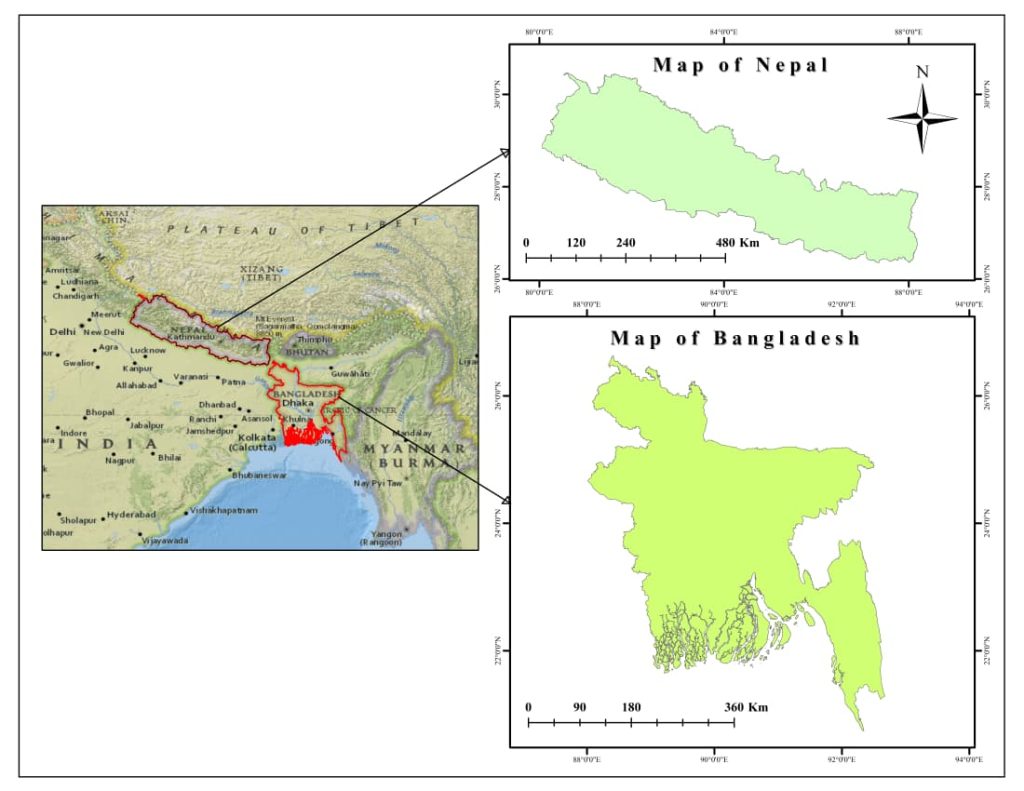
The study was conducted in Nepal (28°23′50.50″ N, 84°07′32.74″ E) and Bangladesh (23°46′37.8336″ N, 90°23′58.0272″ E) (Figure 1). The area of Nepal is 147,516 km2, and Bangladesh occupies 147,570 km2 (Figure 1).
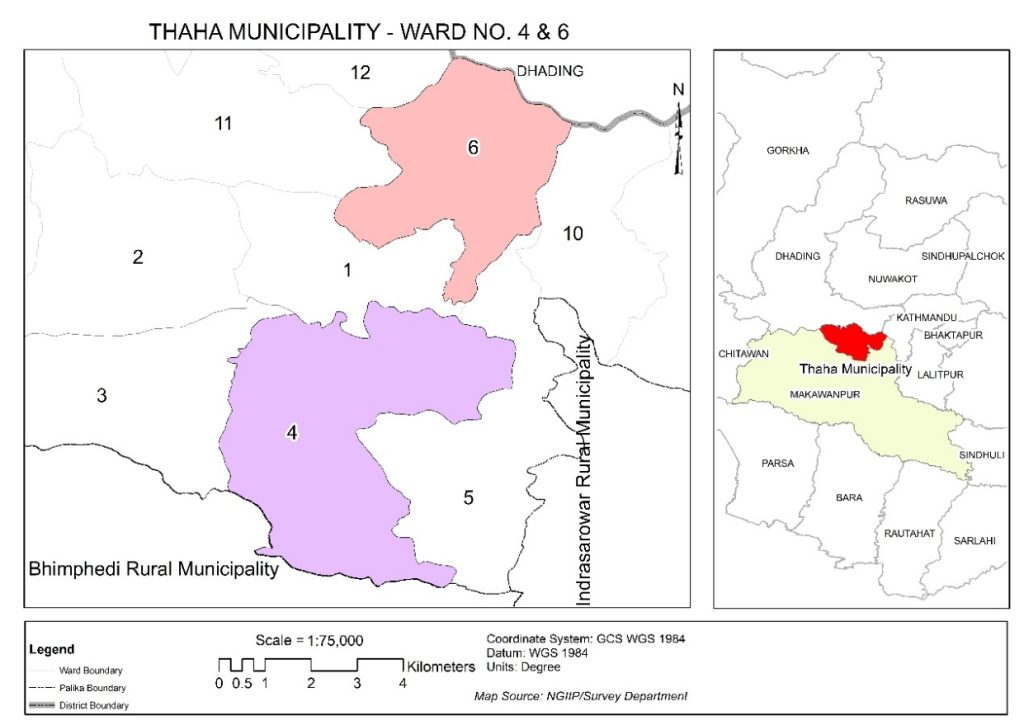
The study area in Nepal lies in the Thaha Municipality (27°37′37.56″ N, 85°5′8.52″ E) in the Makwanpur district (Figure 2). This municipality lies in the mid-hill region of Bagmati Province. This study focused on two wards, Wards 4 and 6, of Thaha Municipality to understand water security in this peri-urban region. It covers a total area of 191.1 km2 with a population of 39,163 (CBS, 2021). It has a cultivated land area of about 26.93%, a forest area of about 65% and a residential area of about 3.68% (GGGI, 2018). It lies at an elevation of 1200 to 2500 m above Mean Sea Level (Thaha Municipality, 2019). The study area has a temperate climate with a mean annual rainfall range of 1500 to 2000 mm and a temperature range of −2 ° to 30.3 ° (Thaha Municipality, 2019). Many natural springs in the Thaha Municipality supply water to local settlements. The main water supply schemes in this municipality are the Rikheshwor, Kalamd and Papung schemes, with most households receiving piped or tap water. Other sources are uncovered wells, groundwater borings and spouts (GGGI, 2018). This place is also popular for vegetable production. Farmers in the region export vegetables worth a billion rupees annually to major cities and to India across the border.
The study area in Bangladesh lies in three municipalities from two southeastern sub-districts (upazilas): Sitakunda and Mirsharai in the Chattogram district, with hills on the eastern side and the coast of the Bay of Bengal on the other (Figure 3) (Islam & Amstel, 2021). Among them, Sitakunda Municipality (22°59′ N and 22°65′ N and 91°66′ E and 91°70′ E) lies in the Sitakunda sub-district. Similarly, Mirsharai (22°74′ N and 22°78′ N and 91°54′ E and 91°61′ E) and Bariyarhat (22°87′ N and 22°90′ N and 91°51′ E and 91°53′ E) municipalities fall under the Mirsharai sub-district. The area has a monthly average rainfall of 195.75 mm, and minimum and maximum temperatures of 21.80 ° and 31.53 °, respectively (BBS, 2022). The watershed in the study area, highly degraded by deforestation in the hills, originated and ended within the sub-district boundaries, flowing from the eastern hills to the western coast.
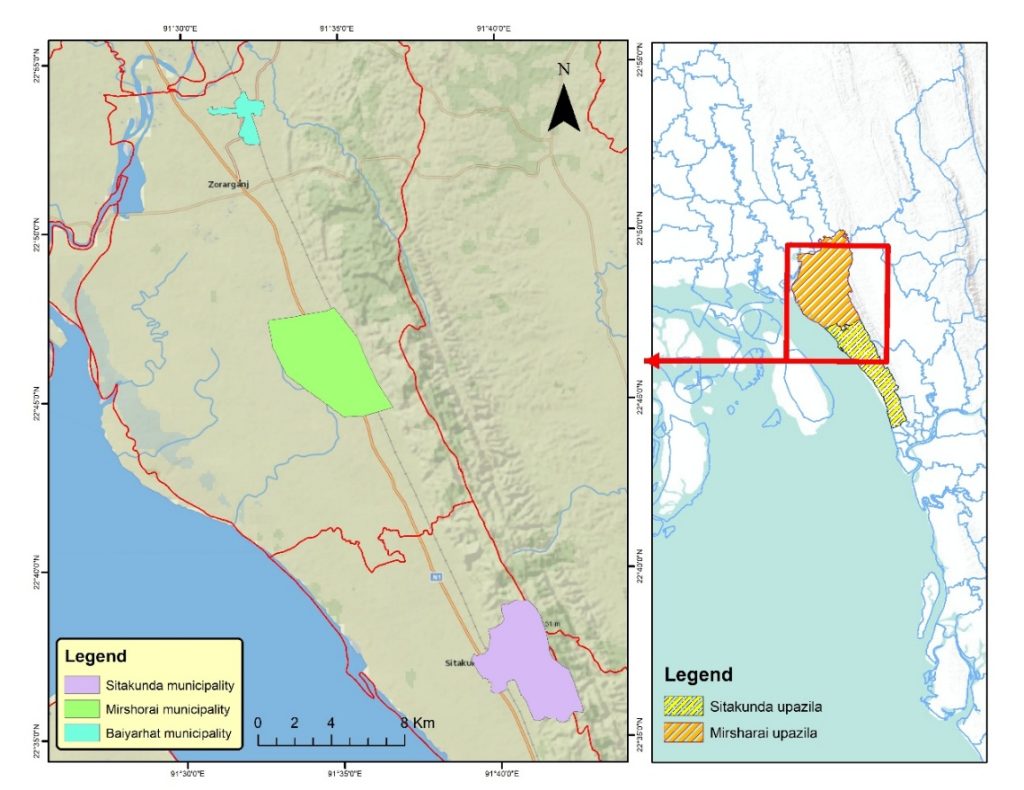
On the other hand, key infrastructural elements, such as the Dhaka–Chittagong Highway and the railway traversing the region from north to south, block the flow of the watershed. A significant development in the study area regarding water security is the establishment of the Bangabandhu Sheikh Mujib Shilpa Nagar, the largest economic zone of Bangladesh, near the coast of the southwest fringe of the study area (Khan et al., 2022). This sudden development has led to increased water demand from both industries and households, posing a risk to local water security. The economic zone is sourcing initial demand from surface and groundwater and plans to significantly increase extraction to meet its water needs. Local communities depend heavily on groundwater, and reliance on surface sources is dwindling. Climate change and local land use changes are further exacerbating the situation.
2.2. Data collection
2.2.1. Preliminary survey
The initial step involved community consultations to establish a shared understanding of the study and to understand the primary water security issues in the region. Based on the suggestions and feedback received, a diverse group of community participants conducted PAST after being selected.
2.2.2. Problem and solution tree construction
Data were collected and analysed in two main stages: constructing the problem and solution trees (Snowdon et al., 2008), and collecting field data to validate and strengthen the PASTs. PAST is an interactive tool to (1) break down a problem into parts; (2) evaluate the impact of the problem; and (3) identify current and potential solutions (Al-Qubatee et al., 2017; Ayni et al., 2012; Basu et al., 2015). Furthermore, it can be strengthened and validated by gathering field data (Sen et al., 2018). The reason these diagrams are called “trees” is that a PAST often resembles a schematic tree, with causes and major problems as roots and trunk, and impacts as branches and leaves, while the solutions symbolise a separate tree (Snowdon et al., 2008). Selecting a specific water security problem to analyse was the first stage in constructing the PAST, with variations depending on the participant group. The problem’s causes were determined, and the conditions that gave rise to the primary, secondary and tertiary causes, and so on, were mapped based on the selected problem. Next, the impacts were determined. After mapping the problem and its impacts, the participants identified the best current interventions, including coping mechanisms and adaptations, to complete the PAST. All conversations, arguments and exchanges during the construction of the trees were recorded with the participants’ permission, either through video or written documentation. Additionally, key informant interviews helped clarify and fill information gaps.
In total, five PASTs were developed in consultation with diverse water stakeholders across the study sites: two in Thaha Municipality, Makwanpur, Nepal and three in Sitakunda, Baraiyarhat and Mirsharai Municipality, Bangladesh (Table 1). Stakeholder groups with similar backgrounds, each comprising 7-15 participants, were formed. A total of 19 participants, representing Wards 4 and 6 of Thaha Municipality in Nepal and 33 participants representing the three municipalities in Bangladesh, were actively involved in constructing the PASTs. Each group in Bangladesh (e.g, Forest dependent community [FDC], transgender community [TC], low-income settlements [LISs]) and Nepal (farmers, community members, local leaders and representatives from water user associations) consulted and identified the main problem concerning water security from its perspective, delineated multiple levels of underlying causes, identified impacts, and outlined current adaptation strategies for water security. These components of each PAST were colour-coded on chart paper. Overall discussions, debates and dialogues during the tree construction were recorded.
| S.N | Country | Location | Community | No of participants |
|---|---|---|---|---|
| 1 | Nepal | Ward 4, Thaha Municipality, Makwanpur | Risheshwor WUA | 12 |
| 2 | Nepal | Ward 6, Thaha Municipality, Makwanpur | Bajrabarahi WUA | 7 |
| 3 | Bangladesh | Sitakunda Municipality | Sitakunda FDC, TC, MHs and LISs | 10 |
| 4 | Bangladesh | Baraiyarhat Municipality | Local Farming Groups (LFG), Women and Caregivers (WCGs), Livestock Keepers (LKs), MHs, and LISs | 15 |
| 5 | Bangladesh | Mirsharai Municipality | Industrial Labour Group (ILG), LKs, LFGs, MHs, Mirsharai FDC, and Aquaculture Producers (APs) | 8 |
2.3. Data analysis
2.3.1. PAST analysis
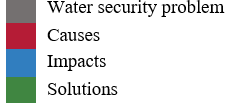
The yEd Graph Editor visualisation software was used for PAST analysis. The yEd graph editor has automatic layout algorithms that quickly create and arrange diagrams using nodes (visual elements) and edges (connecting lines). In this study, the software was used to convert hand-drawn PASTs developed during fieldwork into digital diagrams by creating hierarchically arranged nodes representing causes, problems, impacts and solutions, which were linked with directional arrows to indicate causal relationships (yWorks, 2017). Each component was colour-coded (red for causes, blue for impacts and green for coping/adaptation strategies). The visual outputs generated from the yEd graph were exported as high-resolution images and used for cross-site PAST comparison and interpretation.
3. RESULTS
3.1. Nepal
3.1.1. Risheshwor WUA, Thaha Municipality
This PAST construction involved 12 participants from the Risheshwor WUA in Ward 4 of Thaha Municipality (Table 1 and Figure 4). The local community primarily relied on farming and hotel businesses for their livelihoods. Unequal water distribution and water unavailability were identified as two major issues affecting water security. The WUA in the region was found to be inactive and non-functional. This led to mismanagement in water distribution from the only water source on which the community relied for drinking and domestic purposes. Often, community members used water, especially in the evening, for irrigation, as there is no other irrigation source in the upstream community. There was no water meter system in place to record the quantity of water households used. This resulted in water usage payments not being based on the volume of water consumed. Consequently, households with relatively low water usage were required to pay the same amount as local businesses or farmers with disproportionately higher water consumption. Because the WUA was inactive, monthly water usage payments were not made on time. It led to recurring financial shortages for maintaining and managing the water supply. This resulted in delayed activities to address pipe leaks or maintain taps, for instance.
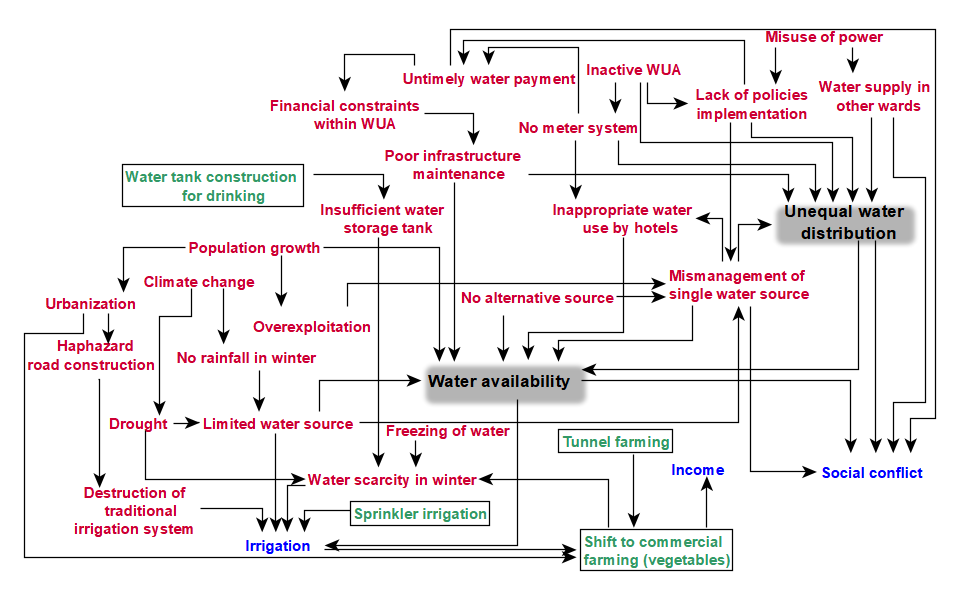
Additionally, the influential hotel owners received disproportionately high amounts of water through self-deployed pipelines. Furthermore, more water was supplied to neighbouring wards, especially to hotels, without consultation with community members, thereby reducing the availability of irrigation water for community members. This imbalance triggered conflicts between hotel owners and community members.
The participants highlighted the scarcity of winter rainfall in recent years, resulting in drought conditions. Additionally, the insufficient capacity of water storage tanks near the main spring worsened water scarcity during the winter season. The traditional farmer-managed irrigation canals (Kulo) have been destroyed by the rapid expansion of rural roads, driven by urbanisation and population growth. In response to these challenges, water tanks for drinking water were constructed with support from the international non-governmental organisation (INGO) Plan International. Farmers adapted to water shortage by shifting from paddy cultivation to vegetable farming and adopting climate-smart practices such as tunnel farming and sprinkler irrigation. Despite these shifts towards climate-smart vegetable production, income from vegetable cultivation was lower than from paddy cultivation. This limited income poses a challenge for peri-urban farmers in sustaining their livelihoods. Overall, water scarcity, driven by mismanagement of water sources, stems from institutional weaknesses and limited technical support from the local government. These findings underscore the need for stronger WUA and for enhanced municipal collaboration to improve water resource management and equitable distribution.
3.1.2. Bajrabarahi WUA, Thaha Municipality
The second PAST was constructed with seven participants from the Bajrabarahi WUA in Ward 6 of Thaha Municipality (Table 1 and Figure 5). The study area is relatively far from the municipal office compared to other wards, which poses a challenge for water governance. The study identified water unavailability as a significant challenge for water security in Bajrabarahi. One of the main reasons for this is climate change, which has led to the drying up of water sources, adversely affecting both drinking water and irrigation. Additionally, the participants pointed out the reforestation of Pinus wallichiana under the Kulekhani watershed programme as another major factor responsible for the reduction in groundwater levels, the gradual disappearance of traditional water sources, and the decline in livestock rearing. Furthermore, the rising demand for water, particularly during the dry season and festival periods, exacerbated water shortages. Agriculture is the primary occupation in this area. Due to the inadequate irrigation water, many farmers have shifted from paddy cultivation to seasonal vegetable farming. Notably, affluent individuals and elite groups have been diverting drinking water for irrigation purposes, while those with limited access to water have resorted to monocrop farming, resulting in degraded land. This has led to a reduction in crop productivity, consequently decreasing household income. This misuse of water stems from limited awareness and has triggered conflicts among individuals from different socioeconomic backgrounds. On the other hand, a WUA was absent in the upstream area of Bajrabarahi, leading to unequal water distribution and subsequent conflicts between upstream and downstream communities. Factors such as mismanagement of water sources, inadequate water quality monitoring, and the local government’s prioritisation of road construction have also contributed significantly to water insecurity at the study site.
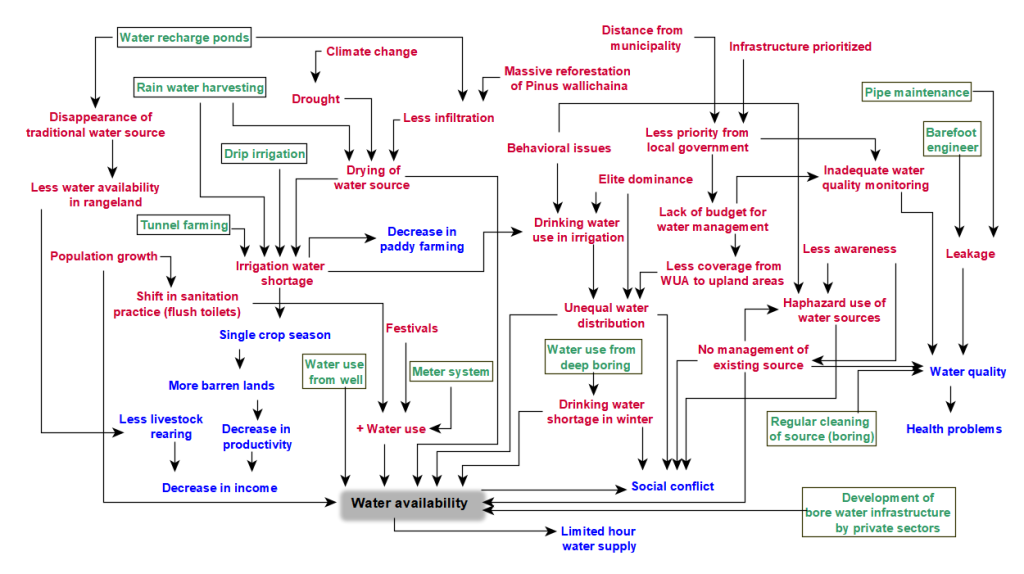
As a key solution to water scarcity, the WUA in the downstream area of Bajrabarahi implemented a water metering system for systematic water distribution and transparent water tariff collection. “Barefoot engineers” from the WUA handle leakages and tariff collection. Furthermore, water sources are being cleaned regularly. Three water recharge ponds were constructed with local government funding. Likewise, the communities have adopted strategies such as drip irrigation, tunnel farming, and rainwater harvesting. Besides, a reservoir has been constructed in collaboration with the municipality/ward and a non-governmental organisation (NGO), the Centre for Community Development Nepal (CCDN), for storing water extracted from borewells. Overall, social injustices, institutional gaps, and environmental changes are the major causes of water insecurity in Bajrabarahi. This highlights the need for improved upstream–downstream coordination, strengthened WUAs, and ongoing municipal support for effective water security management.
3.2. Bangladesh
3.2.1. Sitakunda Municipality
We conducted a PAST analysis of water use in the peri-urban area of Sitakunda, Chattogram, where community members specially representative of various groups (Sitakunda Forest Dependent Community (FDC), Transgender Community (TC), and Municipal Households (MHs)) identified several factors (e.g., level of communication with water and environmental agencies, importance of water user forum or group, gender-based and community-based water access, seasonal water availability, and water management system) contributing to water insecurity (Table 1 and Figure 6). The absence of a community-based organisation (CBO), such as a water user community (WUC), has led to poor waste management, reduced fundraising, lack of a central water supply management system, and absence of a channel to communicate water issues to water agencies such as the Bangladesh Water Development Board (BWDB), Local Government Engineering Department (LGED) and Department of Public Health Engineer (DPHE), resulting in a shortage of standpoint (a supported pipe directly connected to main water distributing system which is installed by government) supply. Furthermore, the absence of environmental agencies, such as the Department of Environment (DoE), at the municipal level has led to weak law enforcement and land tenure issues, resulting in the conversion of water bodies to other land uses and inadequate water supply from pipes or taps, exacerbating water insecurity. It has not only reduced water quality and quantity in the stream but has also contaminated the water.
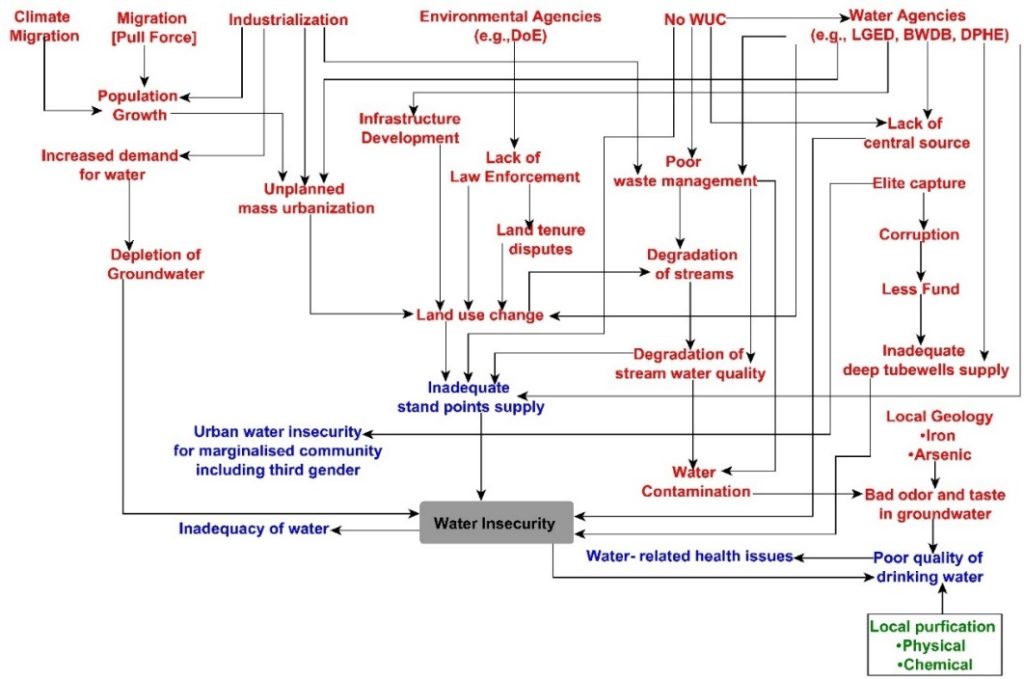
The presence of high levels of iron in the region’s groundwater, driven by geological factors, further challenges water security. Surface water bodies are being converted to various land uses due to ongoing infrastructure development, driven by rapid, unplanned urbanisation. As trade and commerce expand, industrial operations, particularly steel rolling mills, require substantial amounts of water. Climate change and rapid population growth have also spurred migration into the municipality, further straining water resources. As a result, natural water sources such as streams, canals, ponds and lakes have significantly decreased in the study site. Water insecurity affects marginalised groups in the community, notably members of the third gender, due to the influence of elite groups on water sources.
Moreover, corruption by powerful groups has hindered the allocation of funds for essential water infrastructure, such as deep tubewells, exacerbating water scarcity for locals. Overpopulation, rapid industrialisation and infrastructure expansion have not only strained water resources but also degraded stream water quality, leading to increased water demand among locals and heightened water insecurity. In response, community members are employing local water purification methods such as boiling, filtering with a clean cloth, or using chemicals like potash alum to improve water quality and prevent water-borne diseases and bad odours.
3.2.2. Bariyarhat Municipality, Chattogram
The PAST analysis of water use in the peri-urban municipality of Baraiyarhat in Mirsharai, Chattogram, identified several factors, e.g., source and level of water contamination, changes in land-use patterns, overall water demand, effects of internal migration to peri-urban areas, effects of having no Water User Groups (WUGs), land tenure problems, management of natural water resources, and financial support regarding water access from stakeholders, thus contributing to water insecurity (Table 1 and Figure 7). A total of 15 respondents from community-based different groups (e.g., LFG, WCGs, LKs) discussed and identified such issues and mitigation techniques to resolve water insecurity. Migration due to climate change and rapid population growth, along with internal migration from rural to peri-urban areas, has led to insufficient rural economic prospects, asset fragmentation, and rapid industrial growth, resulting in mass urbanisation and unplanned, extensive infrastructural development with detrimental land-use changes. The presence of surface water sources such as ponds, lakes, streams and canals has significantly declined for these reasons. Without a Water User Committee (WUC) accountable for ensuring water rights and security, water shortages have become more severe, and community water access initiatives have been neglected. Lack of public and commercial finance, inadequate waste management, the need for a centralised water supply, and difficulty communicating with LGED, BWDB and DPHE are all notable causes. Moreover, in the absence of environmental agencies (e.g., DoE) and oversight by water agencies such as the LGED and the BWDB, rules and regulations have not been enforced. This has led to the drying of streams, with detrimental changes in quantity and quality due to pollution and toxicity. The embezzlement of government and business investments by local elite groups has exacerbated water insecurity by utilising groundwater resources. On the other hand, industrial reliance on groundwater reserves has led to high water demand, depleting groundwater and heightening water insecurity for local people.
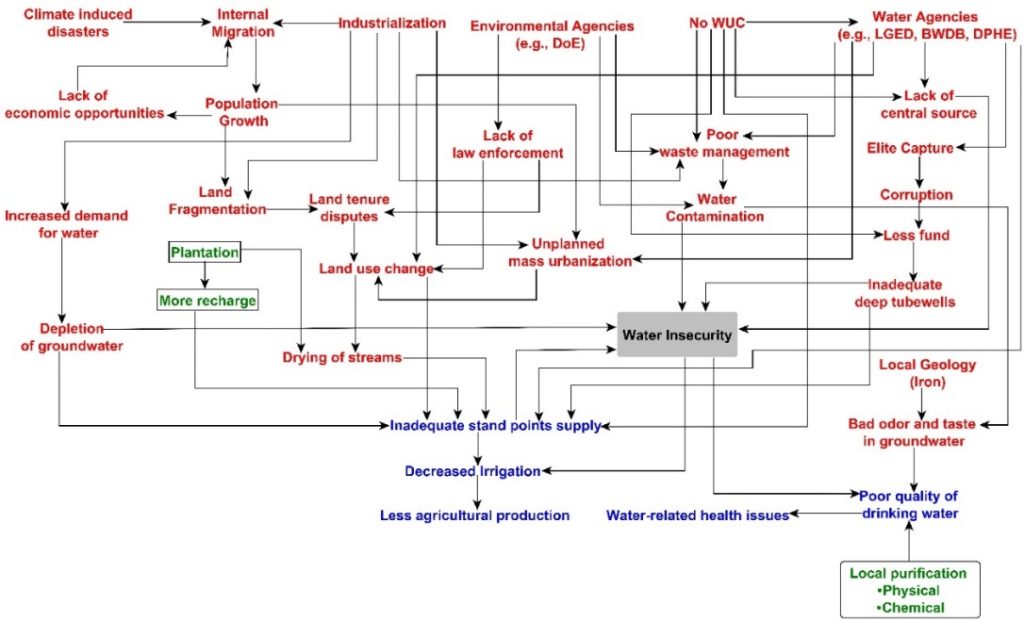
The region’s geology, including high groundwater iron levels and arsenic-contaminated tubewells, is another major reason for degraded water quality, further limiting groundwater use and exacerbating the community’s water insecurity. The PAST study shows that community members without proper water access are improving their drinking water quality to reduce health risks. They accomplish this by using local purification methods, such as physical methods (boiling or purifying water with a clean cloth) or chemical methods (using potash alum available in markets). Restricted surface and groundwater sources hinder the ability to irrigate agricultural lands, affecting local livelihood and production due to the exploitation of water resources. Moreover, the absence of WUCs and environmental regulation agencies (e.g., DoE) poses significant challenges to the sustainable management of water resources. Locals have taken long-term measures to protect and replenish groundwater sources, such as streams, through plantation programmes. These initiatives may support and enhance greater water recharge for future generations if government authorities install adequate water supply structures, such as community water pipes/taps, connected to the main water distribution system.
3.2.3. Mirsharai municipality, Chattogram
The PAST analysis revealed several issues (e.g., management and maintenance of natural water resources, requirement of tubewells and pipelines for enough water, geological study gap, extraction amount of groundwater by industries, status of enforced law, political situation, impacts of mass urbanisation and industrialisation) regarding water insecurity in Mirsharai, Chattrogram (Table 1 and Figure 8). The representatives from diverse groups (e.g., Mirsharai FDC, ILG, APs) of the community consulted and identified such issues to solve water insecurity. The lack of legal enforcement, coupled with a weak waste management system, hampers the supply of government-installed community water pipes/taps directly connected to the main water distributing system due to the absence of WUCs. Climate-induced migration and population growth have accelerated industrial expansion, characterised by unplanned mass urbanisation and the development of inadequate infrastructure. The absence of environmental institutions, such as the DoE, has led to poor waste management and inadequate management of natural water resources, resulting in the degradation of streams. Geological limits on groundwater usage and a lack of water purification have put the population at risk of water shortages. Surface water supplies, including ponds, lakes and streams, are declining due to rural economic constraints, industrialisation and climate change.
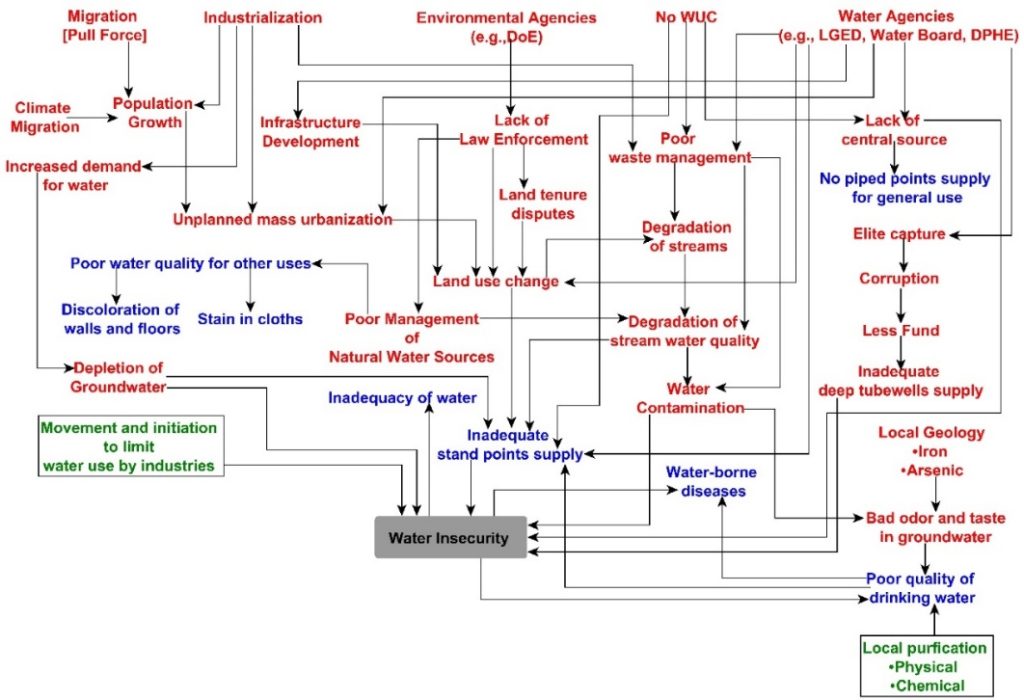
The water and environmental agencies at the local municipality level, including LGED, BWDB, DPHE and DoE, must comply with legislation or effectively monitor and act in accordance with the situation. Inadequate waste disposal, declining levels and amounts of stream water, water contamination, blemishes on garments, surface discolouration, and unpleasant odours and tastes in water result from non-compliance. Local politicians and elite groups have siphoned government funding by reducing the number of deep tubewells, which could have provided communities with water. High quantities of arsenic and iron in groundwater, owing to geological factors, cause unpleasant odours and tastes in drinking water. Communities are affected because there are no designated public-use areas for piped water access.
The PAST reports that the local community has launched a movement to reduce excessive water extraction by industries. Households with greater financial capacity adopt water treatment practices such as boiling, cloth filtration and the use of potash alum, which may help reduce the incidence of water-borne diseases.
4. DISCUSSION
4.1. Factors influencing water security
Drying up of water sources stems from a rapid decline in groundwater levels due to overextraction of groundwater (V. Roth et al., 2018) and climate change in both Nepal and Bangladesh (Figures 4–8). Winter rainfall deficits have diminished the recharge capacity of aquifers, resulting in reduced discharge from springs and rivers (Bajracharya et al., 2019). In Nepal, the 2015 earthquake exacerbated water resource depletion in the mid-hills, affecting water availability across various purposes (Gauchan et al., 2017). Additionally, haphazard road construction in hilly regions has impeded spring sources, reducing water flow (Figure 4) (Adhikari et al., 2020). Such constructions have disrupted traditional water sources, affecting irrigation (Figure 4). Both Bangladesh and Nepal are experiencing increased water demand driven by population growth and evolving lifestyles. Land-use changes, including the conversion of water bodies, are notable in Bangladesh (Figures 6–8). Furthermore, migration and industrial expansion in Bangladesh, and vegetable farming and the hotel business in Nepal, have further intensified water demand. Moreover, local geology contributes to groundwater with high iron content and arsenic-contaminated tubewells, deteriorating water quality in Bangladesh. Access to water during dry seasons significantly affects the well-being of the population (Mohamed, 2022), resulting in economic losses, especially in agriculture (Figure 4). Haphazard use of water sources also contributes to the deterioration of water quality (Figures 4–8). In summary, a combination of biophysical and socioeconomic factors has contributed to water insecurity in peri-urban regions (Ranjan & Narain, 2012) in both Nepal and Bangladesh.
4.2. Unequal water distribution and conflict
In Nepal, non-functional WUAs and weak water management practices are the primary causes of unequal water distribution and ensuing conflicts (Figures 4 and 5). Upstream–downstream disputes over water use from a single source were evident in the study areas (Figure 5), which were exacerbated by non-functional WUAs in upstream areas. A separate study on conflicts in mid-hill towns highlighted the emergence of upstream–downstream contestation as a key form of conflict over access to and/or control over water (Devkota et al., 2018). In the current study, the Risheshwor WUA pinpointed disproportional water supply, favouring individuals involved in both agriculture and hotel businesses, within the same ward as a major problem (Figure 4). This observation aligns with the findings of another study, undertaken in Thaha Municipality, where the local government focuses on a limited area, leaving the vulnerable and distant communities underserved (GGGI, 2018). Furthermore, hotels are misusing water resources due to inactive WUAs. Similarly, the Bajrabarahi WUA experiences unequal water supply across wards, exacerbated by its distance from the municipal office (Figure 5). Inadequate irrigation facilities, especially in the upstream area of Thaha Municipality, further contribute to these disparities. Both upstream and downstream users, including affluent and elite groups, have access to irrigation water from nearby rivers or streams via pipe systems and pumps, as they can afford to construct individual irrigation systems.
Additionally, upstream poor communities and elite members also use drinking water for irrigation, leading to shortages of drinking water in downstream communities (Figures 4 and 5), which is a major cause of conflict among community members (Basu et al., 2015). In Bangladesh, community members use groundwater for various purposes, leading to its depletion (Figures 6–8), and industries use excessive water, creating conflicts with the community (Kumar et al., 2011). Consequently, community members have initiated movements to regulate the use of water by industries (Figure 8). Furthermore, marginalised communities such as the third gender (Figure 6) or low caste communities face challenges in accessing water due to political influence and elite groups (Ranjan & Narain, 2012).
The study highlights the disproportionately high water use by affluent and elite communities and groups, including hoteliers and industries, limiting water access for non-influential local farmers and marginalised communities (Figures 4–8). Consequently, conflicts between different users, such as the affluent and elite versus poor members and community members versus hoteliers and industries, have become complex (Basu et al., 2015; Kumar et al., 2011). Increased competition for water use disrupts social harmony and poses potential long-term risks of water insecurity if not addressed promptly (Sen et al., 2018).
4.3. Coping and adaptation strategies
Various coping and adaptation strategies were identified using the PAST tools (Figures 4–8). In Bangladesh, household-level coping strategies such as the use of potash alum and local water purification are predominant (Basu et al., 2015). Communities are completely dependent on the government for water-related issues; however, support from water and environmental agencies is missing (Figures 4–8). Due to lack of support from the government, institutions, as well as I/NGOs, communities have organised movements against industries to combat excessive use of water (Figure 8). In Nepal, adaptation strategies like tunnel farming, drip irrigation, water metering with tariffs, rainwater harvesting and construction of recharge ponds, are prevalent, especially in areas with functional WUAs (Figure 5). Recent years have seen a shift from water-intensive crops like paddy to less water-intensive crop or vegetable farming due to water scarcity (Figures 4 and 5) (Khan et al., 2013; Nepal et al., 2019; Ranjan & Narain, 2012). This shift, also associated with profitable farming, as vegetables require less water compared to paddy cultivation, enables farmers in peri-urban areas to earn more income by selling or exporting vegetables to nearby urban centres (Thaha Municipality, 2019). Additionally, implementing water meters with appropriate pricing mechanisms is crucial for effectively managing municipal water flows and conserving water (Garrick et al., 2017), as evidenced in Bajrabarahi, Nepal (Figure 5). Rainwater harvesting and recharge ponds can ease water supply in peri-urban areas, especially during the monsoon season (Shrestha, 2009; Shrestha et al., 2017), representing another adaptation strategy for communities in Nepal (Figure 5). Effective management and planning of water resources are crucial at individual, community and government levels (Sen et al., 2018). However, local governments and water institutions have initiated limited strategies (Figures 4–8). Most of these coping and adaptation strategies are introduced by community members at the household or WUA level (Basu et al., 2015). This study demonstrates that a range of contextual factors, including biophysical, socioeconomic and institutional factors, shape coping and adaptation strategies of peri-urban communities (Lankford, 2009; Ranjan & Narain, 2012).
4.4. Water institutions and governance
One very notable difference between Nepal and Bangladesh is the presence, or absence, of CBOs such as WUAs or WUCs. In Nepal, WUAs play a role in water resource management with community involvement. However, not all WUAs in the study site are functioning effectively (Figure 4). Additionally, there is limited community involvement in decision-making processes (Basu et al., 2015) within WUAs, especially in water distribution (Figure 4). The distribution of water to new members, such as hotels, is often determined by WUA presidents, resulting in unequal water distribution among community members, giving rise to conflict. The local government lacks an effective monitoring mechanism for WUAs, e.g., in Thaha Municipality. Moreover, the local government has given low priority to water security improvements (Groot & Bayrak, 2019) compared to road construction. However, some I/NGOs support WUAs in water distribution in the study sites (Figures 4 and 5).
In contrast, in Bangladesh, WUCs are absent, leading to the lack of CBOs for sustainable water resource management (Figures 6–8). Environmental agencies, such as the DoE, struggle to enforce rules and regulations on land-use change and land disputes, contributing to poor management of natural water resources. Additionally, various water agencies, like the LGED, DPHE, and Water Board, lack control over the central water sources, hindering pipeline water supply to communities. Unlike Nepal, support of I/NGOs is absent in Bangladesh, further impacting water resource management. Hence, this study underscores the significance of institutional arrangements, including CBOs, and good governance in enhancing water security in peri-urban communities amidst climate change and urbanisation (Groot & Bayrak, 2019; Kumar et al., 2011).
Overall, in addition to biophysical and socioeconomic factors, institutional and governance factors play a crucial role in determining water security in peri-urban regions across both study sites. Water management institutions are largely absent in providing water services in peri-urban areas (Kumar et al., 2011) in both countries. CBOs play a vital role in sustainable water resource management at the local level (Ranjan & Narain, 2012). Furthermore, current coping and adaptation strategies, predominantly individual efforts, are inadequate. There is a critical need to implement adaptation strategies collaboratively with community members, scientists, policymakers and the private sector (Basu et al., 2015; Sen et al., 2018) to ensure water security in the peri-urban regions of South Asian countries, specifically Nepal and Bangladesh.
5. CONCLUSION
Water security in the peri-urban regions of developing countries is governed by a range of factors, including socioeconomic, biophysical, institutional, and governance factors. In Nepal, water security in peri-urban regions is closely related to water quantity, encompassing issues of availability and distribution, while in Bangladesh, water quality is of paramount concern. Notably, both study sites lack water treatment facilities.
In Risheshwor WUA in Ward 4 of Thaha Municipality, community members often use water for irrigation due to the absence of upstream irrigation sources, including the absence of a water metering system, which leads to unfair payment as households with low water usage pay the same as business owners or farmers with higher water consumption, exacerbating water scarcity. In contrast, the presence of a water metering system and “Barefoot engineers” from WUA contribute to transparent water tariff collection and systematic water distribution in Bajrabarahi WUA in Ward 6 of Thaha Municipality.
In Bangladesh (Sitakunda Municipality, Chattogram), high levels of iron in the region’s groundwater, driven by geological factors and exacerbated by overpopulation, rapid industrialisation and infrastructure expansion, further challenge water security. Water insecurity affects marginalised groups in the community, especially members of the third gender, due to the influence of elite groups on water sources. Altogether, conflicts, water-related health issues and reduced agricultural production, leading to a decline in income, are the most common impacts recorded from the study sites.
In Bangladesh, coping strategies such as the use of potash alum and local water purification methods are prevalent. In contrast, in Nepal, adaptation strategies such as tunnel farming, drip irrigation, water metering with tariffs, rainwater harvesting and recharge ponds are common, especially in areas with functioning WUAs. However, WUCs are notably absent in Bangladesh. This study underscores the vital role of CBOs in effective water resource management. Additionally, in Nepal, some I/NGOs have provided technical and financial support to WUAs for the management of water resources. However, governmental and institutional support for water service provision is lacking in both countries.
Furthermore, the influence of affluent and elite groups often exacerbates water and social conflicts in these regions. Overall, this study suggests that applying participatory methods, such as PAST, is highly beneficial for addressing various dimensions of water security holistically in peri-urban contexts. Finally, this study emphasises the significance of cooperation of diverse stakeholders, including community members, scientists, policymakers and the private sector, for ensuring water security in peri-urban regions across South Asian countries.
6. ACKNOWLEDGEMENT
We want to express our sincere gratitude to the Asia-Pacific Network for Global Change Research (APN) for funding the project (CRECS2020-06MY-Maharjan). Our special thanks to research and field assistants, respondents, communities and local government representatives at the study sites, including government and non-governmental organisations in Nepal and Bangladesh, for providing valuable time, information and data. The authors would like to acknowledge Professor Yajna Prasad Timilsina, Institute of Forestry, Tribhuvan University, Pokhara, Nepal, for guiding sampling design and statistical analysis. We are also very grateful to reviewers for their constructive comments and suggestions, which are beneficial for improving the quality of our manuscript.