
Status, policy analysis and management-based approaches for coral reef restoration in Cambodia, Thailand and Vietnam
Keywords
Coral Reef Restoration · Marine Policy · Resilience-based Management · Science-Policy Interface · Southeast Asia
HIGHLIGHTS
- Southeast Asia reefs face dual climate & local threats (pollution, overfishing).
- UV filters pollute reef waters; they can alter the breakdown of other chemicals.
- Over-tourism degrades reefs; closures and restoration show recovery potential.
- Linking science to policy is vital for effective, resilient reef management
1. INTRODUCTION
Southeast Asia (SEA) is a global epicentre for marine biodiversity, hosting approximately 34% of the world’s coral reefs (Burke et al., 2002). These vibrant ecosystems, often termed the “rainforests of the sea,” support at least 25% of all marine life despite covering less than 0.2% of the ocean floor (Mulhall, 2008; Sale, 2021). Their immense socioeconomic value matches the ecological significance of SEA’s reefs. Over half a billion people in the region, particularly in coastal communities across archipelagic nations like Indonesia and the Philippines, depend directly on coral reefs for their livelihoods, food security (providing essential protein), coastal protection against storms and erosion, and cultural identity (Chou et al., 2002). The global tourism and recreational value of coral reefs has been reported to vary widely, from USD 3.3 trillion (Costanza et al., 2014) to USD 36 billion (Bartelet et al., 2024). The difference in valuation is due to design and methodologies, including the undervaluation of local tourism and extrapolation to less-used locations. According to multiple sources, commercial fisheries in the Coral Triangle were found to generate USD 5.85 billion in total economic returns, consisting of both the direct and indirect economic impact from fisheries income and the fisheries sector’s spending on other sectors’ goods and services. This value focuses only on commercial fisheries; hence, the reported returns may be underestimated (Chaijaroen, 2022; ICRI, 2018; Spalding et al., 2016). SEA contributes significantly to the economic valuation of coral reefs, with regional reef-associated tourism valued at over USD 11 billion annually and fisheries generating billions more (Spalding et al., 2017). These ecosystems provide immense ecological value and critical socioeconomic benefits, supporting fisheries, tourism and coastal protection for millions of people across nations such as Vietnam, Thailand and Cambodia. Vietnam’s coastal provinces, for instance, contribute significantly to the national GDP, with the marine economy playing a substantial role.
Despite their importance, these reefs are under severe threat from a combination of global climate change impacts (e.g., rising sea surface temperatures (SST), ocean acidification) and localised anthropogenic pressures. Key regional threats include overfishing, often using destructive methods, pollution from land-based sources (urban runoff, agriculture, industrial discharge, plastic waste) and marine activities (shipping, aquaculture), coastal development leading to habitat destruction and sedimentation, and impacts from tourism, including physical damage and chemical pollution from UV filters in sunscreens (Garcia-Hernandez et al., 2021). The degradation of these reefs poses significant risks to biodiversity, food security, economic stability, and the resilience of coastal communities. Recognising these escalating threats, there is an urgent need for effective policy and management interventions focused on coral reef restoration and enhancing ecosystem resilience.
Despite their critical importance, SEA’s coral reefs are among the most threatened on the planet. They face dual pressures at the global and local levels. Climate change is driving ocean warming, leading to increasingly frequent and severe mass coral bleaching events (such as those that impacted Thailand in 1998 and 2010), and ocean acidification, which hinders coral growth. Projections indicate that under current trajectories, 70–90% of reefs could be lost with 1.5 °C warming, and virtually all with 2 °C warming (Souter et al., 2021). Compounding these global threats are pervasive local anthropogenic stressors, particularly acute in SEA. These include destructive fishing practices (such as blast fishing, cyanide fishing and illegal trawling), overfishing, pollution from land-based sources (sedimentation from deforestation and agriculture, nutrient runoff from sewage and fertilizers, plastic waste), marine pollution, unsustainable coastal development (construction, dredging, land reclamation), and impacts from poorly managed tourism (Carter et al., 2013; Phongsuwan & Chansang, 2012; Reid et al., 2019). Reports indicate that 88–95% of reefs in the region are threatened, with over half at high or very high risk, particularly affecting countries such as the Philippines, Vietnam, Cambodia, Malaysia and Indonesia (Chou et al., 2002). The Global Coral Reef Monitoring Network (GCRMN) documented a global loss of 14% of coral cover between 2009 and 2018, with East Asia being significantly affected (Kimura et al., 2022).
Recent studies have increasingly focused on the intersection of marine policy and reef restoration in Southeast Asia. Comprehensive reviews by Boström-Einarsson et al. (2019) and Razak et al. (2022) have highlighted the historical evolution of coral restoration projects, noting a persistent reliance on short-term structural interventions. Watt-Pringle et al. (2024) and Cvitanovic et al. (2024) have further emphasised the critical need for co-management structures and robust science-policy interfaces to navigate socioecological complexities. Additionally, site-specific analyses, such as Israngkura (2022), offer vital economic insights into the trade-offs of resource closures, as evidenced in Maya Bay. In addition, Wernberg et al. (2024) noted that climate change threatens marine foundation species (e.g., mangroves, seagrasses, kelps) through warming, acidification and storms. These stressors reduce their growth, reproduction and distribution, disrupting critical habitats, carbon storage and coastal protection. Synergistic effects amplify risks, underscoring the need for adaptive management. The contribution of these papers lies in providing a highly targeted, multidisciplinary synthesis that bridges empirical ecosystem risk assessments (e.g., thermal stress and pollutant tracking) with a structured presence/absence analysis of policy instruments specifically restricted to Cambodia, Thailand and Vietnam. By doing so, it translates regional environmental data directly into localised, Resilience-Based Management (RBM) and decision-support frameworks.
This paper aims to review the current status of reefs in key SEA countries (Thailand, Cambodia, and Vietnam), analyse existing policy and management approaches based on research findings, identify gaps, and propose evidence-based strategies and regional collaboration to strengthen restoration efforts. These countries were selected due to their geographical proximity, shared coastlines along the Gulf of Thailand, representation of varying levels of economic development and policy maturity, and the significant threats facing their respective coral reef ecosystems.
The overall goal of this review is to synthesise recent findings and policy analyses to inform a more effective management-based approach for coral reef restoration in this critical region. The primary objectives of this review are to:
- Review the current status of coral reef ecosystems in Cambodia, Thailand and Vietnam, specifically focusing on subregional threats in the Gulf of Thailand.
- Analyse existing national policies and management approaches through a structured presence and absence analysis of specific regulatory provisions, and assess their alignment with international restoration standards.
- Identify actionable gaps in governance, policies and management approaches across the three targeted nations by conducting a presence/absence analysis of policy provisions across legal and management frameworks.
- Propose strategic evidence-based directions for coral reef restoration driven directly by the synthesised analytical results and established RBM management frameworks.
2. METHODOLOGY
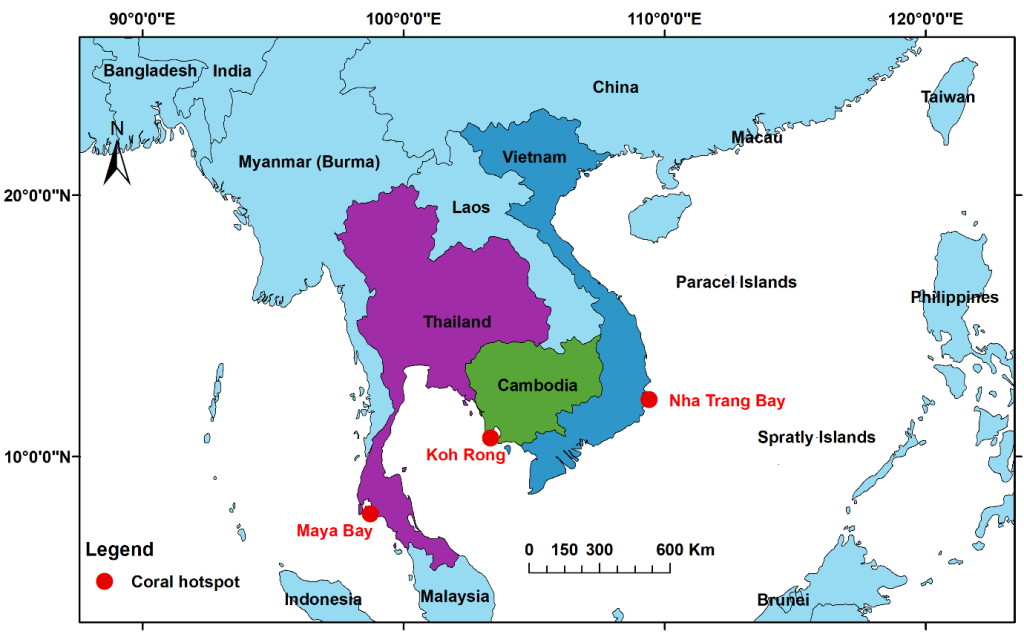
The methodology is explicitly a structured project synthesis of outputs from the collaborative research platform to manage risk and enhance the resilience of coral reefs in Southeast Asia, CRRP2019-08MY-Khanal (Khanal et al., 2025) (Grant No. CRRP2019-08MY-Khanal) supported by the Asia-Pacific Network for Global Change Research (APN). The focus was on Thailand, Cambodia, and Vietnam, and on the nearby coral hotspots of Maya Bay, Koh Rong, and Nha Trang Bay in their respective countries, as shown in Figure 1. The synthesis integrates findings from the research publications and technical presentations from Khanal et al. (2025) to develop a holistic policy framework (Garcia-Hernandez et al., 2021; Giang & Khanal, 2024; Khanal, 2021a, 2021b; Khanal et al., 2021a; Kodikara et al., 2023; Nhem et al., 2025; Khanal et al., 2021b).
Literature search terms included combinations of “coral reef,” “restoration,” “policy,” “management,” “conservation,” “governance,” “Southeast Asia,” “Thailand,” “Cambodia,” “Vietnam,” “Marine Protected Area (MPA),” “fisheries regulation,” “pollution control,” “community-based management,” “funding,” “Payment for Ecosystem Services (PES),” and related concepts. Data extraction focused on addressing the core research questions concerning the status of coral reefs, degradation trends, threats, restoration efforts, relevant policy and legal frameworks (international, regional, national), specific policy instruments employed, national strategies and future targets, and evidence regarding the effectiveness and challenges of these approaches in Thailand, Cambodia and Vietnam. A comparative analysis framework was utilised to systematically contrast the policy landscapes and management regimes of the three countries. This involved identifying key legislative milestones, comparing the design and implementation of specific instruments (e.g., MPA zoning, fisheries rules, funding mechanisms), and assessing stated national priorities and targets. A central element of this synthesis is the construction of a detailed comparative table summarising the findings across multiple dimensions for each country, facilitating direct comparison and highlighting key differences and similarities. The evaluation of effectiveness and challenges draws upon evidence presented in the reviewed literature, including quantitative data (e.g., changes in coral cover, fish biomass where available), qualitative assessments from reports and case studies (e.g., MPA management effectiveness assessments Burke et al., 2002; Carter et al., 2013; Kem & Born, 2023), and analysis of policy coherence, implementation fidelity, and identified barriers (e.g., enforcement gaps, funding shortfalls). The analysis aims to connect policy inputs and management actions with observed environmental and socioeconomic outcomes, where possible. The thematic focus is strictly on policy and management strategies relevant to coral reef restoration and conservation. The assessment of the searched literature is shown in Appendix A.
The methodology follows these conceptual phases:
- Phase 1: Project Data Aggregation: Compilation of empirical field data from the CRRP2019-08MY-Khanal platform, including in-situ water quality assessments, UV-filter pollutant analyses and geospatial/remote sensing data.
- Phase 2: Policy & Literature Review: Systematic mapping of national strategies, action plans, and legal frameworks concerning marine conservation and fisheries for Cambodia, Thailand and Vietnam.
- Phase 3: Comparative Presence-Absence Gap Analysis: Conducting a strict presence/absence analysis to evaluate the implementation and coherence of identified policies and management approaches against the empirical stressors identified in Phase 1 (Table 1).
- Phase 4: Synthesis & Framework Development: Integration of Phase 1 and Phase 3 findings to generate conceptual decision-support tools, RBM frameworks, and science-policy interface models tailored to the three countries.
| Policy Thematic Indicator | Cambodia | Thailand | Vietnam |
|---|---|---|---|
| Marine Protected Area (MPA) Frameworks | Present | Present | Present |
| Fisheries Gear & IUU Regulations | Present | Present | Present |
| Integrated Coastal Zone Mgmt (ICZM) | Present | Present | Present |
| Specific Coral Restoration Targets | Absent | Present | Present |
| Community-Based Mgmt (CPAs/CFis) | Present | Present | Present |
| Marine Payment for Ecosystem Services (PES) | Absent | Absent | Present |
| Sustainable Tourism User Fees | Absent | Present | Absent |
| Water Quality/Pollution Standards | Absent | Present | Present |
| Private Sector Restoration Guidelines | Absent | Absent | Absent |
| Climate Change Forecasting Targets | Absent | Absent | Present |
Limitations of the study: Data availability varies across countries, with potentially significant gaps in Cambodia and in historical trends across the region. The reliance on secondary data sources means the analysis is subject to the limitations and potential biases of the original reporting. Policy landscapes are dynamic and recent developments may not be fully captured in the available literature. Furthermore, assessing the direct causal link between specific policies and reef outcomes is complex due to multiple interacting factors. Access to raw monitoring data, such as that underlying GCRMN reports, is often restricted, limiting independent verification or deeper analysis of trends. The provision for ‘rehabilitation’ or ‘restoration’ was initially excluded from the core cross-country analysis because our preliminary investigation indicated a significant lack of explicitly defined stand-alone policies in readily available English-language legal frameworks strictly dedicated to “restoration” across all three nations. Instead, restoration directives are frequently embedded and diluted within broader environmental protection frameworks and laws or MPA zoning plans, making a direct country-specific 1:1 comparative presence/absence analysis challenging without access to localised, non-translated policy documents. Nevertheless, the assessment of the literature searched is shown in Appendix A.
3. RESULTS AND DISCUSSION
The research conducted across Thailand, Cambodia and Vietnam paints a concerning picture of coral reef status, highlighting pathways for management and restoration.
3.1. Presence/absence analysis
Based on a detailed synthesis of research outputs from the APN CRRP2019-08MY-Khanal project and a systematic review of the national policy landscapes of Cambodia, Thailand and Vietnam, the following Presence-Absence Analysis evaluates the implementation of key coral reef restoration and management indicators. The analysis is grounded in a body of 63 specific documents reviewed across the three countries as outlined in Appendix A.
3.1.1. Country analysis and identification of gaps
Cambodia is explicitly framed as a data-limited case study due to historical gaps in monitoring.
- Strong legal frameworks exist for community involvement through Community Protected Areas (CPAs) and Community Fisheries (CFis). The Protected Area Law (2008) provides a framework for zoning (Core, Conservation, Sustainable Use, Community).
- The analysis identifies a lack of Specific Restoration Targets in stand-alone policies. Governance is hindered by weak enforcement of existing fisheries laws, allowing destructive trawling inshore to persist.
Thailand demonstrates a mature regulatory landscape, particularly in response to pressures from tourism and illegal trade.
- Clear restoration targets are set in the Coral Reef Management Action Plan (2022–2026), aiming to reduce the extent of damage to reefs to 30% by 2026. Innovative financing is present, such as the Koh Tao visitor fee model.
- Despite these targets, there is an absence of specialised guidelines for private sector involvement in coral restoration due to laundering risks. Implementation faces headwinds from potential legislative weakening of the Fisheries Act.
Vietnam exhibits a highly centralised approach with ambitious conservation coverage goals.
- Vietnam is pioneering Marine PES schemes. It has established specific marine ecosystem restoration targets (1% of the national sea area) under Decision 1539/QD-TTg. It also includes explicit targets for climate change adaptation and forecasting.
- Similar to its neighbours, Vietnam lacks Private Sector Restoration Guidelines. Despite the existence of comprehensive laws, an implementation gap persists, with degradation continuing due to weak cross-sectoral coordination and insufficient sanctions.
3.1.2. Synthesis of regional governance gaps
The presence/absence analysis highlights three critical regional gaps that cross administrative boundaries:
- No country has yet developed standardised guidelines to safely leverage private sector capacity for restoration.
- While empirical data (e.g., sediment yields of 77.67 t/ha/yr in Vietnam) is available, it is often not effectively translated into adaptive governance or spatial planning directives.
- All three nations suffer from “paper parks” where MPAs are legally designated but lack the funding, staffing and political will for active protection.
To secure the ecosystem services and economic valuation generated by these reefs, the region must transition from emergency closure models, such as the Maya Bay intervention, toward long-term RBM.
3.2. Current status and threats
Coral reefs in SEA, particularly within the Coral Triangle hotspot, are experiencing significant degradation. Vietnam reports substantial losses, with 11–12% of reefs lost since the early 2000s and 48% considered vulnerable; mangrove and seagrass habitats have also declined dramatically. Even though comprehensive status data for Cambodia, Thailand and Vietnam, were not available in the references searched, the Maya Bay case study exemplifies severe degradation due to localised pressure (tourism), and water quality studies in Koh Rong note concerns despite acceptable water pollution index, suggesting impacts from fishing or physical damage.
Major threats are consistently identified across the region. Climate change-induced SST rise is a primary driver of coral bleaching, with events mapped using NOAA CRW data showing significant thermal stress, particularly pre-pandemic (Khanal et al., 2021b). Vietnam faces projections of substantial temperature and sea-level rise this century, exacerbating risks. Pollution remains a critical issue. Land-based runoff, carrying sediments, nutrients and chemicals, impacts coastal water quality. Soil erosion modelling in Vietnam’s Cai River basin quantified high sediment yields (average of 77.67 t/ha/yr), particularly associated with heavy rainfall, indicating a significant threat to nearby Nha Trang Bay. Aquaculture and urban/industrial wastewater contribute substantial pollutant loads in Vietnam. Plastic pollution is pervasive, with Vietnam being a major contributor. Research on UV filters highlights their presence in reef waters and complex photochemical behaviour, potentially sensitising the breakdown of other pollutants at low concentrations but also inhibiting degradation via light screening at higher levels. Overfishing and destructive fishing practices remain prevalent threats mentioned across multiple contexts. Lastly, the “paradox of over-tourism” was vividly illustrated by Maya Bay, where intense tourism pressure led to ecosystem collapse, requiring drastic management intervention.
3.3. Policy frameworks and management approaches
Countries in the region have established varying levels of policy frameworks. Vietnam has multiple laws (e.g., Law on Environmental Protection 2020, Law of the Sea 2012) and strategies (e.g., Resolution 36-NQ/TW for sustainable marine economy to 2030, Resolution 48/NQ-CP for resource exploitation and environmental protection to 2030) aiming for marine conservation, pollution control and MPA expansion (targeting 6% coverage). Thailand implemented a 5-year Coral Reef Management Action Plan (2022–2026), aiming to reduce damaged reef areas and has laws protecting corals (since 1992) with increased penalties under the amended 2019 Wildlife Conservation and Protection Act. Cambodia has a Protected Area Law (2008) that allows for zoning (core, conservation, sustainable use, community) and a Fisheries Law (2006) that prohibits reef damage and destructive fishing, though enforcement challenges persist. Integrated Coastal Zone Management (ICZM) is recognised as an important approach, with varying degrees of implementation; Vietnam, for instance, has adopted it but faces challenges in cross-sectoral coordination and sustainable funding.
The research emphasises a shift towards RBM—prioritising actions based on coral stress survival history and exposure—and designed science-policy interface models to act as decision-support tools that translate empirical data into adaptive governance and spatial planning directives. This involves understanding ecosystem resilience indicators (recruitment, biodiversity, herbivore populations, stress survival history) and implementing strategies to enhance them, such as coral nurseries and potentially genetic selection. Decision support tools, such as resilience decision trees, are proposed to guide management actions based on exposure and response to stressors.
A critical aspect highlighted is the science-policy interface. Effective management requires translating scientific findings (e.g., on pollutant impacts, bleaching thresholds, restoration techniques) into actionable policies. This demands better communication, contextualization of research, stakeholder engagement and evidence-based decision-making, moving beyond purely technical solutions to incorporate socioeconomic realities. The success of Maya Bay restoration underscores the importance of strong government commitment, stakeholder consensus (government, operators, locals), and decisive action grounded in ecological understanding.
3.4. Chronology of key policies/laws
Thailand
1989: Baseline studies on reef degradation
1992: Corals added to protected species list
∼2000s: Development of National Coral Reef Management Strategy
2018: Closure of Maya Bay
2019: Wildlife Conservation and Protection Act amended (higher penalties)
2021: Five-year Coral Reef Management Action Plan (2022–2026)
2022: Trang province coast declared MPA; Fisheries Dept warning on illegal trade.
Cambodia
1996: Law on Environmental Protection and Natural Resources Management
∼2000s: Expansion of trawling noted
2006: Fisheries Law (prohibiting reef damage, destructive gear)
2008: Protected Area Law (allowing zoning)
∼2014: Marine Conservation Cambodia (MCC) begins work in Kep
2018: Kep Marine Fisheries Management Area (MFMA) established
Vietnam
1993: First Law on Environmental Protection
1994: Ratification of UNCLOS
2007: Resolution 09-NQ/TW (Vietnam’s Maritime Strategy up to 2020)
2009: Decree 25 (Integrated Management of Natural Resources)
2012: Law of the Sea of Vietnam enacted (effective 2013)
2015: QCVN 10-MT:2015/ (Seawater Quality Standards), later replaced with QCVN 10:2023/BTNMT
2018: Resolution 36-NQ/TW (Strategy for sustainable marine economy to 2030)
2020: Law on Environmental Protection (revised, strengthening EIA/incident response)
2023: Resolution 48/NQ-CP (Strategy for exploitation/protection of marine resources to 2030)
3.5. Specific types of pollution and impacts
Pollution poses a multifaceted threat to Southeast Asian coral reefs, originating from diverse sources and manifesting in various forms. Nutrient and sediment runoff are major concerns, particularly linked to coastal development, agriculture and deforestation, and they impact watersheds. In Vietnam’s Cai River Basin, modelling indicated significant soil erosion rates, averaging 77.67 tons/ha/year (2013–2021), peaking dramatically during the rainy season (Ngo, 2022). Such sediment loads can smother corals, reduce light penetration, which is essential for photosynthesis, and carry excess nutrients (Khanal, 2021a). Aquaculture, particularly intensive shrimp and pangasius farming prevalent in Vietnam, produces substantial amounts of nutrient-rich sludge and wastewater, which can lead to localised eutrophication, fueling algal blooms that outcompete corals. Chemical pollution includes persistent substances from industrial and domestic wastewater, port activities (showing elevated oil and grease in Vietnam (Giang & Khanal, 2024)), and increasingly, contaminants from personal care products. Research has highlighted the presence of UV filters, such as oxybenzone, in reef areas, attributable to tourism activities (Garcia-Hernandez et al., 2021; Tashiro & Kameda, 2013). While concentrations found in Okinawa were sometimes below acute toxicity levels for larvae, the chronic impacts and interactions are less understood. Studies show that these chemicals can alter the photodegradation pathways of other pollutants, such as sulphamethoxazole (Kodikara et al., 2023). Plastic pollution is another pervasive issue, with Vietnam identified as a major global source of mismanaged plastic waste entering the ocean (Giang & Khanal, 2024). Plastic debris causes physical damage to corals, smothers benthic habitats and can leach harmful chemicals.
3.6. Socioeconomic trade-offs in management decisions
Coral reef management decisions invariably involve complex socioeconomic trade-offs, balancing conservation needs with human livelihoods. The closure of Maya Bay in Thailand provides a stark example (Khanal et al., 2021a). While ecologically necessary due to extreme degradation driven by mass tourism (visitor numbers soaring to thousands per day), the closure directly impacted the numerous tour operators, boat captains and associated service providers who relied heavily on the bay for income (Khanal, 2021a). The challenge lies in finding alternative opportunities or implementing phased reopening strategies that support local economies while preventing ecosystem relapse (Khanal et al., 2021a). Similarly, implementing fishing restrictions, such as gear limitations or the establishment of no-take zones within MPAs, directly affects fishers’ livelihoods. In areas like Koh Rong, Cambodia, where communities remain highly dependent on fishing (Fauna & Flora International, 2020), strict regulations can cause significant hardship if not accompanied by alternative income generation programs or carefully managed sustainable-use zones. The high economic value derived from healthy reefs through fisheries (estimated at USD 10,000/km2/year for capture fisheries in Vietnam) and tourism (USD 5.8 billion annually in SEA) provides strong justification for conservation, but realising these long-term benefits often requires navigating difficult short-term adjustments for local communities (Giang & Khanal, 2024; Khanal, 2021a). Balancing these competing interests requires transparent decision making, stakeholder participation and equitable benefit-sharing mechanisms.
3.7. Implementation and enforcement challenges
Despite the existence of national laws and policies for marine protection in Thailand, Cambodia, and Vietnam, effective implementation and enforcement remain significant hurdles. Studies in Vietnam note that while legal frameworks and strategies are in place, weak management mechanisms, lack of specific planning, and insufficient sanctions contribute to ongoing pollution and degradation (Giang & Khanal, 2024). Cambodia’s Fisheries Law (2006) prohibits destructive practices and trawling inshore, yet poor enforcement has allowed these threats to persist, particularly impacting seagrass and reefs (Reid et al., 2019). The vastness of marine areas, limited resources (patrol vessels, personnel, funding) for surveillance, and sometimes political influence can undermine enforcement efforts against illegal fishing, including incursions by foreign vessels and the continued use of banned gear like dynamite or cyanide (Burke et al., 2011; Khanal, 2021a). Thailand has recently increased penalties for illegal coral trade under its amended wildlife act (Mongabay, 2023), but successfully prosecuting major players remains a challenge. Transboundary issues, such as shared fish stocks, migratory species, and the movement of pollutants across national boundaries, further complicate management and require regional cooperation, which can be difficult to establish and maintain effectively. Lack of coordination among government agencies responsible for different aspects of coastal and marine management (e.g., fisheries, environment, tourism, transport) also hinders cohesive action (Sekhar, 2005).
3.8. Effectiveness of management tools (MPAs, ICZM, RBM)
Southeast Asian nations employ various management tools with mixed success. Marine Protected Areas (MPAs) are a cornerstone strategy, with Vietnam aiming to protect 6% of its waters by 2030 (Giang & Khanal, 2024), Thailand expanding its MPA network and Cambodia establishing areas like the Kep Archipelago Marine Fisheries Management Area (MFMA) (Reid et al., 2019). However, the effectiveness of MPAs varies widely, often limited by inadequate funding, staffing and enforcement (e.g., “paper parks”), as well as by designs that may not account for connectivity or climate resilience. Integrated Coastal Zone Management (ICZM) aims to provide a holistic framework, but faces significant challenges in practice. In Vietnam, despite legal backing, ICZM suffers from a sectoral approach, stakeholder conflicts, and a lack of sustainable funding and capacity development (Giang & Khanal, 2024; Sekhar, 2005). Hence, RBM is increasingly advocated as a more adaptive approach (Khanal, 2021a). RBM focuses on understanding and supporting the natural capacity of reefs to withstand and recover from disturbances by managing local stressors, protecting key functional groups (such as herbivores) and potentially incorporating climate-adaptive strategies. Decision-support tools, such as resilience assessments and decision trees, have been proposed to guide RBM implementation (Khanal, 2021a). Site-specific interventions, such as the Maya Bay closure and restoration, demonstrate that combining regulatory action (closure) with active ecological restoration (coral planting) can yield positive results when implemented effectively, serving as a potential model, albeit potentially costly and site-specific (Khanal et al., 2021a).
3.9. Role of community involvement and traditional knowledge
The importance of community involvement is implicitly recognised and crucial for successful conservation in Southeast Asia. Effective MPAs often rely on co-management structures that involve local communities in decision making and enforcement (Watt-Pringle et al., 2024). In places like Koh Rong, where fishing is a primary livelihood, conservation measures lacking community buy-in and alternative livelihood options are unlikely to succeed. Cambodia’s Protected Area Law (2008) includes provisions for community zones, potentially allowing for sustainable resource use under specific conditions (FAO, 2008). Traditional ecological knowledge (TEK) held by local communities, accumulated over generations, can offer valuable insights into local ecosystem dynamics, historical changes and sustainable practices, complementing scientific research. Engaging stakeholders, including local communities, is a core principle recommended for successful ecological restoration and policy development. Building trust and ensuring equitable benefit-sharing are key to fostering long-term community support for conservation initiatives.
3.10. Climate change adaptation strategies
Given the unavoidable impacts of climate change, adaptation strategies are essential alongside mitigation of local stressors. The primary adaptation focus discussed is building ecosystem resilience (Khanal, 2021a). By reducing local pressures such as pollution and overfishing, reefs are thought to be better equipped to withstand and recover from climate events like bleaching. Protecting diverse habitats and functional groups within MPAs contributes to this resilience. Advanced techniques such as assisted evolution (breeding or conditioning more heat-tolerant corals) and larval propagation using sexually reproduced corals are being researched globally and trialled in some parts of the region by the Australian Centre for International Agricultural Research. Current strategies emphasise managing local threats, protecting refugia (areas less prone to warming), establishing connected MPA networks to facilitate larval dispersal and species migration, and active restoration to rebuild damaged populations (Khanal, 2021a). Vietnam’s strategies explicitly mention the need to proactively respond to climate change and sea-level rise and enhance forecasting capacity (Resolution 48/NQ-CP, 2023; Vietnam Law and Legal Forum, 2019).
3.11. Science-policy interface evaluation
A recurring theme is the critical need to strengthen the linkage between scientific research and policymaking for effective marine conservation in Southeast Asia (Khanal, 2021a, 2021b). While considerable research is underway, translating research findings into timely and effective policy action remains challenging.
3.12. Comparative analysis of policy instruments and management
Thailand, Cambodia and Vietnam employ a range of policy instruments to manage coral reefs and facilitate restoration, though the specific design, emphasis, and effectiveness vary (Table 2). Assessment of the science-policy interface reveals that successes, though perhaps less documented in the process details, can be inferred where management action aligns with scientific understanding. The Maya Bay closure, likely informed by evidence of severe degradation (Khanal et al., 2021a), represents a potential success in science influencing policy, although the specific advisory mechanisms are not detailed. Initiatives promoting collaborative platforms, evidence-based policy frameworks, and clear communication strategies aim to improve this interface (Khanal, 2021a, 2021b). Establishing bodies or processes specifically tasked with synthesising policy-relevant science and facilitating dialogue (like IPBES globally, or regional initiatives like the WESTPAC International Marine Science Conference (UNESCO, 2024)) are potential pathways forward.
| Feature | Thailand | Cambodia | Vietnam |
|---|---|---|---|
| Current Status | Significant reef areas; 37% damaged (2021); Threats: Tourism impacts (Maya Bay), illegal coral trade, fishing, pollution. | Reefs present (e.g., Koh Rong Archipelago, Kep); Threats: Illegal/destructive fishing (trawling), pollution, development pressure. Limited data in references, but concerns noted. | Extensive coastline/reefs; Significant degradation reported (−11% lost, 48% vulnerable); Major threats: Pollution (land-based, plastics, aquaculture), overfishing, coastal development, climate change impacts. |
| Policy Framework | National Coral Reef Management Strategy; 5-year Action Plan (2022–2026); Wildlife Conservation & Protection Act (amended 2019); MPA focus. | Law on Environmental Protection and Natural Resources Management (1996); Protected Area Law (2008); Fisheries Law (2006); Focus often historically on inland fisheries. | Law of the Sea (2012); Law on Environmental Protection (2020); Law on Fisheries (2017); Law on Biodiversity (2008); Resolution 36 (Marine Econ. Strategy to 2030); Resolution 48 (Resource/Env Strategy to 2030). |
| Key Laws/Regulations | Wildlife Cons. & Protection Act (1992, 2019); Fisheries Act; Tourism regulations; MPA designations (e.g., Trang province 2022). | Protected Area Law (2008); Fisheries Law (2006); Sub-decrees on Coastal Management; Kep Marine Fisheries Management Area (MFMA) established 2018. | Law on Env. Protection (1993, 2014, 2020); Law of the Sea (2012); Fisheries Law (2003, 2017); Decree 25 (Integrated Mgmt.); QCVN 10-MT:2023/BTNMT (Seawater Quality). |
| Policy Instruments | MPA establishment; Ban on coral trade/collection; Fishing gear restrictions; Tourism limits/closures (e.g., Maya Bay); Restoration programs; Pollution control efforts (planned). | MPA/MFMA establishment (Kep); Zoning within protected areas; Prohibition of destructive fishing methods; Community-based fisheries management (CFi) initiatives; Restoration efforts (MCC partnership). | Strategic Environmental Assessment (SEA); Environmental Impact Assessment (EIA); Pollution discharge standards; MPA network planning (target 6% by 2030); Mangrove restoration targets; Integrated Coastal Zone Management (ICZM) strategies. |
| Actions Ahead | Reduce damaged reefs to 30% by 2026; Expand MPA network; Strengthen enforcement against illegal trade/fishing; Implement sustainable tourism models; Enhance restoration capacity. | Strengthen enforcement of fisheries laws; Improve MPA management effectiveness; Expand monitoring (reef health, illegal fishing); Implement Kep MFMA plan; Scale up restoration; Enhance community involvement. | Reduce marine pollution (esp. plastics); Achieve MPA (6%) and mangrove restoration targets; Implement sustainable marine economic strategy; Improve climate change adaptation/forecasting; Strengthen ICZM implementation & cross-sectoral coordination. |
Failures of the science policy interface often stem from poor communication between scientists and policymakers, research not being presented in an accessible or directly policy-relevant format, a lack of institutional mechanisms for integrating scientific advice, and political or economic factors overriding scientific recommendations (Khanal, 2021b; IUCN, 2010). Vietnam’s experience, where comprehensive laws exist but degradation continues, points to potential gaps between policy formulation and on-the-ground implementation, possibly linked to weak science integration or enforcement capacity (Giang & Khanal, 2024).
3.12.1. Marine protected areas (MPAs)
MPAs are a cornerstone strategy in all three countries. Thailand utilises its National Parks Act and the 2015 Act on Marine/Coastal Resources Management for MPA designation, with recent additions like Trang province’s coastal MPA. Cambodia’s 2008 Protected Areas Law provides the framework, supplemented by the National Protected Area Strategic Management Plan (NPASMP), which targets establishing new marine PAs, and specific designations like the Koh Rong Marine National Park (formerly MFMA) and Kep MFMA (Fauna & Flora International, 2020; Reid et al., 2019). Vietnam establishes MPAs through government decisions and has a network of 12 active sites, with ambitious plans under Decision 1539/QD-TTg to significantly expand coverage. Reported coverage varies: SEA averages around 24.5% within some form of MPA, but only 1% in highly protected zones. Thailand reports that over 12% of its marine/coastal areas are protected, with a target of 30% (IUCN & MFF, 2012). Vietnam’s current MPA coverage is low (approx. 0.24%) but aims for 0.5% in formal MPAs, plus other measures, to reach 6% of total conservation area by 2030.
3.12.2. Zoning & management
Zoning is applied, though systems differ. Cambodia has a legally defined four-zone system (Core, Conservation, Sustainable Use, Community) applicable to all protected areas. Thailand used a three-tier classification in its 1992 strategy and implemented specific zoning within individual MPAs. Vietnam also employs zoning within its MPAs. Management plans are generally required, but management effectiveness is a major concern across the region. Assessments suggest many MPAs in SEA are not effectively managed (Burke et al., 2002). While some Thai MPAs show positive signs (Phongsuwan & Chansang, 2012), overall effectiveness was rated as medium in earlier assessments (Carter et al., 2013; IUCN & MFF, 2012). Cambodian PAs face significant management challenges identified through RAPPAM assessments, although community involvement in areas such as Koh Rong show potential. Vietnam aims to assess the effectiveness of 70% of its sanctuaries by 2030.
3.12.3. Fisheries management
Controlling fishing pressure is critical. All countries prohibit highly destructive methods like dynamite and cyanide fishing, though enforcement remains the primary challenge (Burke et al., 2002). Gear restrictions are common, such as Cambodia’s ban on trawling in shallow waters (<20 m) (Reid et al., 2019) and Thailand’s restrictions on purse seine mesh size and night fishing (though recent amendments are controversial) (Environmental Justice Foundation, 2024). Tackling illegal, unreported, and unregulated (IUU) fishing is a major focus, particularly for Thailand, following EU pressure, leading to the 2015 Fisheries Ordinance with enhanced Monitoring, Control, and Surveillance (MCS) measures. Cambodia’s 2019 Marine Fisheries Management Principles also prioritise the prevention of IUU. Vietnam also incorporates IUU considerations into its fisheries management.
National laws protect specific endangered marine species. Thailand’s amended Wildlife Act (2019) provides high protection for whale sharks (preserved) and various rays (protected). Vietnam maintains lists of endangered species prioritised for protection and conservation programs. Cambodia’s ENR Code includes provisions for biodiversity protection.
3.12.4. Pollution control
Addressing pollution is crucial for reef health. General Environmental Protection Laws in each country provide the framework and often require Environmental Impact Assessments (EIAs) for development projects. Specific regulations or standards for wastewater discharge exist or are under development (Hein et al., 2020), but managing diffuse sources like agricultural runoff and sedimentation remains challenging (Carter et al., 2013; Chou et al., 2002). Thailand has dedicated agencies, such as the Pollution Control Department, working on these issues.
Recognising the transboundary nature of marine pollution (especially plastic pollution), all three countries participate in regional initiatives like the Coordinating Body on the Seas of East Asia (COBSEA). National efforts include Thailand’s Roadmap on Plastic Waste Management (2018–2030), focusing on reduction and reuse, and on exploring Extended Producer Responsibility (EPR). Cambodia has general waste management laws and sub-decrees, but implementation faces challenges. Vietnam addresses waste management through its Environmental Protection Law and specific decrees.
3.12.5. Restoration policies & guidelines
Explicit national policies dedicated solely to coral restoration appear less developed than protection policies. Thailand has government-led breeding and restoration projects, but faces debate over allowing private-sector cultivation due to laundering risks. Vietnam incorporates restoration targets and activities within its broader National Biodiversity Strategy and Action Plan (NBSAP) and MPA expansion plans. Cambodia’s framework, particularly the ENR Code, allows for restoration activities, often implemented through community or NGO projects (IUCN, 2025). Management often relies on international best practice guidelines from organisations such as IUCN, SER and ICRI, emphasising the need for site assessment, addressing stressors, setting clear goals and monitoring (ICRI, 2021, 2024). A critical gap identified in many projects is the lack of effective post-restoration ecological monitoring and reporting (Watt-Pringle et al., 2024).
3.12.6. Community-based management & ecotourism
Engaging local communities is increasingly recognised as vital. Community involvement in Cambodia is supported by strong legal frameworks, including Community Protected Areas (CPAs) and Community Fisheries (CFis) (Marschke & Nong, 2002), which grant management rights and responsibilities (IUCN, 2025; Landesa, 2025). Thailand has a history of involving local communities in coastal management planning and projects focusing on socioeconomic monitoring and livelihood support. Vietnam’s NBSAP and other policies emphasise co-management approaches and benefit-sharing mechanisms.
3.12.7. Ecotourism regulation
Managing tourism’s footprint is crucial. Thailand has implemented specific rules for diving and snorkelling activities (5 Star Marine Phuket, 2025) and promotes the Green Fins program for sustainable dive tourism (Chou et al., 2002). The Koh Tao visitor fee model is an example of how to generate local conservation funds through tourism. Cambodia’s NPASMP includes the development of a specific Ecotourism Strategy for protected areas. Vietnam also incorporates sustainable tourism principles in its strategies.
3.12.8. Funding mechanisms
Securing adequate and sustainable funding is a universal challenge. Primary funding comes from national government budgets, which are often insufficient. International aid projects funded by donors such as the Global Environment Facility (GEF), ADB, the World Bank and bilateral aid agencies play a significant role. Innovative mechanisms are emerging: Thailand’s Koh Tao demonstrates user fees. Vietnam is actively developing Payment for Ecosystem Services (PES) schemes for marine and wetland ecosystems, building on its forestry PES experience; private sector involvement through Corporate Social Responsibility (CSR) or partnerships exists; and newer financial instruments like the Coral Bond in Indonesia and parametric insurance for reef repair (supported by ADB/GEF in other SEA/Pacific countries offer potential future avenues ADB, 2022; Burke et al., 2002; GEF, 2022; IUCN, 2006, 2024; Landesa, 2025).
The comparison reveals that while the toolkit of policy instruments is broadly similar across the three nations, the specific configuration, legal underpinning and apparent focus differ. Thailand demonstrates strong regulatory development in response to specific pressures like IUU fishing and tourism, but faces implementation headwinds and potential policy reversals (Environmental Justice Foundation, 2024). Cambodia emphasises comprehensive legal frameworks (ENR Code) and community-based structures (CPAs/CFis), potentially reflecting a strategy to leverage local capacity amidst state resource limitations, but struggles with enforcement (Chou et al., 2002; Reid et al., 2019). Vietnam exhibits a more centralised planning approach, setting ambitious national targets for conservation coverage and restoration, and notably pioneering marine PES systems. The success of any of these approaches, however, hinges on overcoming the common and deeply rooted challenges of enforcement, funding and capacity. This suggests that context matters greatly and effective management requires tailoring instrument mixes to national circumstances while addressing fundamental governance weaknesses.
Furthermore, a clear policy trend is the growing integration of active restoration with traditional protection measures. Faced with ongoing degradation and the slow pace of natural recovery, particularly under climate stress, governments are incorporating restoration into national strategies and plans (IUCN, 2025). This marks a shift from purely passive conservation towards more interventionist approaches, acknowledging that simply protecting areas may no longer be sufficient. However, the science and practice of large-scale, cost-effective and ecologically successful coral restoration are still evolving (ICRI, 2021). Ensuring that restoration efforts are scientifically sound, well-monitored, integrated with threat reduction and scalable remains a significant policy and management challenge for the region.
3.13. National strategies and future targets
All three countries have articulated national strategies and targets to improve marine conservation and coral reef health in the coming years, often aligning with global commitments such as the CBD’s 30 × 30 target.
- Thailand: The primary guiding document is the Coral Reef Management Action Plan (2022–2026). Its key target is to reduce the proportion of damaged coral reefs from 37% (in 2021) to 30% by 2026, with some officials expressing ambition to reach as low as 5%. Achieving this involves a multi-agency approach, engaging departments responsible for national parks, marine resources, fisheries and law enforcement (Marine Police, Navy) to control threats, including illegal harvesting and trade. Thailand has endorsed the global 30 × 30 target, implying future expansion of marine protection, potentially prioritising resilient areas identified in studies (Phongsuwan & Chansang, 2012). Planned actions include continued enforcement against illegal coral trade and IUU fishing, potential expansion of MPAs, ongoing government-led and collaborative restoration projects and the management of tourism impacts through regulations (5 Star Marine Phuket, 2025). However, future policy direction is uncertain due to the potential weakening of the 2015 Fisheries Act (Environmental Justice Foundation, 2024; Nasuchon, 2009) and the ongoing debate over allowing private coral aquaculture.
- Cambodia: The National Protected Area Strategic Management Plan (NPASMP) 2017–2031 provides the long-term vision (FAOLEX, 2017). Its strategic objectives focus on strengthening conservation (securing boundaries, law enforcement, biodiversity restoration), enhancing sustainable management (harmonising development, connecting PAs), expanding community participation and benefits (livelihoods, ecotourism, collaborative management), and strengthening institutional capacity (staffing, resources, collaboration). Specific targets related to marine conservation include proposing and approving 10 new Marine/Coastal PAs by 2031 and ensuring that 100% of Community Protected Areas (including coastal ones) have approved management plans and access to livelihood-enhancement support by 2031. The Environment and Natural Resources (ENR) Code (2023) provides the updated legal backbone for achieving these goals, strengthening governance, clarifying institutional roles, promoting participation (including extending CPA agreements to 25 years), and establishing principles for sustainable management of coastal and marine environments (ClientEarth, 2023). Future actions will involve developing specific sub-decrees to implement the ENR Code, continued support for community-based management (CPAs, CFis) (IUCN, 2025; Landesa, 2025), habitat restoration efforts as outlined in the Marine Fisheries Management Principles and the implementation of NPASMP activities.
- Vietnam: Vietnam’s future strategy is outlined in its NBSAP to 2030 (Vision 2050) and operationalised through specific projects, such as Decision 1539/QD-TTg (2024) on Expanding Marine Conservation Areas by 2030. The overarching goal is ambitious: to have 6% of the national sea area under some form of conservation management by 2030. This includes expanding formal MPAs to cover 0.5% of the sea area (target: 27 MPAs), managing fishery resource conservation zones (59 areas) and temporary no-fishing zones (63 areas) covering 2.3%, expanding Ramsar sites and wetland reserves to 1.5%, establishing other effective area-based conservation measures (OECMs) covering 0.5%, and designating areas for marine ecosystem restoration (corals, seagrass, mangroves) covering 1%. Key tasks outlined include perfecting legal mechanisms and policies, enhancing law enforcement, capacity building, promoting science and technology application (including GIS/remote sensing for management), mobilising diverse financial resources (including developing marine PES), strengthening international cooperation, restoring degraded ecosystems, controlling pollution sources, and improving monitoring and data management.
A common thread across these national strategies is the articulation of ambitious targets, often aligned with international commitments like the CBD GBF (ICRI, 2025). These include significant increases in protected area coverage, reductions in reef damage and incorporation of active restoration efforts. However, there appears to be a potential disconnect between these high-level ambitions and the persistent, well-documented challenges related to funding, enforcement capacity and the sheer scale of threats such as climate change and coastal development pressure (Chou et al., 2002; Environmental Justice Foundation, 2024). For instance, Thailand’s goal to drastically reduce reef damage seems challenging given current funding constraints and potential legislative weakening. Cambodia aims to establish numerous new marine PAs despite existing difficulties in effectively managing its current PA network and acknowledged capacity limitations (Chou et al., 2002). Vietnam’s plan for 6% marine conservation coverage requires a massive scaling up of management across diverse designation types, alongside pioneering complex mechanisms like marine PES, which faces its own implementation hurdles. This suggests that while setting ambitious targets is important for political signalling and aligning with global goals, achieving them will necessitate a commensurate and sustained increase in financial investment, institutional capacity, enforcement effectiveness, and genuine political will to overcome the deeply entrenched implementation barriers that have historically limited conservation success in the region.
3.14. Evaluation of effectiveness
Assessing the overall effectiveness of policy and management interventions reveals a mixed picture with significant room for improvement. While the establishment of MPAs is widespread, their effectiveness in achieving conservation outcomes is often limited by inadequate management, enforcement and funding (Burke et al., 2002; IUCN & MFF, 2012; Kem & Born, 2023). Some studies indicate positive effects within well-managed MPAs or zones (e.g., increased fish density, potential resilience) (Phongsuwan & Chansang, 2012), but widespread degradation often continues even within protected boundaries due to ongoing illegal activities or external pressures such as pollution and climate change (Reid et al., 2019). Efforts to control destructive fishing and IUU have intensified, particularly in Thailand (Environmental Justice Foundation, 2024), but complete eradication remains elusive across the region. Pollution control measures often struggle to address diffuse sources and lack consistent enforcement (Carter et al., 2013). Community-based management initiatives (CPAs, CFis) show promise in fostering local stewardship and contributing to management, but often require sustained external support and secure tenure rights (Landesa, 2025). Restoration projects have demonstrated technical feasibility (e.g., coral gardening, PVC structures, 3D printing). However, success is often localised, costly, and dependent on controlling underlying stressors, with long-term ecological benefits and scalability still largely unproven or poorly documented (Burke et al., 2002; ICRI, 2021). Vietnam’s development of marine PES is innovative but faces challenges in valuation and implementation. Overall, while policy frameworks and instrument deployment have advanced, tangible improvements in reef condition at large scales appear to be limited by persistent implementation deficits.
3.15. Challenges of coral reef management and restoration
The effectiveness of coral reef management and restoration in Thailand, Cambodia and Vietnam is constrained by a set of interconnected challenges:
3.15.1. Funding limitations
Chronic underfunding plagues conservation efforts. Government budgets are often insufficient, leading to heavy reliance on short-term, project-based international aid. This hinders long-term planning, sustained monitoring, adequate staffing and consistent enforcement. While innovative finance mechanisms like user fees (Koh Tao), PES (Vietnam), blue bonds and insurance (ADB, 2022; IUCN, 2024; GEF, 2022) offer potential, they require significant development, robust governance, and may face their own hurdles in achieving scale and equity.
3.15.2. Enforcement gaps
Despite comprehensive laws prohibiting destructive fishing, pollution and encroachment in protected areas, enforcement is frequently weak or inconsistent (Kem & Born, 2023; Reid et al., 2019). This stems from inadequate resources (patrol boats, personnel, legal support), limited capacity, difficulties in monitoring vast marine areas and, at times, corruption or a lack of political will to prosecute offenders (Phongsuwan & Chansang, 2012). This gap undermines the credibility of regulations and the effectiveness of MPAs.
3.15.3. Capacity constraints
Effective management requires skilled personnel for monitoring, ecological assessment, planning, enforcement, community engagement and restoration science. Many agencies and local communities lack sufficient trained staff, technical expertise and necessary equipment (Burke et al., 2002; Chou et al., 2002). This limits the ability to implement adaptive management based on sound science and monitoring data.
3.15.4. Coordination issues
Marine ecosystems transcend administrative boundaries, yet management responsibility is often fragmented across multiple government agencies (environment, fisheries, tourism, maritime security and local government) with overlapping mandates and poor coordination. This can lead to conflicting policies, duplicated efforts, or gaps in responsibility. Transboundary cooperation, particularly in shared waters such as the Gulf of Thailand, is essential yet often underdeveloped (Carter et al., 2013).
3.15.5. Socioeconomic pressures
High dependence on marine resources, coupled with poverty and limited alternative livelihoods in many coastal communities, drives unsustainable exploitation, including illegal fishing (Burke et al., 2002; Chou et al., 2002). Powerful economic interests associated with coastal development, tourism and industrial fishing can also create conflicts with conservation objectives (Khanal et al., 2021a). Addressing these drivers requires integrated approaches that link conservation with sustainable livelihood development and poverty reduction.
3.15.6. Climate change adaptation
The accelerating impacts of climate change (bleaching, acidification, intensified storms) pose an existential threat that local and national policies alone cannot solve. Management strategies must incorporate climate resilience, identifying and protecting potential refugia, managing local stressors to bolster natural resilience, and potentially employing climate-adapted restoration techniques (Hein et al., 2020; ICRI, 2021; IUCN, 2006). However, integrating climate projections and vulnerability assessments into practical management remains a significant challenge.
3.15.7. Restoration scalability & effectiveness
While active restoration is increasingly part of the policy toolkit, scaling up efforts beyond small pilot projects faces major hurdles related to cost, technical capacity, larval supply (for sexual propagation), and the need to ensure long-term survival and ecological function, especially if underlying stressors persist (ICRI, 2021). The lack of standardised monitoring protocols and reporting makes it difficult to evaluate the true cost-effectiveness and ecological contribution of many restoration projects.
These challenges are deeply intertwined. For example, lack of funding directly impacts enforcement capacity and the ability to offer alternative livelihoods. Weak enforcement allows socioeconomic pressures to drive continued degradation, undermining both protection and restoration efforts. Poor coordination hinders efficient use of limited resources. Climate change acts as a threat multiplier, increasing the vulnerability of reefs already weakened by local stressors and making recovery windows shorter. Addressing climate change and pollution requires a holistic and integrated approach that tackles governance, finance, capacity, socioeconomic drivers and climate adaptation simultaneously.
4. CONCLUSION
The coral reefs of Southeast Asia are invaluable but highly threatened ecosystems. Research highlights the compounding pressures of climate change-induced warming and ocean acidification, alongside significant localised threats from pollution (including land-based runoff, plastics, and emerging contaminants like UV filters), destructive fishing practices and unsustainable coastal development and tourism. Studies in Vietnam, Thailand and Cambodia reveal varying degrees of degradation, economic dependence and policy responses. While management frameworks and laws exist, their effectiveness is often hampered by implementation gaps, enforcement challenges and a lack of cross-sectoral coordination.
Successful interventions, like the restoration of Maya Bay, demonstrate that recovery is possible with decisive, evidence-based action, strong governance and stakeholder collaboration. Key outputs from regional research include improved understanding of threats, baseline ecosystem assessments, predictive models for erosion and bleaching, and frameworks for RBM and policy synthesis.
The main conclusions emphasise the critical need for:
- Strengthening the science-policy interface to ensure research effectively informs management decisions;
- Implementing integrated and adaptive management approaches (like RBM and ICZM) that address multiple stressors simultaneously;
- Enhancing regional cooperation to tackle transboundary issues like pollution and illegal fishing;
- Investing in robust monitoring and enforcement capacity; and
- Fostering community engagement and promoting sustainable livelihoods to reduce pressure on reef resources.
5. RECOMMENDATION
Following Israngkura (2022), we recommend that the restoration of Maya Bay transition from an emergency closure model to a long-term sustainable management system. This includes a redesigned entrance fee system to manage congestion and the establishment of strict “no-recreation” conservation zones within the bay. The specific eight policy measures from Israngkura (2022) include “conservation and recreation zoning, enforcing marine park closure, redesigning marine park entrance fee systems, ensuring adequate recreational facilities, stricter enforcement of the law, promoting alternative tourism sites, encouraging more inclusivity and participation in decision-making processes, and enhancing public awareness”
Moving forward, enhancing the effectiveness of policy and resilience-based management approaches for coral reef restoration in Southeast Asia requires a concerted and integrated effort focused on bridging the implementation gap. Key recommendations include:
- Strengthen Implementation and Enforcement: Prioritise the effective enforcement of existing laws governing fisheries (especially IUU and destructive gear), pollution discharge, and protected area regulations through increased resources, capacity building for enforcement agencies and addressing governance issues like corruption.
- Develop Sustainable Financing: Move beyond reliance on short-term projects by diversifying funding streams. This includes optimising government budget allocations, scaling up user-fee systems where appropriate, developing and refining PES mechanisms (particularly in Vietnam), exploring innovative blue finance options (e.g., bonds and insurance) and fostering long-term public-private partnerships.
- Invest in Capacity Building: Implement targeted programs to enhance technical and managerial capacity at national and local levels for MPA management, ecological monitoring (using standardised methods), restoration techniques, enforcement procedures and community engagement.
- Improve Coordination: Establish clear mechanisms for inter-agency coordination at the national level and strengthen regional cooperation (e.g., through COBSEA and GCRMN) to address transboundary issues, facilitate knowledge sharing and support collaborative monitoring and enforcement.
- Integrate Climate Resilience: Explicitly incorporate climate change projections and vulnerability assessments into MPA network design, management planning and restoration strategies—Prioritise actions that enhance natural resilience, such as protecting climate refugia and reducing local stressors.
- Advance Strategic and Monitored Restoration: Support scientifically sound restoration efforts, focusing on sites where local stressors are effectively managed. Invest in research to improve cost-effectiveness and scalability, and mandate standardised monitoring protocols to evaluate ecological outcomes and inform adaptive management.
- Empower Local Communities: Strengthen community participation in management through secure tenure rights (e.g., Cambodia’s CPA/CFi model), co-management arrangements and equitable benefit-sharing mechanisms, while supporting alternative sustainable livelihoods to reduce pressure on reef resources.
- Enhance Monitoring and Data Sharing: Invest in robust, long-term monitoring programs using standardised methodologies, and facilitate data sharing through regional platforms to support evidence-based adaptive management and track progress towards national and international targets.
The future of Southeast Asia’s invaluable coral reefs hinges on Thailand, Cambodia, Vietnam and their neighbours’ ability to translate policy commitments into effective, sustained action on the ground. Addressing these complex, interconnected challenges requires a holistic approach, significant investment and unwavering political commitment. The potential for reef resilience and the growing policy focus on integrated management and restoration offer a pathway towards securing these critical ecosystems for future generations, provided the implementation gap can be decisively closed.
6. ACKNOWLEDGEMENT
Sincere gratitude to the Asia-Pacific Network for Global Change Research (APN) for providing the essential funding support for the project “Collaborative Research Platform to Manage Risk and Enhance Resilience of Coral Reef in Southeast Asia” (Grant No. CRRP2019-08MY-Khanal), which made much of the synthesised research possible. Special thanks also to Ms Yumi Namba of the Tokyo Institute of Technology for her invaluable assistance and ensuring the smooth coordination of project activities. Furthermore, we deeply appreciate the contributions of all collaborating researchers, government and non-government officials, and other stakeholders who participated directly and indirectly in this project.