
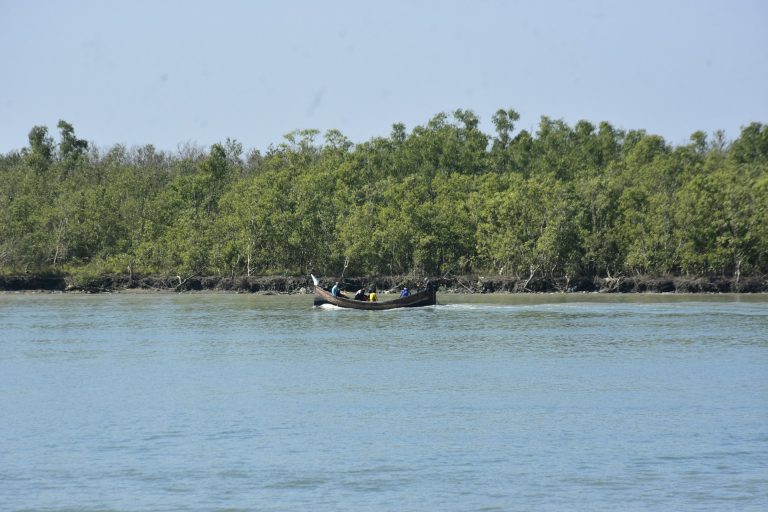
Exploring sociocultural connections for conserving large carnivore habitats for biodiversity and climate friendly landscape management: Case study from the Sundarbans in Bangladesh
Keywords
Bangladesh · Climate change adaptation · FOREST CONSERVATION · LARGE CARNIVORES · SUNDARBANS MANGROVES · TRADITIONAL AND LOCAL KNOWLEDGE (TLK)
HIGHLIGHTS
- The sociocultural connection with predators has the potential to enhance the possibility of achieving both biodiversity and forest protection, as well as contributing to climate change adaptation and mitigation.
- Knowledge exchange between creates opportunities for innovative forest landscape management.
- Climate change adaptation and mitigation need to expand their scope by incorporating the role of TLK in the conservation and sustainable use of forests.
1. INTRODUCTION
Natural and intact ecosystems are dwindling fast due to increasing direct and indirect anthropogenic pressures (Danet et al., 2024; Isbell, 2010; United Nations [UN], 2019; Worm et al., 2006). These ecosystems are exceptionally valuable and produce direct (e.g., food provision and tourism) and indirect (e.g., habitat provision and climate change regulation) ecosystem services to society. The presence of large carnivores in an ecosystem is often considered an indicator of biodiversity, both in terrestrial and marine ecosystems (Ellingsen et al., 2015; Estes et al., 2011; Natsukawa & Sergio, 2022; Tolcha et al., 2026). Large carnivores such as wolves, tigers, grizzly bears, sharks and eagles, among others, are umbrella species that are important for maintaining a healthy ecosystem. These predators play a key ecological role in maintaining the balance of ecosystems (Ordiz et al., 2015; Wallach et al., 2015). The role of megafauna, including predators, in forest protection and climate change mitigation and adaptation, can also be significant as they can protect carbon stocks in ecosystems (Malhi et al., 2022; Seddon et al., 2020), including blue carbon stocks such as those found in coastal mangroves and seagrass ecosystems (Atwood et al., 2015). However, this topic has received little attention. Maintaining large carnivores is essential for healthy ecosystems because it preserves key ecological interactions, such as maintaining biodiversity, reducing the spread of diseases, minimising crop damage and stabilising the carbon cycle. This is achieved by maintaining trophic cascades that shape ecosystems both from top-down and bottom-up (Ciucci et al., 2020; Estes et al., 2011; Keesing et al., 2010; Malhi et al., 2022; Ritchie & Johnson, 2009; Schmitz et al., 2014). For instance, researchers have suggested that the reintroduction of wolves in Yellowstone National Park provides evidence of how the introduction of large carnivores to the wild can rejuvenate and maintain the balance of the natural ecosystems (Beschta et al., 2023; Ripple et al., 2025). Large carnivores can provide vital direct and indirect benefits to society, from biodiversity to other aspects of life (Phuntsho et al., 2018; Sarasola et al., 2016; World Wildlife Fund [WWF], 2017).
The discursive aspect of TLK is synonymous with both local ecological knowledge (LEK) and indigenous and local knowledge (ILK) (Kohsaka & Rogel, 2019; Saha et al., 2026). TLK is an important driving force for preserving areas with a high degree of wilderness (Markkula et al., 2019). TLK manifests in various forms, including beliefs, rituals, observations, and folklore (Kohsaka & Rogel, 2019). TLK also refers to the collective body of knowledge and practices of indigenous and local people (UN, 1992). This collective body of knowledge and practices is handed down through generations to ensure the continuous maintenance and use of the knowledge for living in harmony with ecosystems. However, knowledge systems that incorporate unsustainable resource use practices can damage TLK. For example, both ecosystems and livelihoods can deteriorate due to the choice of unsustainable fishing methods in rivers located inside the forests and coastal areas to increase income (see Siddique et al., 2023). The practice of alternative land use can even cause the displacement of indigenous and local communities (see Annisa, 2025; Jerez, 2021). These unsustainable practices can reduce cultural components that interact more closely with ecosystems (e.g., through direct contact with nature) and the TLK systems that support them (Pascual et al., 2017). Ecosystems in which humans and nature interact closely are considered social-ecological systems (SES), which have a specific structure, processes, and feedback that maintain a dynamic stable state (see Berkes et al., 2003; Leslie et al., 2015).
The cultural connection between humans and tigers holds central importance for conserving predators and their habitats (Badola et al., 2010; Carter & Linnell, 2016; Dutta et al., 2026; Rayan & Linkie, 2015). These connections can be considered feedback in predator-based SES. Studies on the interaction of TLK with predators such as tigers fall within a particular niche of TLK that allows humans to coexist with some of the most dangerous species, at least from a human point of view, but which are ecologically important. Exploring the interlinkages between TLK and tigers requires an understanding of the key ecosystem services that tiger habitats offer to local people, such as the provision of food and fibre, as well as spiritual and aesthetic appeal through pilgrimage routes. It is imperative to comprehend the societal feedback concerning these services that conserve tiger habitats. This encompasses the prevailing belief that food is provided by intact forests and that all living things are endowed with the right to existence by a divine creator. Interlinkages between TLK and tiger habitats are rare, and studies probing such interactions are scarce, particularly in the global south, which still boasts important remaining predator habitats, including those of tigers (Padmanaba et al., 2013; Sahoo et al., 2013; Soman et al., 2025; Torrents-Ticó et al., 2021).
The analysis of cultural connections with ecosystems is an important but sunderutilised concept for the general conservation and management of wild ecosystems, and their associated human wellbeing components (Berkes et al., 2003; Colding & Folke, 2001; Datta et al., 2023; Soman et al., 2025; Turner et al., 2003). While studies have examined cultural links through deities, rituals, and beliefs that connect people to mangrove forests through livelihood activities (Jalais, 2010; Mitra, 1986), few have attempted to apply this knowledge to conservation strategies using the social-ecological systems approach to forest conservation, including climate change mitigation and adaptation (Malhi et al., 2022; Schmitz et al., 2023). Considering the rampant deterioration of predator populations worldwide and citing these cultural linkages of human-nature coexistence, this paper explores a culturally backed conservation approach that considers TLK as a key tool. We argue that TLK plays a significant role in understanding the ecological importance of tigers as predators in mangrove conservation.
We have sanalysed the case of the Royal Bengal tiger (Panthera tigris tigris) in the Sundarbans mangrove forest located in southwestern Bangladesh by capturing the perceptions of the subsistence resource harvesters regarding tigers and their habitats. These subsistence resource harvesters, consisting of indigenous and local people, enter the forests to catch fish, crabs, honey, and wood such as mangrove poles, as well as collect other mangrove resources like Nipa palm (Nypa fruticans) leaves. They do so using their traditional knowledge of sustainable forest use. These forest resource harvesters, with their TLK-based interactions in the Sundarbans mangroves, have indirectly contributed to the management and sustainable use of biodiversity by imposing controls on their resource use through activities such as carrying out low-input and traditional methods of subsistence-level harvesting (Bose et al., 2024; Chakraborty et al., 2019; Datta et al., 2012; Walters et al., 2008). These characteristics establish the Sundarbans as a social-ecological system, as has been argued for other mangrove ecosystems (see Berenji et al., 2021; Glaser et al., 2010; Mozumder et al., 2018; Saha et al., 2026).
The ‘paper’s structure is delineated as such: In accordance with the preceding section, the subsequent section presents the methods employed in the study. This is achieved by introducing the study area, its socioecological history (Section 2.1), and the data collection and analysis techniques (Section 2.2). In Section 3, the results and analysis of the study are presented. These results are explained through the perceptions and opinions of the TLK holders. Section 4 delineates the predominant factors contributing to the transformation of TLK within the region, while Section 5 offers a synopsis of the study’s salient findings and their ramifications.
2. METHODS
2.1. The study area
The Sundarbans comprise the world’s largest single tract of mangrove ecosystem fed by numerous streams and rivulets that pour into the Bay of Bengal (Figure 1).
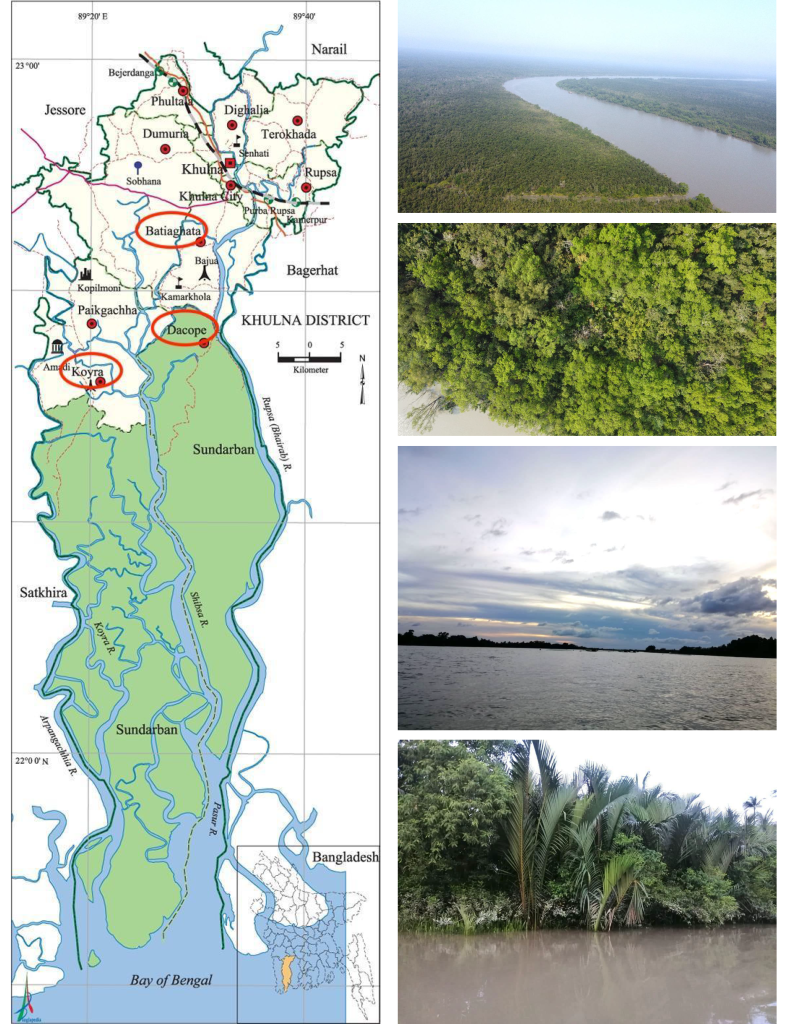
The Sundarbans mangroves, a unique ecosystem, span an area of approximately 10,200 km2. According to Nandy and Kushwaha (2010) and Payo et al. (2016), 5,937 km2 of this area are located in Bangladesh, while 4,263 km2 are located in India. The formation of this system has given rise to a distinctive proliferation of flora and fauna capable of thriving in both terrestrial and saltwater environments, a characteristic that is the hallmark of mangrove ecosystems. These forests also serve as a critical habitat for endangered species such as the Royal Bengal tiger (Panthera tigris), the saltwater crocodile (Crocodylus palustris), the river terrapin (Batagur baska), and the Gangetic river dolphin (Platanista gangetica). All of these species face extinction due to habitat loss, hunting, poaching, and depleted prey populations (International Union for Conservation of Nature [IUCN], 2022).
In the Sundarbans, the local resource harvesters include the indigenous Munda people, who are believed to have migrated from the Chotanagpur plateau area in India approximately 200–300 years ago (Huda, 2021). Due to the migration of the Munda people and their intermingling with the local population, the knowledge of the Sundarbans area is considered in this paper as traditional and local knowledge (TLK). Until recently, TLK-based resource use, conservation, and protection received limited recognition, especially after the area received World Heritage Site (WHS) status in 1997. However, after receiving WHS status, the Sundarbans experienced increased boat-based tourism in specific areas of the forest. While these areas are protected, vast areas of forest outside the protected areas remain vulnerable. This calls for a wider conservation approach that includes protection and conservation on a larger scale (Chakraborty et al., 2020).
2.2. Data collection and analysis
Our study used a qualitative framework (Table S1, Supplementary electronic material) to gather information from various sources using multiple data collection methods (Gillham, 2000; Taylor, 2016). We highlight the opinions and perceptions of indigenous and local people who hold TLK, connection to the mangrove forests through subsistence resource use. The analysis in the paper was based on face-to-face interviews with 29 forest resource harvesters (Table S2 in supplementary electronic material), who represented groups of four to seven individuals who entered the forests to harvest resources for subsistence.
We relied on in-depth interviews to capture detailed cultural connections to the forest, tigers, and forest resources such as fish, honey and wood through extensive discussions. We used in-depth interviews because they provide rich personal data, allowing us to understand individuals’ motivations, context and what they consider important (Morris, 2015). These discussions were reinforced and expanded upon in three focus group discussions (FGDs) with seven to eight people (with the same respondents who were willing to participate in the FGDs).
The same respondents were invited to share their opinions, which are considered extremely important for interpreting natural environments because they demonstrate collective significance and preferences regarding these environments (Irvine et al., 2016; Kenter et al., 2015).
These FGDs allowed us to understand the shared nature of the opinions about forests, including tigers, during the interviews. Also, we did not select interview respondents randomly because of the higher likelihood of selecting non-TLK-based resource harvesters (see below). Respondents were selected from forest fringe villages in the Batiaghata (Debitala and Katianangla), Dacope (Dangmari), and Koyra (Koyra Sadar) subdistricts in the eastern part of the Sundarbans (Figure 1).
We used a purposive sampling method. This method began with two key informants from the study area who helped us find key experienced resource users, including master harvesters who have TLK for extracting forest resources from the Sundarbans. Master harvesters are a special group of people with deep knowledge of the mangroves acquired through direct interaction with the forest. They also promote sustainable forest resource use, as younger generations of resource users often follow these master harvesters to extract resources and avoid dangers, such as tiger attacks.
For conducting the interviews, we followed a purposive sampling method. This purposive sampling method used local acquaintances of the second and third authors as an entry point to select these 29 forest resource harvesters, who use TLK-based techniques to extract resources. The purposive sampling began with two key informants from the study area who helped us find experienced resource users, including master harvesters with TLK knowledge for extracting forest resources from the Sundarbans. These first-level interviewees helped us find two to three more TLK holders from their community. This purposive snowball sampling process relied on acquaintances and trust, allowing us to gain deeper insights into forest interactions from the TLK holders (see also Rudes et al., 2025). This type of sampling is useful for connecting with specialised populations (e.g., TLK holders), which are difficult to identify using randomised sampling methods that may select non-TLK holders and introduce bias. Prior to conducting interviews and focus group discussions (FGDs), we explained the research objectives, methods, and possible implications and why TLK was used in our study. We then obtained verbal consent from all interviewees and FGD participants, confirming that participation was voluntary and that anyone could refuse to participate or withdraw at any time. The interviews and discussions consisted of subsistence harvesters, mainly consisting of three main occupations in the Sundarbans. These are honey collectors, nipa palm (Nypa fruticans) collectors and fishers and crab collectors. These activities are not mutually exclusive. For instance, honey collectors catch and consume fish while in the forests. Several respondents engaged in multiple types of resource harvesting to support their livelihoods. For instance, some farmers in our interviews and focus group discussions (FGDs) were also part-time fishers, sometimes going fishing with other groups (see Table S2 in the supplementary electronic material). The FGDs provided an opportunity to interact with subsistence harvesters and exchange and verify information, particularly regarding direct and indirect drivers based on the local resource harvesters’ shared opinions. Data gathering was conducted from July 2017 to March 2022. Data verification followed preliminary interview interpretations carried out in October 2018 and August 2022.
The interviews were designed to explore the following three topics: (1) different types of subsistence harvesting, (2) perceptions of forests and real-life experiences with tigers gathered through forest resource harvesting, and (3) perceptions of tigers related to the quality of the forest. Using a qualitative framework allowed us to capture the respondents’ perception-based insights (McCracken, 1988). In the focus group discussions (FGDs), both the young and old generations participated, which helped us understand how TLK is mobilised for sustainable mangrove resource harvesting.
The interviewees were from villages on the edge of the forest, where people enter the Sundarbans to collect non-timber forest products (NTFPs), such as honey, nipa palm leaves, fish, and shellfish. The forest resource harvesters are both Hindu and Muslim and share a joint cultural history. The importance of strong intergenerational ties to the forest in subsistence harvesting is a central tenet of this study. For instance, family members primarily venture into the deeper parts of the forest to collect honey. Generally, males in the study area enter the forests to harvest resources, a characteristic generally observed throughout the Sundarbans. Thus, all of the respondents in our study were male. Women have a role within the village. Although they play a vital role in growing and gathering food through agriculture, we do not consider them to have a direct relationship with the forest landscape. However, some women enter the forest to harvest resources.
However, we acknowledge that women have significant indirect relationships with forests, and their efforts to harvest resources are equally important for forest conservation. This interpretation lies beyond the scope of the present study. We transcribed and coded all data from the in-depth interviews and focus group discussions (FGDs) according to different categories to identify themes that emerged from the data (open and axial coding; see Strauss & Corbin, 1990) regarding the connection between tigers and the overall health of the Sundarbans.
The research did not collect any confidential or personal information from the interviewees and FGD participants. Before our data collection, approval of prior informed consent was carried out as all interviewees and FGD participants were informed about the research focus, expected outcomes, intended use of findings (including publications), and their right to withdraw at any time without negative consequences. After providing this explanation, we received oral consent from all interviewees and FGD participants before carrying out the respective data collection exercises.
3. RESULTS
3.1. Sociocultural connection between people and forests
In this section, we describe the nature of sociocultural connections to forest stewardship. The interviews and FGDs revealed that local resource harvesters rarely see tigers. Thus, compared to their knowledge of other aspects of the forest, such as bees, fish, and crabs, their knowledge of tigers has taken on a special, metaphorical form (see Table S3 in the Supplementary Electronic Material). This knowledge has also established the nature of TLK in the Sundarbans associated with tigers and their habitats. The Sundarbans socioecological system is primarily a fisher-gatherer society. Direct observation and storytelling play important roles in learning and exchanging information about resource harvesting, including place-based, tacit knowledge with intergenerational links based on experience (see also Fernández-Llamazares et al., 2016; Keskitalo, 2025; Reyes-García & Fernández-Llamazares, 2019).
Sociocultural connections play a vital role in linking the forest ecosystem to people, helping to provide a variety of resources from the forest. These connections support the existence of tigers. The quote below explains the relationship between the forest, tigers, and people in the Sundarbans:
Tigers live in the forests for their whole life, and they (tigers) cannot live without forests. Whereas humans do not (always) need to live with the forest…. if I cannot raise and maintain my family income, I will leave the profession of honey collection and move to the cities, perhaps… or perhaps work as a farmer. But the tiger cannot live without the forests, and it dies if the forest is not there.
Fisherman, Age 52, Batiaghata. Interviewed July 2022.
The quote illustrates the relationship between people and the forest. “Us” refers to people who rely on the forest for their livelihood and culture. The tiger is depicted as the spirit of the forest (see Table S3 in the supplementary electronic material). This sociocultural connection limits the number of people entering the forests, especially the deepest parts with different forest niches and the greatest biodiversity.
Those who do wrongdoings or any sins in the forest cannot stand in front of a tiger when attacked or help someone who is attacked
Honey collector, Age 67, Batiaghata, Interviewed March, 2022.
The quote below also supports this argument:
Sundarbans is a harsh area to live and there are fears of tigers, venomous snakes such as king cobra, crocodiles… but if one always fears about them, one cannot come to the Sundarbans and one cannot learn about these forests
Nipa palm collector, Age 49, Batiaghata, Interviewed March, 2022.
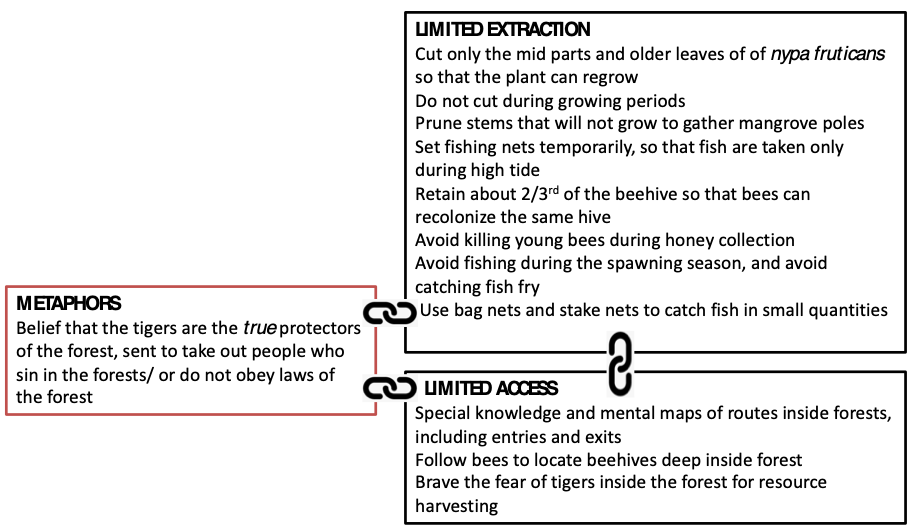
These characteristics are what couple the system of forests and people through the existence of the tiger. Sociocultural connections intersect with TLK in that they depend on each other (see Figure 4). One vital aspect of TLK practices that intersect with sociocultural connections is the low-key approach to harvesting mangrove resources. Without this approach, it is believed that the forest goddess “Bonobibi” may become angry and not protect harvesters from the tiger god Dakshinray (see Table S3 in the Supplementary Electronic Material). Therefore, worshipping the Bonobibi, the forest deity, is worshipping the forest and its tigers. Locals believe that Dakshinray is the protector of the forest and its resources and that humans invade his territory. He may send his tigers to attack those who do not abide by the forest’s rules. These rules are about the selective and limited extraction of mangrove resources. For example, the selective cutting of mangrove poles from unhealthy trees that could rot is encouraged. About a third of a jungle honeybee hive is retained to allow for its regeneration, enabling the same forest tract to be used multiple times. Similarly, several artisanal fishing practices are employed, such as the use of small set nets (char pata jal and khal pata jal) and crab traps to catch a limited number of fish and shellfish for subsistence living (see Figure 4).
About two-thirds of the beehive should be kept and not all the hive should be harvested, so that the bees do not have to work again to build the whole hive… we need to cut the hive, taking care not to kill any bees. We also need to control the smoke and fire, as too much heat can kill bee larvae. I learned all these during honey collecting. In my early days, I used to observe how my fellow collectors do this.
Honey collector, Age 64, Koyra, Interviewed February 2020.
The Sundarbans case suggests that important keystone species conservation can be achieved through socioecological relations with indigenous and local people whose livelihoods depend on the forests. Indigenous and local people have remained economically poor due to a lack of economic opportunities, frequent saltwater intrusions that render the land infertile, coastal flooding caused by cyclones, and a vicious cycle of loan systems (Giri, 2018; Sen, 2023; Siddique et al., 2023). This economic poverty and the uncertainty of floods and cyclones have made local resource harvesters dependent on mangrove forest resources. In the process, they have also developed an understanding of the key role of tigers in the forest for their continuous survival. The following quote explains this relationship:
Without the Sundarbans, we will not be able to acquire fish, crabs, and nipa palm (golpata) from the forests… it (the Sundarbans) provides our necessities for many generations. Whatever I do in my life to raise my family, it is due to the forest
Fisher, Age 43, Dacope, Interviewed September 2022.
The quotations presented in this section lend support to the argument that the Sundarbans exist as an exemplary ecosystem with socioecological components, despite its degradation, due to a pool of TLK used to coexist with tigers. These interactions have the potential to generate novel conservation opportunities centred on livelihoods, a topic that will be explored in the following section.
3.2. The conservation component of spiritual connections through the belief system
Socioecological connections (smobilised by TLK through direct interactions of the indigenous and local people with the forest ecosystem and culturally transmitted through storytelling and day-to-day communications) that emerged from the interviews and group discussions (Table S1, Supplementary Electronic Material) show that the local resource harvesters perceive the wild and intact mangroves as pure. For instance, these harvesters consider forests where tigers live to be the most significant. These untouched forests have “purity,” a quality lacking in human domains (villages), and human contact can degrade this purity. In addition to the dangers of the forest, local resource harvesters mentioned their appreciation for its beauty. Twenty-two harvesters stated that they feel “pure” and “fulfilled” when visiting these forests (see Table S3 in the Supplementary Electronic Material). The possibility of supporting livelihoods together and the sense of purity (along with the dangers) that forests provide motivate people to protect them. The following quote is an example of this opinion:
Our Sundarbans are a pure (pobitro) forest to us. It is very beautiful also…we should not damage the purity of the Sundarbans. And those who do wrongdoings and sins (opobitro) in the forest have to pay a price in the future.
Honey collector: Age: 64. Batiaghata, Interviewed July 2022.
Relatively intact forests that provide honey are wild and prime tiger habitats. This demonstrates the deep spiritual significance of wilderness and the unethical nature of alienating and degrading it. The effects of this degradation can manifest as tiger attacks.
The sociocultural connections act as a feedback mechanism that helps the mangrove ecosystem, including the tigers within it, survive despite heavy human pressure. This feedback is not well understood yet, as more research on spiritual and cultural connections with forests and tigers is needed. However, we argue that it is a key socio ecological characteristic related to maintaining the tiger-lizard-kingdom (TLK) in the Sundarbans (Figure 4). Additionally, we found that the practice of sharing stewardship of the forests with tigers by using metaphors and belief systems to protect the forests is missing from current landscape interventions in the Sundarbans. Spiritual connections to tigers are a key pillar of the TLK pool, gathered and generated through direct interactions with the forests and indirect interactions through real, experience-based stories told by harvesters.
We learn from the Sundarbans, as most of us are not educated. We gather such learning through each trip to the Sundarbans and from the experienced harvesters
Honey collector, Age 33, Koyra, Interviewed September 2020
Another quote states that the need for TLK is only possible to develop through real interactions with the forest:
We have to go in and come out of the forest safely. …We have to read signs in the forest and the tides for our survival for going to and coming out of the forests (survival both from tigers as well as through gathering food)
Fisher, Age 28, Batiaghata, Interviewed July 2022.
The wider pool of TLK includes geographical knowledge, such as knowledge of the nature of the sea and coastal areas, the timing of tides, waves and river currents, and a mental map of a vast network of tidal creeks for navigation. It also includes knowledge of harvested species, such as where they live, forage and spawn; knowledge related to honeycombs and their location; and knowledge of plants and animals, including the nature of tigers (Table S4, Supplementary Electronic Material). Additionally, it includes knowledge of harvesting techniques, such as the ability to track a single bee to its hive and the use of handmade set nets to catch fish from tidal creeks during tidal fluctuations (see Figure 2).
Our master harvester can follow a bee inside the forest and get to its hive, first we locate the bee from our boat and try to see which direction it is going. These days, sometimes we attract the bees by adding honey and water and spraying it on the leaves, and then we follow the bees as they return after drinking and collecting the honey.
Honey collector, Age 33, Koyra, Interviewed July, 2020.
4. THE INTERPLAY OF DRIVERS OF CHANGE OF TLK
Below, we discuss some of the main direct and indirect drivers of ecosystem change based on the shared opinions of local resource harvesters during the FGDs (Figure 3). These drivers were observed in the Sundarbans (based on Millennium Ecosystem Assessment [MA], 2005). These drivers act in a tightly interconnected way.
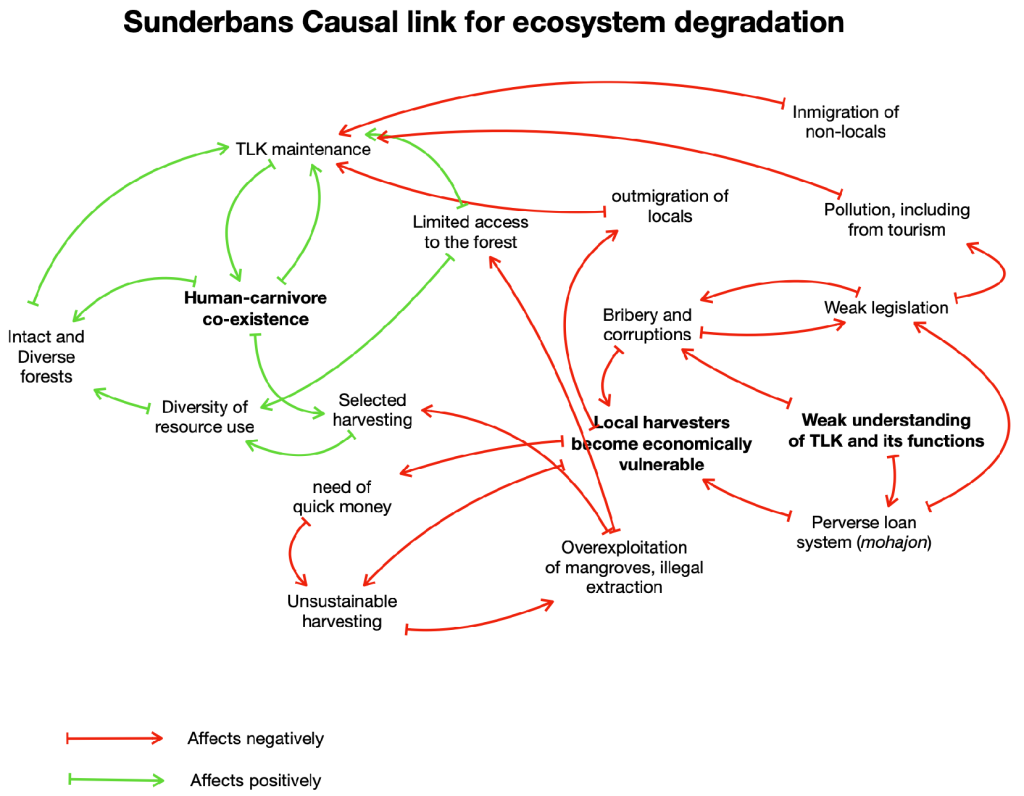
Overexploitation in the form of illegal logging, poaching, and unsustainable fishing practices was identified as one of the primary drivers of change in wild mangrove forests that are home to tigers (see Haque et al., 2025; Hossain et al., 2016; Saif et al., 2016). Several participants noted that poaching can originate from local villages and be facilitated by easier access to forests (n = 6). The local use of tiger parts can increase poaching, a phenomenon noted by other researchers (e.g., Mahtab et al., 2026; Saif et al., 2016). The acquisition of mangrove poles by woodcutters was reported to be occurring at a much faster rate, including illegal extraction (n = 5), a phenomenon also observed by Rahman (2022). Respondents, especially honey collectors and fishers who enter the forest buffer zone, stated that the forest has become hollow (n = 22) because illegal cutters do not cut selectively, as traditional mangrove pole harvesters do. The local resource harvesters mentioned increased cyclone activity while discussing the effects of climate change (n = 18), which degrade the forest environment through erosion of river and creek banks, as well as uprooting of large trees, especially iconic species such as sundari (Heritiera fomes). We specifically asked about the effects of climate change on forests rather than villages. This fact has also been noted in recent studies (see Halder et al., 2021; Mohammed et al., 2024).
The socioeconomic driver (n = 16) is a significant indirect factor that increases vulnerability in the Sundarbans SES. Illegal extraction of forest resources was identified as a significant factor reducing subsistence-based extraction (e.g., Akhtaruzzaman, 2000; Uddin et al., 2023). During interviews and focus group discussions, forest resource harvesters mentioned that forest department-accredited passes are only available to boat owners. Therefore, resource harvesters who do not own a boat must be wage labourers under those who do. This reduces their self-sufficiency. As a result, these resource harvesters sometimes extract more forest resources, such as wood, fish and crab, than is allowed through the forest passes. For example, ideally, parts of nipa palm plants that have older leaves should be cut from each tree. However, harvesters tend to cut all the usable leaves in order to gather a profitable quantity, which leads to the degradation of nipa palm niches. Similarly, a perverse loan system by local moneylenders (mohajons) exacerbates the economic vulnerability of locals as harvesters borrow money at high interest rates, resulting in higher repayment amounts. As a result, the debts never decrease, compelling the resource harvesters to cut more nipa palm leaves (n = 3). Similarly, illegal logging also occurs under these circumstances and has increased in intensity in recent years, especially for construction projects through ports such as Mongla. (See also Schwartzstein, 2019.)
The use of poisons for illegal fishing in shallow creeks was mentioned as an example of unsustainable extraction (n = 13). Illegal fishing practices are also supported by science and technology (n = 21), such as the availability of insecticides in the agricultural sector. Although these practices are localised, they affect the wider ecosystem because they destroy fish larvae and eggs. These practices exhaust fish and shellfish in one creek, prompting fishermen to move to a second creek more quickly, which is far more detrimental to the tidal fisheries associated with the mangroves.
The above instances demonstrate that the approach of managing protected areas through command and control (i.e., forest and coast guards) is not always effective. This approach has not prevented the illegal extraction of resources from the Sundarbans, as mentioned in other literature (e.g., Rahman, 2022). Additionally, the degradation of the freshwater channels caused by large dams and barrages (especially the Farakka Barrage) due to India’s and Bangladesh’s land development policies also adversely affects the Sundarbans. These dams and barrages alter the vital aggradation function of deltaic environments by reducing the flow of freshwater and sediment, which stifles the process by which land is built up and on which mangrove forests depend (Rahman & Rahaman, 2018). Due to these combined factors, local TLK holders migrate to cities and towns in Bangladesh and neighbouring India due to declining livelihood security from the mangroves. Many choose to work on construction and road-building sites as daily-wage labourers. Thus, the TLK system deteriorates drastically. Non-native people migrate to the forest fringe villages, where they have lower local knowledge of how to survive in wild mangrove ecosystems (n = 17). This can further deteriorate the mangrove socioecological system.
The TLK holders mention that tigers need the terrestrial parts of the forest for resting, breeding, and catching prey. Therefore, the size of their population depends heavily on the availability of these spaces, even though tigers can swim through tidal creeks to move between adjacent islands. Once the main steward of the forest, according to the TLK holders, the tiger has disappeared from certain areas due to habitat destruction and shrinking forests, as well as poaching. Consequently, people can more easily enter the forest and overexploit its resources (n = 21). The biocultural connection with the forest predator is lost.
These direct and indirect drivers interact and originate at different organisational levels, affecting the Sundarbans over time. Direct drivers, such as poaching, illegal logging, and unsustainable fishing, are related to the Sundarbans’ sociopolitical landscape. Market environments and corruption that allow the unrestricted sale of poisons for fishing are major indirect drivers. Although forest guards sometimes raid targeted shops to seize the illegal sale of poisons, the overall effect is considered low. A similar trend exists for poaching wildlife and illegal logging. Erosion of the traditional livelihood of local harvesters and outmigration (n = 18) is a major indirect driver that allows non-TLK practices to replace TLK-based practices (see also Saha & Goswami, 2020; Yasmin, 2026).
We would like to semphasise that the decrease in TLK-based extraction of subsistence resources is a significant driver of change. Substance harvesters do not have an opinion on TLK because they lack a definition that captures cause-and-effect relationships (e.g., a decrease in TLK decreases the potential for long-term resource harvesting). Additionally, although TLK holders are the stewards of some of the most biodiverse forests and possess a rich knowledge base, they are mostly economically poor. This economic poverty has kept the conservation of tigers associated with TLK in the background.
5. DISCUSSION
5.1. Cultural interaction at the centre of humans’ coexistence with large predators and forests
Researchers have argued that cultural connections to wildlife and forests are key to effective forest management, including in protected areas (de Pater et al., 2023) and in adapting to and mitigating climate change (Malhi et al., 2022). In the case of the Sundarbans, these cultural connections can promote forest protection through sustainable resource harvesting using TLK both inside and outside the PA. These cultural connections, coupled with the presence of TLK, can help maintain the resilience of subsistence harvesters and ensure their continued survival in the mangroves (see also Jeanne-Lazya et al., 2022; Pearce, 2023). Recently, management systems with high TLK components have been emphasised as important for conserving ecosystem services (Folke, 2004; Pascual et al., 2022; Leal Filho et al., 2025; Nyathi et al., 2025). Conversely, without cultural connections to tigers and restricted forest use, socioecological connections can weaken. This requires a management system with rigorous command and control-based protection, the establishment of exclusion zones, and the implementation of quota systems and total allowable catch (TAC) systems, among others. However, the rational management of forests can also lead to the increased commodification of forests for economic purposes (Jeanne-Lazya et al., 2022).
Furthermore, only a small portion of the Bangladeshi Sundarbans is protected by the West, East and South Sanctuaries (Chakraborty et al., 2019). Of the total area of the Sundarbans mangroves in Bangladesh, 139,697 hectares lie within the protected area (PA) and 460,303 hectares lie outside it. According to Islam and Wahab (2005), the three sanctuaries are fragmented and provide limited opportunities for the long-term, complete conservation of mangroves. Since the sanctuaries are closer to the sea, they will be affected more by rising sea levels due to climate change than the northern parts of the Sundarbans. This implies that protecting mangroves outside of the three sanctuaries is essential, and that the human-predator relationship based on TLK can play a crucial role in maintaining the biological diversity of the Sundarbans. Otherwise, the rapid environmental changes the Sundarbans are undergoing due to climate change and socioeconomic factors can challenge the TLK and the community’s adaptive capacity (Fernández-Llamazares et al., 2015), which can deteriorate the mangroves as a socioecological system. In our study, we find that the cultural connections between tigers and the forest by the local people lie at the intersection of efficient use (MSY approach regarding Sundarbans) and the wilderness-based approach applied in the case of conservation with WHS status. Our study finds that the cultural connections between the local people and the forest lie at the intersection of the MSY approach to the Sundarbans and the wilderness-based approach applied in conservation areas with WHS status.
It should be noted that the classic approach of protecting areas for predators is not practical for many national parks in Asia and Africa, where people rely on these areas for their livelihoods and often live within them. Here, an endogenous (culturally-backed) pathway that is characterised by cultural interaction and understanding can be chosen for the conservation and sustainable utilisation of predator habitats. In this sense, there are important management implications for the authorities and institutions that are responsible for the effective co-management of the Sundarbans mangroves. Our study is particularly relevant to the Bangladesh Forest Department, which oversees management of forest habitats in the Sundarbans. This includes ecotourism management, shrimp cultivation, restoration of degraded habitats, and law enforcement to curb illegal harvesting and residential area expansion, among other activities (see also Chakraborty et al., 2020). Our study is also relevant to Bangladesh’s NDCs, as it can help strengthen the country’s forest resources for climate change adaptation and mitigation backed by biodiversity. It is important to highlight the role of forest resource harvesters whose TLK systems help harvest forest resources sustainably and add aesthetic and recreational value to mangroves (Chakraborty et al., 2020). These harvesters coexist with tigers in their livelihood domains. This could lead to increased activities that protect and restore the Sundarbans and reduce the impact of the vicious cycle of TLK degradation (see Figure 2).
Our findings, which are based on the interaction between people and large carnivores, are directly connected to global biodiversity conventions, such as the Convention on Biological Diversity (CBD) and the Kunming-Montreal Global Biodiversity Framework (KMGBF). The CBD emphasises the conservation, sustainable use and equitable sharing of biological diversity (UN, 1992; Article 8j), as well as the consideration of the customary use of biological resources according to sustainable traditional cultural practices (UN, 1992; Article 10). The Kunming-Montreal Global Biodiversity Framework also strives to maintain the sustainable harvesting of biological resources while stopping species and genetic diversity loss (Kunming-Montreal Global Biodiversity Framework, 2022, Targets 4 and 5). Additionally, given that less than one-fourth of the Sundarbans in Bangladesh are protected areas (see Chakraborty et al., 2019), our findings align with Other Effective Area-Based Conservation Measures (OECMs), which call for the conservation of 30% of healthy ecosystems by 2030. This can be achieved by increasing mangrove habitats where tiger acceptance is high, while considering the National Biodiversity Strategy and Action Plan (NBSAP). Additionally, we recommend synchronising the restoration of degraded mangrove habitats with the knowledge of TEKTLK holders to ensure long-term acceptance of the mangroves. The knowledge of TLK holders must be recognised and prioritised, when necessary, for the sustainable use and conservation of mangroves. This, in turn, may help achieve the target of increasing the conservation of healthy ecosystems.
5.2. How cultural interaction with predators can be adopted in forest conservation pathways
First, although field-based scientific data can accurately predict wildlife, it is resource-intensive for the protection and restoration of large carnivores, such as tigers. Incorporating culturally backed understandings and knowledge, possible through the application of traditional local knowledge (TLK), into scientific decision-making can provide a valid platform for forest habitat conservation in the Sundarbans. Providing a voice and a platform for information sharing and consultation, as well as raising awareness of land and resource use rights, can be effective ways to conserve and sustainably apply TLK in the study area. This can also provide feedback to global biodiversity-related policy platforms, such as the Aichi Biodiversity Targets and UN SDGs (see Titumir, n.d.). Additionally, integrating TLK into Bangladesh’s National Biodiversity Strategy and Action Plan by raising awareness of sustainable resource use based on TLK in mangrove-adjacent communities can increase acceptance of the full range of mangrove biodiversity, including predators (see Saha et al., 2026). In this region, the acceptance of tigers as apex predators is strong and their role in maintaining the health of the forest ecosystem is widely recognised. In this sense, our study is similar to those by Siddique et al. (2024), Petracca et al. (2018), Turvey et al. (2014), and Malhi et al. (2022). Second, studies on cultural interactions with predators in relatively intact ecosystems provide insight into the complex relationship between the social and ecological components of the ecosystem (Figure 4) and how this knowledge can inform land and resource use decisions (Berenji et al., 2021; DeWalt, 1994). These studies also create opportunities to recover disappearing knowledge of smarginalised groups (see Chapin, 1994; Gómez-Baggethun, 2022), and increase their potential for sustainable resource use (see also DeWalt, 1994). The merging of two contrasting realms of knowledge is possible here, as is argued in the IPBES approach to conserving ecosystems. (see Pascual et al., 2017).
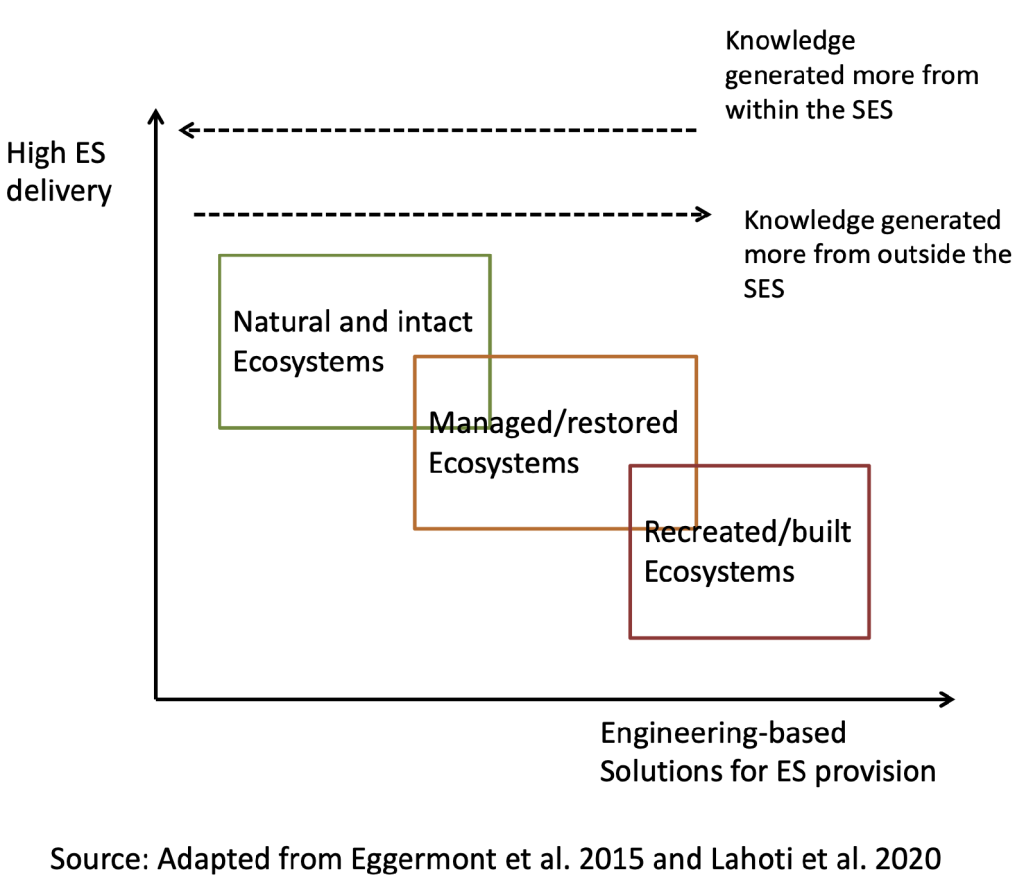
Third, we advocate reducing stressors that weaken the TLK and impair cultural interactions tied to the mangroves. Our findings suggest that external factors such as pollution, loan systems, corruption, and climate change, as well as internal factors such as poverty and outmigration, negatively impact the TLK component that srecognises tigers as a species that (indirectly) favours sustainable resource extraction. Fourth, recapturing the disappearing knowledge of indigenous and local communities whose culture is rapidly disappearing (see Chapin, 1994; Gómez-Baggethun, 2022) is a meaningful step in ecosystem conservation (through large carnivores, in our case). This is primarily achieved by maintaining cultural interactions with biodiversity, which serve as feedback in socio ecological systems inhabited by large carnivores (see Petracca et al., 2018). Fifth, the cultural understanding of tigers in the Sundarbans can be applied to mangrove and tiger conservation outside the Sundarbans National Park (see Andresen et al., 2014; Chakraborty et al., 2019, 2020; Karanth et al., 2011). Tigers require large habitats, which may cause them to venture outside of protected areas, resulting in direct conflicts with humans (see Ripple et al., 2014). This is a primary cause of their decline in the wild.
6. CONCLUSION
In this paper, we demonstrate how the cultural components of a society, such as its belief systems, shape the perceptions of local resource users in the Sundarbans, an area where wild tigers are considered to be apex predators. As iconic animals, tigers serve as keystone species in healthy forest ecosystems. However, in cases where humans coexist with dangerous wild animals, it is uncommon for them to view the animal as the forest’s primary protector. The Sundarbans can be considered a connected system consisting of components related to SES. These components are interconnected by TLK, which recognises tigers as top predators and the most important protectors of forests. This recognition is reinforced through direct experience, metaphors and storytelling. Belief systems in the Sundarbans serve as feedback mechanisms that sustain the SES.
Conservation initiatives, including climate-friendly landscape interventions, can benefit from focusing on sociocultural interactions between people and predators. This approach leverages cultural connections and recognises the cultural ecosystem services they generate. In order to integrate into the ecological discourse on large carnivore conservation, including tigers, we need a detailed account of TLK that provides applicable insights. The survival of subsistence harvesting systems alongside forests for hundreds of years demonstrates this system’s long-term contribution to biodiversity and climate-friendly economic wellbeing. It also provides important ecosystem services, such as storm protection and fisheries-based protein production, in the Sundarbans. Thus, the management systems in the Sundarbans (in both Bangladesh and India) should expand their efforts in biodiversity and forest conservation to include perception-based cultural interactions between locals and the forests. Conservation authorities and interest groups in the Sundarbans should incorporate a culturally rooted, TLK-based understanding of the ecosystem to protect the tigers on which the forest’s health relies.
Implementing this method can help mangrove-adjacent communities, particularly the dependent communities of the Sundarbans, achieve a much higher level of engagement and support for conservation. By involving indigenous and local knowledge holders, we can help the current management increase ecotourism, restore forests in degraded areas, promote the long-term sustainable use of the Sundarbans, combat illegal activities and recognise the importance of forested habitats. TLK components can serve as an internal boost for conserving and sustainably using SES, such as the Sundarbans. Implementing this method will also enhance regions where a nature-based approach to resource use, climate change mitigation and adaptation is desired.
7. ACKNOWLEDGEMENTS
The authors acknowledge the Asia-Pacific Network for Global Change Research, which funded the research with project reference number (CRRP2019-04MY-Chakraborty). The authors also thank the local resource harvesters, including the Munda (IPLC) people in the study area, for their valuable insights in the interviews and focus group discussions. These insights were vital for making this study and the arguments possible. We also thank the two anonymous reviewers, whose comments and suggestions have made the paper better.
8. ETHICAL APPROVAL
The research did not carry out any official research ethics approval procedure, as the research did not elicit any confidential or personal information from the interviewees and FGD participants. Before our data collection process, prior and informed consent-taking procedures were carried out as all interviewees and participants were informed about the focus of the research, the expected outcomes, how the findings would be used, including in publications, and that interviewees and participants could stop their engagement at any point without having any negative consequences. After this explanation, we received the oral consent of all interviewees and FGD participants before carrying out the respective data collection exercises. The indigenous and local people were not involved in the research process. We used interviews coupled with group discussions to elicit information on how TLK is related to tigers and the forest. The word participants was used as we also used FGDs. Those taking part in the FGDs were considered as FGD participants (not FGD respondents) as they provide shared opinions after discussions and cross-checking information.
9. SUPPLEMENTARY MATERIAL
Supplementary material associated with this aricle can be found at https://www.apn-gcr.org/bulletin/wp-content/uploads/2026/10/Supplementary-electronic-material.pdf